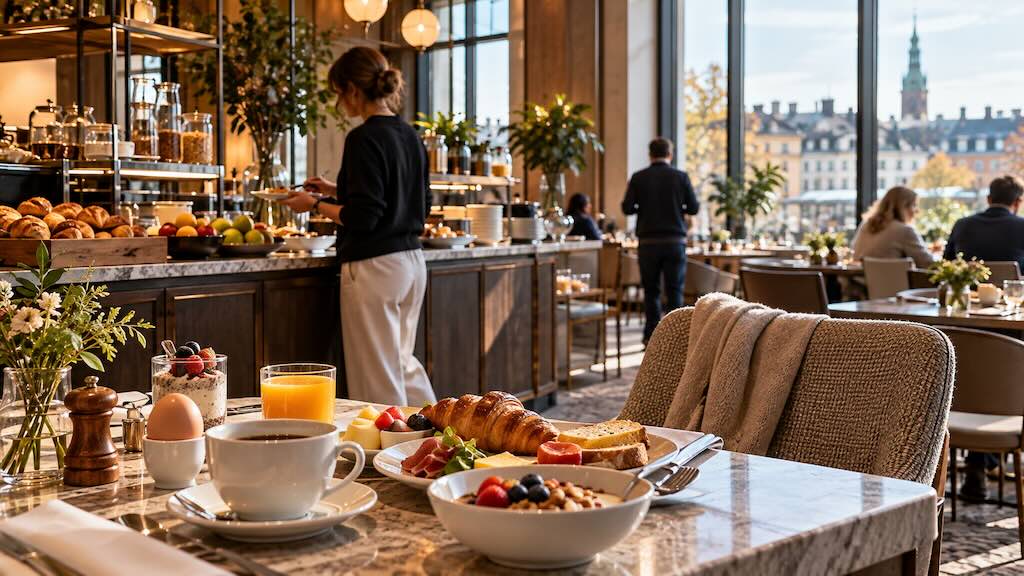
At seven in the morning, a hotel breakfast room has a particular appeal. The coffee is ready, bread is waiting in baskets, and somebody else has already taken care of the washing-up. You can eat, collect your bag and begin exploring without making a single decision about where to find breakfast.
It’s a pleasant arrangement. But when breakfast costs extra, is it worth paying for?
The answer depends less on the size of the buffet than on how you plan to spend your mornings. A generous hotel breakfast can be excellent value for a family heading out early. For someone spending a long weekend in a city full of cafés, it might be an unnecessary expense—and a missed opportunity to experience the neighbourhood.
Before adding breakfast to your next hotel booking, there are a few things worth checking.
First, find out what breakfast really costs
Hotel booking pages can make breakfast seem like a simple choice between included and not included. In practice, the price difference isn’t always obvious.
One room rate may include breakfast while another excludes it. A cheaper package might require advance payment or have stricter cancellation conditions. Even at the same hotel, comparing the wrong rates can make breakfast appear better value than it is.
Start with two offers for the same hotel, room type, dates and number of guests. Check that the cancellation and payment terms are equivalent, then compare the total cost.
For example, imagine a two-night stay costs €280 without breakfast and €328 with breakfast for two people. The difference is €48, or €12 per person per morning. That’s a hypothetical example, not a typical hotel rate, but it shows the calculation that matters.
Now ask what you’d otherwise spend. If you’d happily pay €12 for breakfast at a nearby café, the hotel option may be reasonable. If you normally want only a coffee and something small, you could be paying for a meal you don’t particularly need.
It’s also worth checking the hotel’s own website. Breakfast arrangements vary between properties and booking channels. Booking.com’s guidance explains that breakfast inclusion is specified for individual accommodation offers, rather than automatically applying to every room at a property.
The best breakfast might be the one that saves you time
Price isn’t the only consideration. On some trips, convenience is worth paying for.
Imagine you have a train to catch at nine. You need to pack, check out and reach the station. Finding an open café, waiting to order and allowing enough time to eat can turn a straightforward morning into a series of small calculations.
If breakfast is available downstairs before you leave, the decision becomes easier. The same applies to a business trip with an early meeting or a family holiday where getting everyone ready already takes considerable effort.
But check the serving hours before paying. An early flight may mean leaving before breakfast begins. Some hotels offer packed breakfasts or other arrangements for early departures, but don’t assume yours does without asking.
And consider your appetite. A substantial breakfast might carry you comfortably through a morning of sightseeing. If you rarely eat much before midday, a full buffet may offer little practical advantage.
Don’t assume a buffet means better value
Hotel breakfast photographs are designed to be appealing. There may be fresh fruit, pastries, several kinds of bread, cooked dishes, cheeses and an impressive collection of juices.
But the number of choices doesn’t necessarily tell you whether breakfast is worth the price.
If you usually eat toast and drink coffee, access to twenty additional dishes won’t change much. Equally, a modest breakfast prepared well may be more enjoyable than a large buffet where the food has been sitting out longer than you’d like.
Check recent guest photographs and reviews for the particular property, paying attention to what people actually describe rather than simply counting positive ratings. Look for details about freshness, replenishment, seating and whether breakfast becomes crowded at popular times.
Dietary requirements also matter. If you need gluten-free options, have food allergies or follow a particular diet, contact the hotel directly to confirm what it can safely provide. A general description such as “varied breakfast buffet” isn’t enough to establish suitability.
Sometimes the better choice is outside the hotel
One of the pleasures of staying somewhere new is discovering how the place begins its day.
In one city, that might mean standing at a café counter for coffee and a pastry. Elsewhere, it could involve a bakery, a market stall or a neighbourhood restaurant serving something you wouldn’t ordinarily eat at home.
Choosing breakfast outside the hotel can turn an ordinary meal into a small part of the trip. It gives you a reason to walk through unfamiliar streets before the busiest hours and notice places you might otherwise pass later in the day.
Of course, this depends on where you’re staying. A central hotel surrounded by cafés offers different possibilities from an airport property, a rural guesthouse or a resort where the nearest alternative requires transport.
Before deciding, look at a map and check actual opening hours. A café that looks perfect for breakfast may not open until ten, particularly on Sundays or public holidays.
And remember that eating locally isn’t automatically cheaper. In some destinations, a hotel breakfast included at a modest premium may cost less than ordering coffee, juice and a cooked meal at a popular café.
Should you book breakfast in advance?
If you’re confident you’ll eat at the hotel, booking breakfast ahead can sometimes save money. But policies differ, so compare the available options rather than assuming advance purchase is always cheaper.
For example, Scandic’s published breakfast guidance says its pre-booked breakfast prices are lower than adding breakfast at check-in or buying it as a walk-in guest, with prices varying by hotel.
However, a breakfast package may be attached to a particular room rate with different payment or cancellation conditions. Read those conditions before choosing it, especially if your travel plans could change.
For a longer stay, you might prefer flexibility. If breakfast isn’t included and can be purchased separately, paying for it on selected mornings may make more sense than committing to the same routine every day.
For families, check whether children’s breakfasts are included or discounted, and whether the offer covers everyone in the room. A rate described as “breakfast included” should be checked against the actual number of guests on the reservation.
The simplest way to decide
Before confirming a hotel booking, ask yourself three questions: How much extra am I paying? Will I actually use breakfast on the mornings covered? And what would I prefer to do instead?
If the price difference is small, your mornings are busy and the hotel serves a breakfast you genuinely want, including it can be a sensible choice.
If you’re staying in a walkable neighbourhood, enjoy exploring local cafés and prefer to decide each morning what you feel like eating, a room-only rate may suit you better.
There’s also nothing wrong with choosing hotel breakfast simply because you enjoy it. Sitting down with coffee while the city wakes up can be one of the nicest parts of a stay. Convenience and pleasure have value, even when they aren’t the cheapest option.
The important thing is to know what you’re paying for—and to choose the kind of morning you actually want.