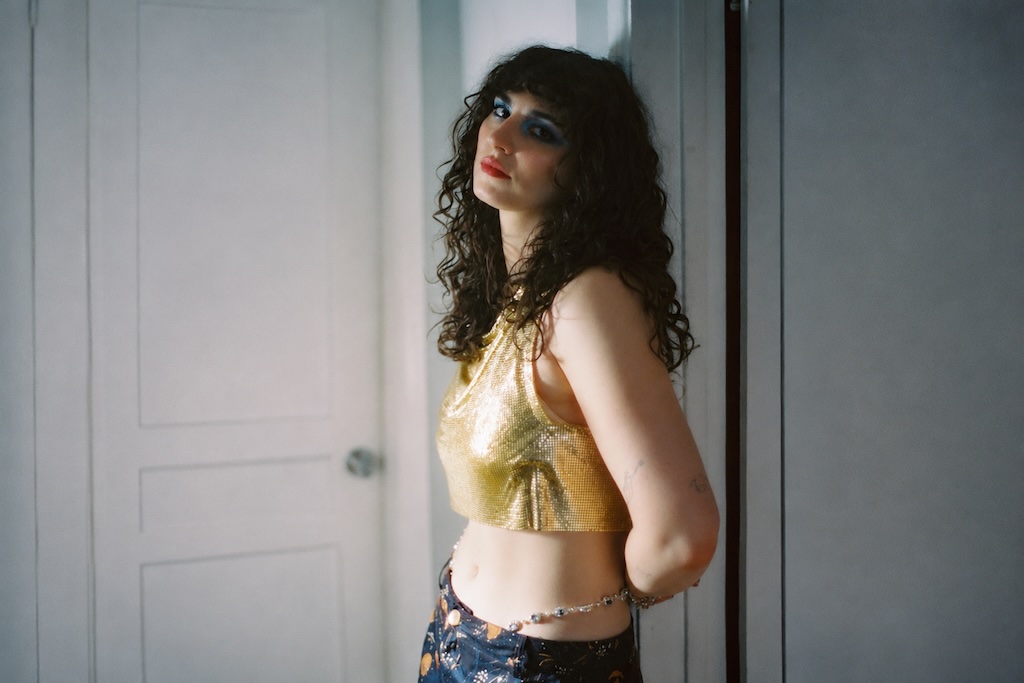
For months, Rachel Bochner knew there was an album she needed to write. She also knew she couldn’t bring herself to begin.
The end of a long-term relationship had left her with feelings that didn’t fit neatly together. There was grief for someone she loved and guilt over the pain involved. At the same time, she was beginning to feel the excitement and freedom of understanding her queer identity more clearly. Happiness felt difficult to acknowledge when it existed alongside someone else’s hurt.
Rather than confront those emotions immediately, Bochner immersed herself in creating a visual world around her earlier EP, Lovergirl. When she eventually began writing the songs that would become I Guess A Sure Thing Couldn’t Go Down Gently, she wasn’t following a timeline or working towards a tidy explanation. She was trying to understand one feeling at a time.
The Brooklyn-based singer-songwriter describes the record as a dissection of a relationship’s ending. Across twelve tracks, she examines blame, shame, memory and the uneasy coexistence of loss and self-discovery. On “Fault Line,” she considers the temptation to cast herself as inherently destructive, a way of making a complicated situation seem simpler than it was.
Distance has changed how she sees that story. She can now recognise the ways she hurt someone without reducing a decade of love, friendship and shared experiences to the breakup. She can also accept that a relationship was no longer right for her without pretending it never mattered.
New York holds some of those memories. Bochner moved to the city in 2021, and its streets, bars and neighbourhoods have become attached to different periods of her life. The Lower East Side brings nostalgia for a younger version of herself. Midtown produces a much less comfortable reaction. These days, a good afternoon might be spent walking around Brooklyn with her partner, getting iced coffee or making something simply because she enjoys it.
In conversation with Good Hours, Rachel Bochner reflects on the long process of writing I Guess A Sure Thing Couldn’t Go Down Gently, the difference between honesty and privacy, and the compassion she has learned to extend to the person she was when it all began.
Good Hours / Music
Artist File — 2026
Artist
Spotlight
Good
Hours
Featured Artist / In Conversation
Rachel Bochner
Singer / Songwriter
“I could be devastated about the end of a relationship and simultaneously feel euphoric about discovering something fundamental about myself.”
Rachel Bochner / On Grief and Self-Discovery
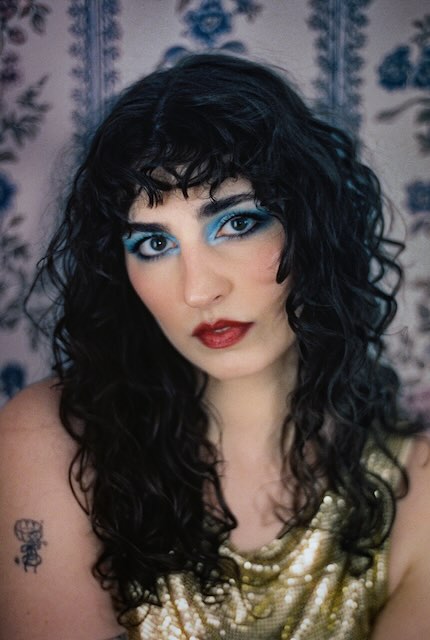
Finding a Way Into the Story
Good Hours: You’ve described this album as a dissection of how a relationship ended, rather than simply a breakup album. When you began writing, were you consciously trying to understand what had happened, or did that understanding only emerge once you could see the songs together?
I began the writing process knowing that I needed to understand what had happened, but I had absolutely no idea where to start. It was obvious there was an album to be made about the breakup, but for months I couldn’t actually bring myself to talk about it. The experience felt too big, too painful, and too complicated to distill into a three minute song. I’m avoidant by nature, so naturally I chose to spend my time creating an entire visual world around my previous EP, Lovergirl, at first instead. When I finally started writing, I wasn’t necessarily following a chronological narrative or trying to construct some cohesive explanation. I was just trying to make sense of individual feelings and experiences. The bigger picture started revealing itself as I wrote more songs. I began to recognize recurring themes, contradictions, and patterns in the way I was processing everything. I think that’s why I describe the record as a dissection.
Good Hours: The record holds grief and joy at the same time — losing an important relationship while beginning to recognise another part of yourself more clearly. Did writing help you become more comfortable with the idea that two apparently contradictory feelings can both be completely true?
Definitely. One of the most difficult parts of that period was feeling like I wasn’t allowed to experience joy while someone I loved was hurting. There was this immense guilt attached to the excitement and freedom I was beginning to experience as I came into myself. It felt almost selfish to acknowledge how happy and affirmed I was feeling when the circumstances surrounding that realization had caused so much pain. Writing helped me understand that those feelings weren’t mutually exclusive. I could be devastated about the end of a relationship and simultaneously feel euphoric about discovering something fundamental about myself. Neither feeling invalidated the other. I spent a lot of time trying to make those emotions fit into a neat narrative, when the reality was that they were both happening all at once. Learning to sit with that contradiction was a huge part of the healing process.
Love Without a Villain
Good Hours: There’s a temptation after any relationship ends to construct a neat story about what happened and who was responsible. How has your version of that story changed with distance?
Where I am now in my healing process, I’ve certainly moved away from the idea that there needs to be a clear villain or a black and white explanation for everything that happened. Immediately after the breakup, I was so consumed by guilt that I was willing to take on almost all of the blame. It felt like the only way to make sense of the pain I’d caused. If I could convince myself that I was inherently destructive, then at least there was an explanation and outlet for me to direct my grief.
With distance, I’ve been able to recognize how much more nuanced the situation was. I can take accountability for the ways I hurt someone without reducing an entire decade of love, friendship, and shared experiences to the way it ended. I can also acknowledge that the relationship wasn’t right for me anymore without rewriting history and pretending it was never meaningful.
Good Hours: “Fault Line” plays with the idea that calling yourself inherently destructive can actually be easier than confronting all the nuance of hurting someone you love. What made you recognise that you were telling yourself that story?
The concept behind Fault Line was born of me looking for a way to make sense of the damage without having to confront all of the individual decisions and circumstances that contributed to it. There’s something strangely comforting about believing you’re just fundamentally broken or destructive. It gives you a predetermined excuse for all of your wrongdoing. You don’t have to unpack the nuances or acknowledge that sometimes people make mistakes, change, or hurt each other despite having good intentions. We examined that mindset in “Fault Line” and, honestly, poke some fun at it. The idea of being an inherently destructive force, doomed to cause devastation wherever you go, is obviously a pretty dramatic way to interpret your own life. But when I was in the depths of my guilt and shame spiral, it was convincing. We wanted to explore that tendency to turn yourself into a caricature of the worst thing you’ve ever done rather than allow yourself to exist as a complicated person.
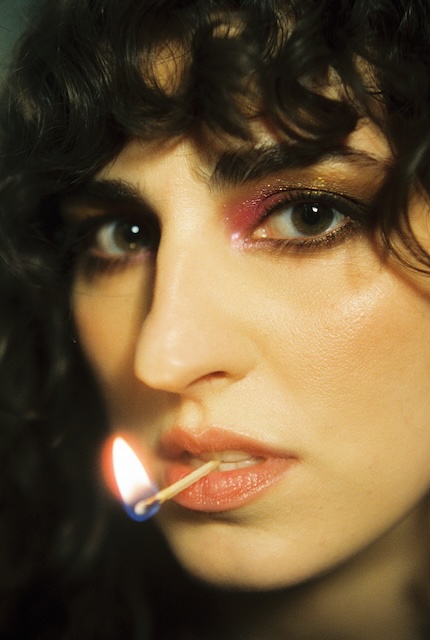
What Happens When a Memory Becomes a Song
Good Hours: Your songwriting is often remarkably candid. Where is the boundary between honesty and privacy for you? Is there ever a detail that makes a song better but that you decide belongs to your life rather than to the listener?
I feel like the boundary is less about whether something is personal and more about whether sharing it feels necessary to the story I’m trying to tell. I guess I might be categorized as an oversharer, and I love writing with people who make me feel comfortable enough to really dig into the details. But I also recognize that there are other people involved in some of these experiences, and their stories aren’t necessarily mine to tell in their entirety. In my experience, writing about such deeply personal experiences can go two ways. Sometimes, the more detailed, specific, and brutally honored the lyrics I’m writing feel, the more widely relatable listeners seem to find it. Or other times, a little ambiguity can create just the right amount of space for people to bring their own experiences into the song too.
Good Hours: Once something deeply personal becomes a song, does it still feel like a memory belonging to you, or does repeating it in studios, rehearsals and eventually onstage begin to turn it into something else?
It definitely starts to become something else, which is one of the most interesting parts of releasing music. Initially, these songs were mostly for me to process experiences I didn’t really know how to talk about otherwise. But once you put something into the world, people begin attaching their own memories and experiences to it, and it transforms, shapeshifts, and evolves into this amazing collective thing.
I’ve always loved the community aspect of music and the idea that something you create in a very isolated, personal moment can eventually become a shared experience. That is especially meaningful with this record because so much of it deals with feelings that can be incredibly isolating. Hearing someone connect with a song in a way I hadn’t anticipated is a reminder that the emotional experience can be universal (whether the circumstances are completely different or scarily similar).
Good Hours: The album has a deliberately unwieldy title: I Guess A Sure Thing Couldn’t Go Down Gently. What do you like about allowing something to be messy or excessive rather than reducing it to the neatest possible phrase?
The title is perfectly representative of the entire album. It’s a mouthful, it’s a little dramatic, and it doesn’t necessarily offer a neat explanation of what you’re about to hear. I love that. The experience that inspired this record wasn’t concise or particularly graceful, so why would the title be neat and easily digestible?
The City and the Versions of Ourselves
Good Hours: You live in Brooklyn, and places have appeared repeatedly in your work — from “Brooklyn” to “Your Manhattan.” What role does the city play in your memory? Are there streets, rooms or neighbourhoods that become inseparable from particular periods of your life?
New York is such an important part of my life and an incredibly significant backdrop for so many of my experiences. I moved into the city in 2021, and so much of my adult life, my identity, and my journey as an artist have unfolded here. This city is inspiring in so many ways – it’s genuinely just really easy to write about. Certain streets or bars or neighborhoods hold really visceral emotional memories for me. You can walk past a venue or a street corner years later and suddenly feel transported back to a very particular version of yourself. The LES makes me nostalgic for a younger and dumber version of myself. I can’t step foot in Midtown with my stomach churning.
Good Hours: After spending so much time writing about upheaval, guilt and self-discovery, what does an ordinary good day look like for you now — one where you’re not necessarily trying to turn anything into a song?
Sleeping in, getting a really good iced coffee, wandering around Brooklyn with my partner, seeing friends, and doing something crafty or creative that has absolutely no professional objective attached to it. I love a good DIY project, and I am always looking for an excuse to make something. I’m working on learning how to let myself enjoy things without needing to turn every experience into something productive. Shoutout to my therapist <3
A Little More Grace
Good Hours: If you could sit beside the version of yourself who was just beginning to write this record — without warning her about what was coming or telling her how everything turns out — what do you think you would understand about her now that she couldn’t yet understand about herself?
What a sweet and painful question. I think I would understand just how hard she was trying. I spent a lot of time being frustrated with myself for not recognizing certain things sooner, for being avoidant, for making decisions that ultimately hurt people, and so on. I have a lot more compassion for that version of myself now. She was navigating something incredibly complicated without the perspective or language I have today. I don’t think she needed someone to tell her what to do. I think she needed someone to tell her that she wasn’t a bad person for changing, and that eventually she would be able to look back on everything with a little more grace.
Bochner doesn’t offer a tidy account of what happened. She is more interested in recognising the different truths that can exist within one experience: that a relationship mattered, that leaving it caused pain, and that changing was still necessary.
Her present-day pleasures are smaller and less burdened with explanation. An iced coffee. A walk around Brooklyn. A project made for no reason beyond the pleasure of making it. After an album spent examining the past, there is something quietly significant about learning to let an ordinary day belong to itself.
Frequently Asked Questions About Rachel Bochner
Who is Rachel Bochner?
Rachel Bochner is a Brooklyn-based singer-songwriter whose music explores relationships, identity and personal change through candid indie-pop songwriting.
What is Rachel Bochner’s album called?
Her album is titled I Guess A Sure Thing Couldn’t Go Down Gently. It contains twelve tracks.
What inspired I Guess A Sure Thing Couldn’t Go Down Gently?
The album grew out of the end of a long-term relationship and Bochner’s evolving understanding of her queer identity. It examines grief, guilt, joy and the difficulty of holding conflicting emotions together.
What is Rachel Bochner’s song Fault Line about?
“Fault Line” examines the temptation to describe yourself as inherently destructive after hurting someone, rather than confronting the more complicated circumstances and decisions behind a breakup.
How does Rachel Bochner approach privacy in her songwriting?
Bochner considers whether a personal detail is necessary to the story she wants to tell. She also recognises that experiences involving other people may contain parts that are not hers to share.
When did Rachel Bochner move to New York?
She moved to New York City in 2021. Streets and neighbourhoods across the city have since become closely connected to different periods of her life and songwriting.
What does Rachel Bochner enjoy outside music?
She enjoys spending time with her partner and friends, walking around Brooklyn, getting iced coffee and working on DIY or craft projects without a professional goal.
https://www.instagram.com/rachelbochner
https://www.facebook.com/rachelbochner
https://www.youtube.com/@rachelbochner