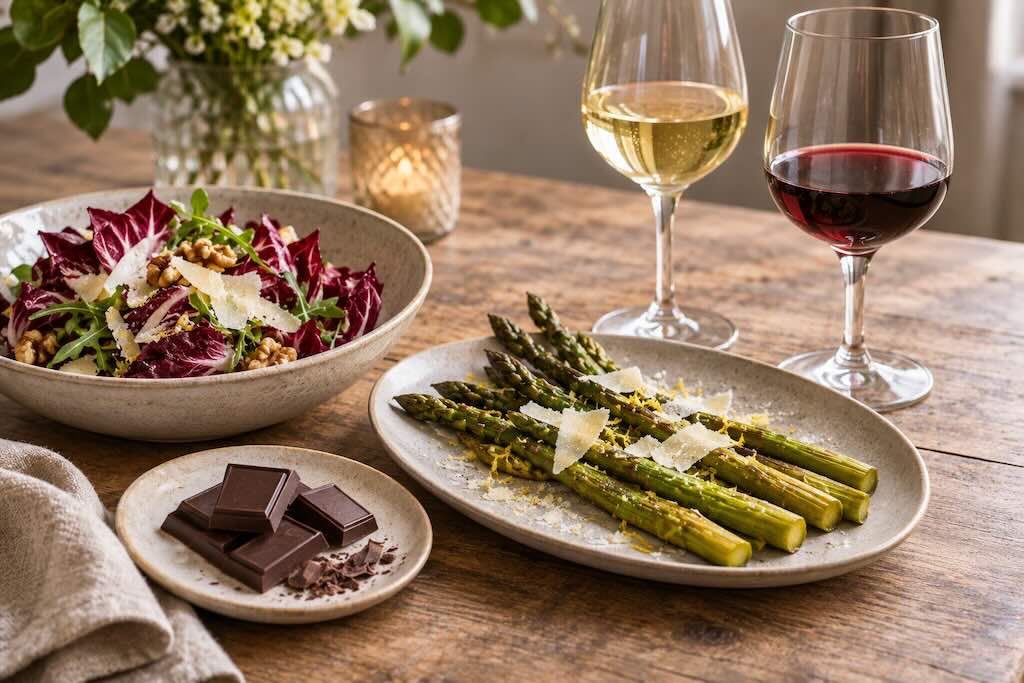
Radicchio, asparagus, chicory and dark chocolate have something in common: they can make an otherwise enjoyable glass of wine taste unexpectedly harsh. A red that seemed smooth on its own may become drying alongside bitter greens. A crisp white that works beautifully with dinner can taste thin beside a square of dark chocolate.
The solution isn’t to avoid these foods or spend more on wine. It’s to understand what bitterness does to a pairing. Once you know when to choose a fresh white, a gentle red or a sweeter dessert wine, planning a meal becomes considerably easier.
The quick guide: which wine goes with which bitter food?
| Bitter food | Wine to try | Why it can work |
|---|---|---|
| Radicchio or chicory salad | Grüner Veltliner or dry Riesling | Fresh acidity and little tannin keep the pairing lively. |
| Rocket (arugula) | Dry rosé or Sauvignon Blanc | Refreshing styles avoid adding heavy tannins to peppery greens. |
| Asparagus | Unoaked Sauvignon Blanc | Herbal and green flavours can complement the vegetable. |
| Artichokes | Muscadet or a restrained, dry white | A relatively neutral wine is a sensible starting point for a difficult ingredient. |
| Roasted Brussels sprouts | Dry rosé or lighter Pinot Noir | These can suit the sweeter, browned flavours developed during roasting. |
| Dark chocolate | Ruby Port or Banyuls | Sweetness and concentrated fruit help balance cocoa bitterness. |
These are starting points, not guaranteed matches. Dressings, sauces, roasting and the sweetness of the finished dish can change which wine works best.
Why bitter foods make wine difficult
Bitterness doesn’t behave like richness. A fatty dish can soften the impression of tannins in red wine, but bitter ingredients may make those same tannins more noticeable.
Tannins are compounds associated with the drying, sometimes slightly bitter sensation found in many red wines. Pair a strongly tannic wine with bitter greens and the combined effect can become unpleasant.
Virginia Tech’s food-and-wine guidance explains that bitter foods and bitter wines do not cancel each other out. That’s why a low-tannin white or rosé is often a safer choice for bitter vegetables than a powerful young red.
Bitter greens: choose freshness over power
A salad of radicchio, endive or rocket may have a pronounced bitter edge, particularly when the leaves are served raw. Rather than choosing a full-bodied Cabernet Sauvignon, begin with a dry white such as Grüner Veltliner, Riesling or Sauvignon Blanc.
These wines can bring acidity and freshness without the firm tannins that make some reds difficult companions for bitter greens.
Pay attention to the dressing, too. Lemon juice, vinegar, mustard, cheese and toasted nuts can influence the pairing as much as the leaves themselves. A salad dressed with lemon and olive oil may call for something different from radicchio served with roasted walnuts and a creamy dressing.
If you prefer red wine, consider a lighter, fruit-forward style such as Gamay. Avoid assuming that every Pinot Noir will be gentle: its structure depends on how and where it was made.
Asparagus: the preparation matters
Asparagus has a reputation for being difficult with wine, but the way it’s cooked makes a considerable difference.
For steamed asparagus with a little lemon, a young, unoaked Sauvignon Blanc is a sensible choice. Its green, herbal character can complement the vegetable rather than compete with it.
Roasting or grilling introduces browned flavours that offer more pairing possibilities. A dry rosé can work particularly well, while a lighter red may suit a more substantial roasted asparagus dish.
Decanter’s asparagus pairing guide makes this distinction between fresh, grilled and roasted preparations, also considering richer accompaniments such as hollandaise.
Artichokes: keep the wine uncomplicated
Artichokes present a different challenge. Compounds in the vegetable can alter how sweetness is perceived after eating it, making certain wines taste unusual.
Rather than opening an expensive bottle, try a straightforward dry white such as Muscadet. A restrained wine is less likely to compete with the artichoke’s distinctive flavour.
Consider the entire dish. Artichokes served with a lemon dressing, melted butter or a creamy dip may pair differently. When entertaining, it’s worth choosing a versatile wine for the meal rather than trying to find a perfect match for one difficult vegetable.
Dark chocolate: sweetness changes the rules
Dark chocolate contains bitter cocoa compounds, but unlike vegetables, it usually contains sugar and substantial richness. That changes the pairing.
A dry red wine can seem sharper or more astringent after sweet chocolate. The familiar combination of dark chocolate and a powerful Cabernet Sauvignon therefore isn’t always the success people expect.
Ruby Port or Banyuls, a sweet fortified wine from southern France, are more dependable starting points. Their sweetness and concentrated fruit flavours can complement dark chocolate without making the wine seem excessively dry.
Le Cordon Bleu’s chocolate pairing guidance recommends choosing a wine sweeter than the chocolate, with sweet fortified wines among its suggested matches for dark varieties.
Cocoa percentage matters, but so do added ingredients. Chocolate containing berries, orange peel, caramel or nuts may favour a different wine from a plain, intensely bitter bar. Start with the chocolate you actually plan to serve rather than choosing by percentage alone.
Four pairing mistakes worth avoiding
- Choosing a heavily tannic red for bitter greens. The combined bitterness can make both the food and wine less enjoyable.
- Ignoring how vegetables are cooked. Raw radicchio and roasted radicchio may need different wines because roasting changes the flavour of the dish.
- Serving very dry wine with sweet chocolate. The chocolate’s sugar can leave the wine tasting unexpectedly sour or thin.
- Pairing only the main ingredient. A lemon dressing, rich sauce or sweet glaze can have more influence than the vegetable itself.
An easy way to choose wine for a dinner with bitter ingredients
If you’re serving bitter greens or asparagus as part of a larger meal, begin with a fresh, dry white or rosé. These are versatile choices that generally avoid the tannin problem.
If dark chocolate is the dessert, don’t feel obliged to keep pouring the dinner wine. A small serving of Ruby Port or another suitable sweet wine may be a better match.
The aim isn’t to find one perfect bottle for every ingredient. It’s to avoid combinations that exaggerate bitterness and choose wines that make the food more enjoyable. Once you understand that distinction, even the more challenging vegetables become easier to serve with confidence.