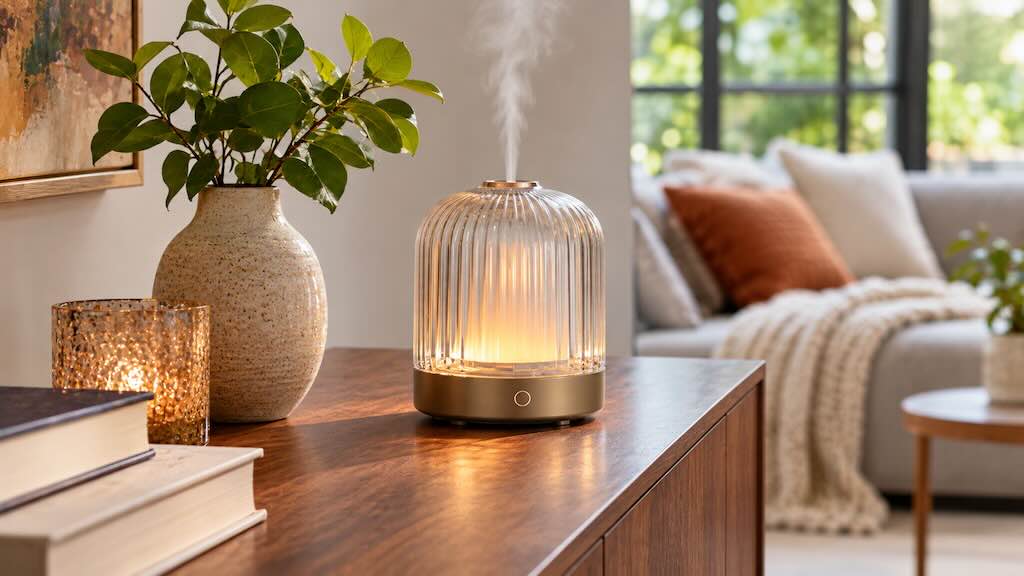
There are several ways to make a home smell inviting. A candle on the coffee table, fresh flowers in the hallway, or a reed diffuser tucked onto a shelf can all add something to a room. Waterless scent diffusers offer a more automated approach: fragrance released at chosen intervals, without filling a tank or adding drops of oil to water.
It’s an appealing idea, especially if you enjoy home fragrance but don’t want another small appliance that needs constant attention. Some models are rechargeable, some plug into an outlet, and others offer timers or app controls.
But the convenience raises a reasonable question. Are waterless diffusers genuinely better than traditional alternatives, or simply a more expensive way to make a room smell nice?
What exactly is a waterless scent diffuser?
A waterless diffuser releases fragrance without mixing it into a reservoir of water. That sounds straightforward, but the category includes different technologies.
Some devices use nebulization, dispersing fine droplets of fragrance or essential oil into the air. Others use fans, evaporation, or automatic spraying. The term “waterless” describes what the device doesn’t need, not necessarily how it works.
Traditional ultrasonic diffusers work differently. They use water and ultrasonic vibrations to create a mist, often with a few drops of essential oil added according to the manufacturer’s instructions.
Neither type is automatically the better purchase. A waterless model may offer stronger or more convenient fragrance delivery, while an ultrasonic diffuser can be an appealing option for someone who prefers a water-based mist and wants to choose compatible essential oils.
One distinction is important: a waterless scent diffuser is not a humidifier, an air purifier, or a way to remove unpleasant odors at their source. Its primary purpose is to add fragrance.
What makes waterless diffusers appealing?
The obvious advantage is convenience. There is no water tank to fill before every use, and many devices allow you to choose when and how frequently fragrance is released.
That can be particularly useful in a living room or entryway where you want a consistent, subtle scent without thinking about it throughout the day.
Timers are worth paying attention to. A diffuser that runs only during the hours you’re home may use less fragrance than one operating continuously. Adjustable intensity is useful, too, because the amount of scent that feels pleasant in a spacious living room could be overwhelming in a small bedroom.
There’s also a design consideration. Some modern diffusers resemble decorative glass bottles or small speakers rather than conventional appliances. If the device will remain visible on a shelf or sideboard, its appearance may matter almost as much as its controls.
The hidden expense is what you put inside
A diffuser’s purchase price tells only part of the story. Fragrance refills are an ongoing expense, and not every device accepts the same liquids.
Some systems use proprietary fragrance cartridges. Others accept particular oils or refill bottles. Even a refillable device may require a specific formulation, so it’s important not to assume that any perfume or essential oil will work.
Consider the cost over a year. A $90 diffuser requiring a $35 refill every two months would cost approximately $300 during the first year, including the device. That is only a hypothetical example, not a prediction of any model’s actual consumption.
Fragrance use depends on the settings, hours of operation, and product design. A large bottle doesn’t automatically guarantee good value if the device releases fragrance frequently.
Before buying, find out how much a compatible refill costs, whether it’s readily available in the United States, and whether the manufacturer provides a realistic estimate of how long it lasts under clearly stated conditions.
A closer look at two different approaches
Waterless home fragrance isn’t one uniform product category. These two devices illustrate different approaches to automated scenting. Their specifications come from their manufacturers; neither has been independently tested by Good Hours.
EterLove Plume Pro: A rechargeable, refillable option
The EterLove Plume Pro Automatic Scent Diffuser takes a relatively straightforward approach to room fragrance. It has a rechargeable 2,000 mAh battery, USB-C charging, five mist modes, and a daily timer adjustable from one to 24 hours. Seven-color ambient lighting is also included.
Its stated fragrance capacity is 500 ml, or approximately 16.9 fluid ounces. The manufacturer lists the device at $89.99, reduced from $139.99, at the time of writing in November 2026.
The appeal is clear: cordless placement, automatic scheduling, and a generous fragrance capacity without a water reservoir. It may suit someone who wants fragrance at particular times of day without relying on an app.
There are limitations. The manufacturer advertises up to three months of fragrance use on the lowest setting, but actual consumption hasn’t been independently verified. The product page also currently displays no customer reviews for the Pro model.
EterLove sells a 500 ml Plume fragrance refill for $32.99, but its published refill listing identifies compatibility with the standard Plume diffuser. Buyers considering the Pro should confirm the exact refill compatibility before ordering.
Another consideration is the return policy. The manufacturer offers support for eligible product problems within 30 days, but excludes returns based simply on a change of mind or personal preference. That’s a meaningful drawback for a fragrance purchase, where liking the scent is essential.
Pura 4: App-controlled home fragrance
The Pura 4 smart fragrance diffuser takes a different approach. Rather than using a large refill bottle, it works with the company’s fragrance vials and allows users to adjust scent intensity, set schedules, and switch fragrances through an app.
The manufacturer lists the device at $49.99 and describes it as suitable for medium-sized rooms. According to Pura, one fragrance vial typically lasts around three weeks when used for six to eight hours daily at medium intensity. Actual duration varies.
Pura’s appeal lies in its scheduling controls and extensive fragrance selection. The trade-off is dependence on the brand’s compatible vials and connected system. The device may cost less initially than some rechargeable alternatives, but replacement fragrances determine the longer-term expense.
Neither approach is inherently superior. EterLove emphasizes a large-capacity, rechargeable format; Pura emphasizes app control and a dedicated fragrance ecosystem. The right choice depends on how you want to use fragrance at home and what you’re comfortable spending to maintain it.
Waterless vs. ultrasonic: Which should you choose?
| Consideration | Waterless diffuser | Ultrasonic diffuser |
|---|---|---|
| Water required | No | Usually yes |
| Fragrance source | Compatible oils, cartridges, or fragrance solutions | Water with compatible essential oils |
| Maintenance | Refill and clean fragrance-delivery components as directed | Empty and clean water reservoir regularly |
| Fragrance intensity | Varies; some models provide more concentrated delivery | Varies; often produces a more diluted mist |
| Ongoing costs | Depend on refill pricing and consumption | Depend on oil use and replacement supplies |
| Best suited to | Scheduled or frequent room fragrance | People who prefer a water-based diffuser |
Waterless doesn’t mean maintenance-free. Fragrance residue can accumulate in nozzles or other components, while ultrasonic diffusers need regular reservoir cleaning. Follow the instructions for the specific device rather than assuming one cleaning method works for every model.
What about pets and fragrance sensitivity?
Fragrance is a personal preference, but it’s also something everyone sharing a room may be exposed to.
People with asthma, fragrance sensitivities, or respiratory concerns may find scented products irritating. A waterless diffuser should not be assumed to be safer simply because it doesn’t use water or heat.
Pet owners should be especially cautious. The ASPCA advises care when using essential oil diffusers around animals, particularly pets with breathing problems. It recommends avoiding essential oil diffusers in homes with birds because of their sensitive respiratory systems.
Keep fragrance liquids out of reach, provide ventilation, and consult your veterinarian before using scented oils around pets. Marketing descriptions such as “natural” or “clean” don’t establish that a fragrance is suitable for every household.
Five things worth checking before you buy
- Refill compatibility: Can you use different approved fragrances, or are you restricted to one brand?
- Running costs: What will six or twelve months of regular use realistically cost?
- Controls: Can you adjust the intensity and operating hours without unnecessary complexity?
- Maintenance: How often does the device need cleaning, and are replacement parts available?
- Return policy: Can you return the device if the scent, sound, or performance isn’t what you expected?
Are waterless scent diffusers worth the money?
For someone who enjoys having a lightly fragranced home every day, a well-designed waterless diffuser can be a worthwhile purchase. Timers, adjustable output, and the absence of a water tank make the experience convenient.
But convenience isn’t the same as value. A relatively inexpensive device can become costly if it requires frequent proprietary refills. And a powerful diffuser isn’t necessarily desirable in a small room or a household where fragrance isn’t universally welcome.
If you only occasionally want a pleasant scent, a reed diffuser or another simple option may be enough. If you enjoy experimenting with home fragrance and want it to run automatically, a waterless model becomes more interesting.
The best purchase isn’t necessarily the device with the largest bottle, the strongest mist, or the most settings. It’s one that delivers a scent you genuinely enjoy, at a cost you’re happy to maintain, without making your home more complicated than it needs to be.
Frequently asked questions
Do waterless diffusers use more essential oil?
Not necessarily. Consumption depends on the technology, intensity setting, and operating time. Some nebulizing models disperse undiluted oil, while other waterless systems use different fragrance formats. Check the manufacturer’s usage estimates.
Can you use any essential oil in a waterless diffuser?
No. Some devices accept specified essential oils, while others require compatible fragrance cartridges or solutions. Using an unapproved liquid may damage the device or create safety concerns.
Do waterless diffusers need cleaning?
Yes. Although they don’t have a water reservoir, fragrance-delivery components may need cleaning. Follow the manufacturer’s instructions for your specific model.
Are waterless diffusers better than candles?
They offer different experiences. Waterless diffusers provide automated fragrance without an open flame, while candles combine scent with visible light. Neither is automatically appropriate for every household, and both require attention to safe use.