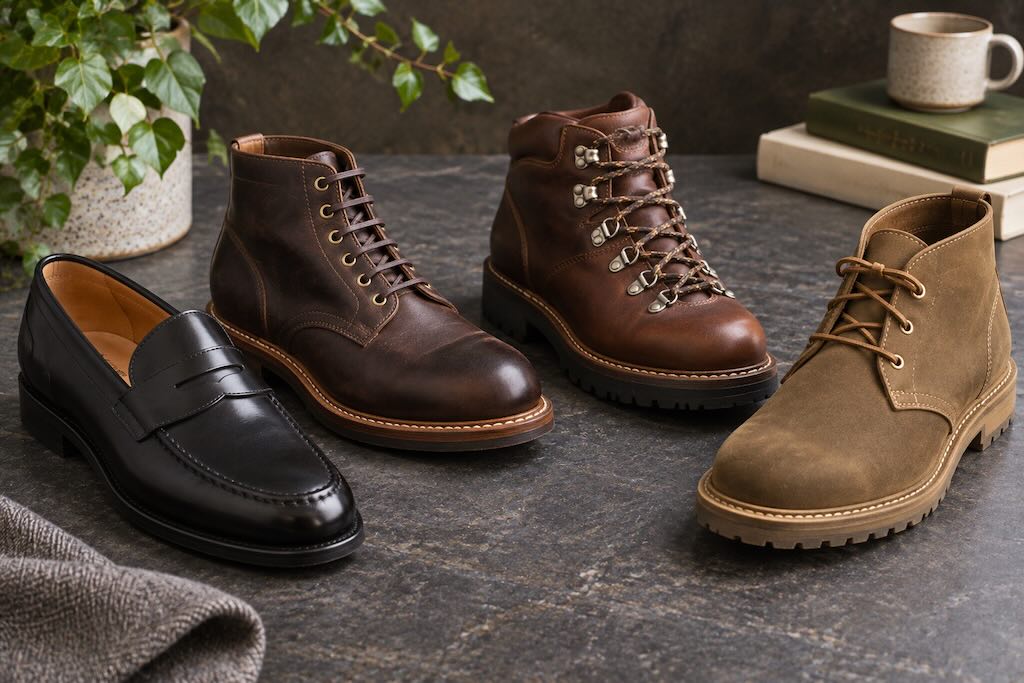
There are shoes you buy because you recognise the name, and shoes you discover because something about their design makes you look twice. Perhaps it’s the shape of a loafer, the leather on a boot or the knowledge that a manufacturer has thought seriously about how the shoe can be repaired.
Independent shoemakers offer an interesting alternative to the familiar luxury labels. Some work with specialist factories; others focus on particular constructions, traditional techniques or practical footwear that doesn’t follow seasonal fashion.
That doesn’t automatically make their shoes better. A beautifully made boot can still be uncomfortable, and a repairable sole means little if the shoe doesn’t fit. These four makers are worth discovering for different reasons, with prices and compromises that deserve as much attention as their craftsmanship.
Morjas: a loafer that doesn’t need a special occasion
Swedish footwear label Morjas combines Scandinavian restraint with traditional Spanish shoemaking. Its Penny Loafer, introduced in 2017, is a good introduction to the brand: a relatively slim silhouette that looks natural with tailored trousers but doesn’t seem out of place with jeans.
The shoes are made in Almansa, Spain, using Goodyear-welted construction. This method attaches the upper and sole through a welt, allowing a suitably equipped repairer to replace worn soles. The black calfskin version has a leather lining and single leather sole; rubber-soled versions are also available.
At 3,500 SEK, The Penny Loafer isn’t inexpensive. What makes it interesting is the combination of understated design, traditional construction and a price below many established luxury dress-shoe labels.
Who it suits: Someone building a versatile wardrobe who wants one pair of loafers for work, dinners and smarter everyday dressing.
What to consider: Fit is especially important with slip-on shoes. Morjas says this model runs approximately half a size large compared with conventional lace-up footwear. Leather soles also require more consideration in wet weather than rubber alternatives.
Worth the price? The construction and versatility make a reasonable case for the cost if loafers are already part of your wardrobe. If you rarely dress beyond trainers and casual boots, the purchase is harder to justify.
Explore The Penny Loafer at Morjas.
Grant Stone: traditional boots without the heritage mythology
American footwear company Grant Stone takes a practical approach to classic leather boots. Rather than presenting an elaborate story about generations of domestic manufacturing, it is transparent about producing its footwear in Xiamen, China.
The Diesel Boot is its straightforward plain-toe design, available in several leathers and finishes. The black Chromexcel version uses leather from Chicago tannery Horween, a Goodyear welt, leather lining, cork filling and a rubber outsole.
It’s an appealing combination for someone who likes substantial boots but wants something less overtly rugged than traditional workwear. The shape works with denim, heavier trousers and casual tailoring.
At $435 for the black Chromexcel version, the price reflects a considerable amount of traditional footwear construction. The brand also offers standard, wide and extra-wide fittings, which is a meaningful advantage for buyers who struggle with narrow fashion boots.
Who it suits: Someone who wears leather boots frequently, appreciates repairable construction and wants a relatively restrained everyday style.
What to consider: These are substantial leather boots, not lightweight trainers. Break-in comfort and fit will vary. Buyers outside the United States should also check shipping, returns and potential import charges before ordering.
Worth the price? The materials, construction and width choices offer a credible justification for someone who will wear them regularly. They are less compelling if you simply want the appearance of a leather boot and don’t value those details.
Explore the Diesel Boot at Grant Stone.
Velasca: Italian craftsmanship with a mountain influence
Italian label Velasca is known for footwear that draws on traditional shoemaking while keeping the designs approachable. Its Resegott boot takes a different direction from the familiar polished Oxford or Chelsea boot.
Inspired by mountain footwear, the Resegott has a broad, practical shape, smooth calf-leather uppers and a substantial Vibram rubber sole. The dark-brown version is made in Montegranaro, Italy, with suede-leather lining.
Its appeal is largely in the contrast: refined leather and Italian manufacture combined with the proportions of a rugged walking boot. It could be particularly interesting with corduroy, wool trousers or relaxed winter clothing.
The listed price is $660 on Velasca’s US storefront, placing it firmly in premium territory.
Who it suits: Someone drawn to Italian design who wants a distinctive cold-season leather boot rather than a conventional dress shoe.
What to consider: Despite the mountain-inspired design and Vibram sole, this shouldn’t automatically be treated as technical hiking equipment. Its leather construction requires appropriate care, and its chunky appearance won’t suit every wardrobe.
Worth the price? The Italian manufacture, materials and unusual design explain some of the premium. But this is the most difficult purchase to justify on practicality alone. Less expensive boots can handle ordinary winter wear, making the Resegott primarily a considered style choice.
Explore the Resegott at Velasca.
Jim Green: the practical boot with a different purpose
South African footwear maker Jim Green offers something refreshingly different from the polished language of luxury shoemaking. Its African Ranger is designed around practicality, with a broad shape, relatively simple construction and an appearance that makes no attempt to disguise its outdoor influences.
The boot has become one of the company’s recognisable designs. The Fudge leather version is listed at £165 through the UK store, considerably below the prices of the other footwear featured here.
Jim Green also connects the African Ranger range to a conservation initiative, stating that it donates a pair to a ranger for every ten pairs sold. It’s an interesting part of the brand’s identity, although buyers should treat that as the company’s stated programme rather than independent proof of impact.
Who it suits: Someone who values sturdy, casual footwear, prefers roomier fits and wants boots for everyday walking, travel or informal outdoor use.
What to consider: The broad toe shape and workwear appearance may feel too utilitarian for some. Different African Ranger versions have different soles and construction details, so buyers should compare the specific model rather than assume the entire range fits or performs identically.
Worth the price? For someone prioritising practical design over refinement, the African Ranger makes perhaps the clearest value argument in this selection. It offers an interesting alternative to more expensive casual leather boots, provided the fit and styling are right.
Explore the African Ranger range at Jim Green.
What makes an independent shoemaker worth supporting?
Small or independently operated brands aren’t automatically more ethical, more comfortable or better made than larger companies. The useful questions are more specific: where are the shoes manufactured, what materials are used, how are they constructed and can they be repaired?
Goodyear-welted construction can make resoling more practical, but repair costs and the condition of the upper still matter. Good leather can age attractively, yet it also needs cleaning and care. And no amount of craftsmanship compensates for a poor fit.
It’s worth checking return policies, local repair options and the real cost of ordering internationally. A shoe that seems reasonably priced on an American website may become considerably more expensive once delivery and import charges are included.
Of these four, Morjas offers the most straightforward route into smarter footwear, Grant Stone makes a convincing case for a substantial everyday boot, Velasca brings the strongest design personality, and Jim Green stands out for practical value.
The most worthwhile discovery, however, isn’t necessarily a new pair of shoes. It’s finding a maker whose approach matches what you actually need—and recognising when the shoes already in your wardrobe are doing the job perfectly well.