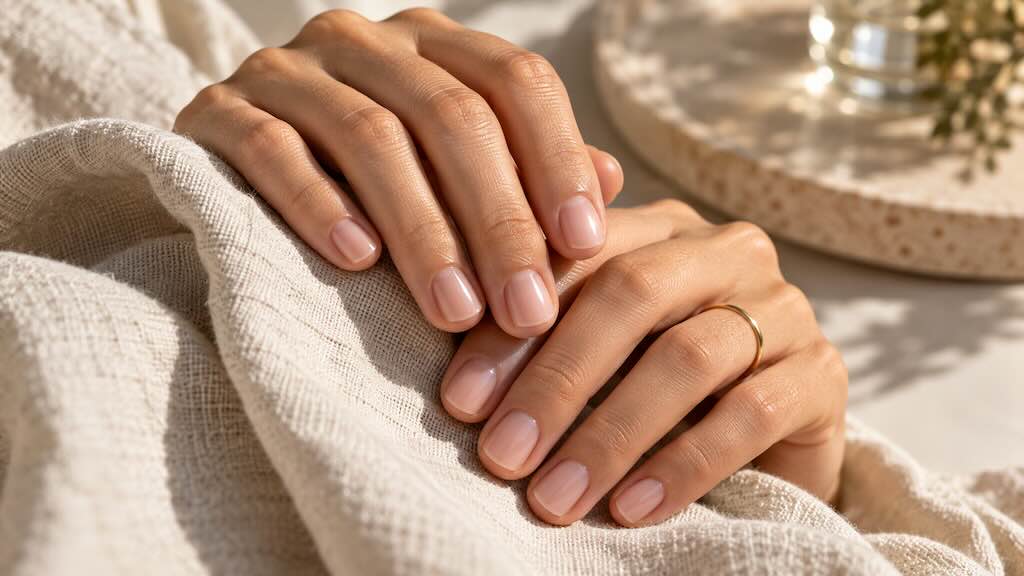
Short nails have a practical advantage: they are less likely to catch on clothing, get in the way when typing or break during everyday tasks. But keeping them short doesn’t automatically keep them in good condition.
A nail can be neatly trimmed and still peel at the edges. The skin around it can become dry and uncomfortable. A manicure that looked tidy on Monday may have developed a rough corner by Thursday.
The good news is that caring for short nails rarely requires an elaborate routine. A few careful habits can help prevent avoidable damage and keep nails looking neat, whether you prefer bare nails, clear polish or a darker colour.
Start with the right nail length
Short doesn’t have to mean cutting every nail down to the fingertip.
Leaving a small amount of free edge—the part of the nail that extends beyond the fingertip—can make it easier to shape the nail without cutting too close to the sensitive skin beneath it.
There is no ideal length for everyone. Someone who plays an instrument, works with their hands or regularly wears protective gloves may prefer very short nails. Others may find a slightly longer edge more comfortable.
Rather than trying to make every nail exactly the same length, consider the natural shape of each fingertip. Nail beds differ, and a small variation often looks more natural than cutting a longer nail excessively short to match a broken one.
How to trim short nails without damaging them
The way you cut your nails matters as much as how frequently you do it.
The American Academy of Dermatology recommends cutting fingernails almost straight across and slightly rounding the corners. This helps maintain a strong edge without leaving sharp points that catch on fabric or other surfaces.
For a simple trim:
- Wash your hands and make sure your nail tools are clean.
- Trim after a shower or bath, when nails are generally softer and easier to cut.
- Use sharp nail clippers or suitable nail scissors.
- Cut conservatively, following a mostly straight line across the nail.
- Use a nail file to soften the corners and smooth uneven edges.
- Apply hand cream after trimming.
Avoid digging beneath the nail or cutting so close that the fingertip becomes tender. If you feel discomfort, you’ve probably gone further than necessary.
Choose a shape that works with your natural nails
Short nails can look polished without an elaborate shape. In fact, simple outlines are often the easiest to maintain.
Rounded nails
A gently rounded shape follows the natural curve of the fingertip. It’s a practical option when nails are kept very short and there isn’t enough free edge for a more defined shape.
Squoval nails
Squoval nails combine a relatively straight edge with softly rounded corners. They can create a tidy outline without the sharp corners of a square manicure.
Soft square nails
A soft square shape can look attractive on short nails, especially when the nail plate is naturally broad. Keep the corners gently filed so they don’t catch.
Whichever shape you prefer, avoid filing deeply into the sides of the nail simply to create a narrower appearance. Work with the nail’s natural structure rather than trying to force a shape that doesn’t suit it.
File gently, especially if your nails split
A nail file is useful for maintaining short nails between trims. If an edge becomes rough, smoothing it promptly can stop it catching repeatedly on clothing.
Choose a file appropriate for natural nails and use light pressure. Filing gently in one direction can help avoid unnecessary stress on fragile edges.
If your nails are prone to peeling, resist the temptation to pull away loose layers. Doing so can remove additional material from the nail plate and leave the edge more vulnerable.
Frequent, aggressive buffing is another habit worth reconsidering. Buffing can temporarily make the nail surface look smoother, but it also removes some of the nail plate. Thin or fragile nails generally benefit from less abrasion, not more.
Moisturise your nails, not just your hands
Hand cream is often applied quickly, with most of the attention going to the palms and backs of the hands. The nails and surrounding skin deserve some of it too.
Frequent handwashing, cleaning products and dry weather can leave the skin around the nails rough and uncomfortable.
After washing your hands, work a little moisturiser around the nail folds and across the nails themselves. A fragrance-free hand cream or suitable ointment may be enough.
Cuticle oil is another option, particularly if you enjoy using it, but it isn’t essential. The important habit is regular moisturising rather than purchasing a particular nail-care product.
If your hands become very dry overnight, applying a richer cream before bed may help keep the surrounding skin comfortable.
Leave your cuticles alone
Neat nails don’t require removing the cuticles.
The cuticle helps protect the area between the nail plate and surrounding skin. Cutting or forcefully pushing it back can damage that barrier and increase the risk of infection.
The American Academy of Dermatology’s manicure safety advice recommends avoiding cuticle cutting and aggressive pushing.
If the skin around your nails looks dry, moisturise it rather than trying to remove it.
And if you develop a hangnail, don’t pull it off. Wash your hands and carefully trim the loose piece of skin with clean, appropriate tools without cutting into healthy skin.
Why short nails still peel and break
Keeping nails short can reduce the chance of catching and breaking them, but it doesn’t prevent every type of damage.
Repeated exposure to water, detergents and other cleaning products can contribute to nail weakness. Nails may also become more fragile through repeated manicures, rough removal of artificial coatings or frequent use of harsh products.
Some people naturally have more fragile nails than others. Age, certain medical conditions and other factors can also affect nail health.
If your nails repeatedly split or peel, begin by looking at what they encounter every day.
- Wear suitable protective gloves when washing dishes or using cleaning products.
- Dry your hands thoroughly after prolonged water exposure.
- Moisturise regularly, particularly after handwashing.
- Avoid using your nails to open packaging, scrape surfaces or pry objects apart.
- File rough edges before they catch and tear.
- Take a break from treatments that leave your nails noticeably thinner or more fragile.
These steps can help reduce avoidable damage, but they won’t correct every underlying cause of brittle nails.
Do nail strengtheners actually work?
Nail strengtheners are marketed for everything from peeling edges to nails that bend too easily. Their effectiveness depends on the formulation and the problem you’re trying to address.
Some products create a protective coating that temporarily makes nails feel harder or more resistant to minor damage. That doesn’t necessarily mean they improve the underlying structure of the nail.
In fact, a nail that becomes too rigid may be more likely to snap rather than flex.
The American Academy of Dermatology cautions that some strengthening polishes can increase nail stiffness and potentially contribute to breakage.
Before buying a treatment, consider whether the problem is dryness, repeated physical damage or something that needs professional assessment.
A strengthening product isn’t a substitute for protecting nails from everyday wear.
Can you wear polish on short nails?
Absolutely. Short nails work with almost any polish colour, and they don’t need additional length to look intentional.
A sheer pink or translucent nude can give a soft, understated finish. Deep red, burgundy, navy and dark brown can look equally good, creating a more defined outline.
If you prefer a simple manicure, apply thin coats according to the polish instructions and allow sufficient drying time. Avoid painting onto the surrounding skin.
A suitable base coat may help reduce staining from strongly pigmented colours, while a top coat can improve the appearance and durability of the finish.
But polish is optional. Clean, neatly shaped natural nails can look just as finished.
What about gel manicures?
Gel polish can provide a long-lasting finish, but it isn’t necessary for healthy-looking short nails.
Repeated application and removal may contribute to peeling, brittleness or thinning, particularly when the nail surface is aggressively filed or the coating is pulled off.
Gel products can also cause allergic reactions in some people. Proper application, suitable curing equipment and careful removal matter.
If your nails have become fragile after repeated manicures, consider allowing time without gel or artificial coatings and seek professional advice if damage persists.
For further guidance, see the American Academy of Dermatology’s advice on reducing nail damage from artificial nails.
A simple weekly routine for short nails
Keeping short nails neat doesn’t require a manicure appointment every week. A few minutes of attention at home may be enough.
Every day
- Wash and dry your hands thoroughly.
- Apply hand cream, including around the nails.
- Wear protective gloves when needed.
- Avoid picking at peeling nails or hangnails.
Once or twice a week, as needed
- Check for rough edges or small splits.
- File gently to maintain a comfortable shape.
- Trim nails when they become longer than you prefer.
- Remove chipped polish carefully rather than peeling it away.
You don’t need to trim nails on a fixed schedule. Their growth rate and your preferred length will determine how often they need attention.
When nail changes need more than home care
Not every nail problem is caused by a poor manicure or a lack of moisturiser.
Persistent splitting, changes in nail thickness, unusual discolouration, pain, swelling or a nail lifting away from the skin can have several causes.
If you notice a new or persistent change, particularly a dark streak or changing pigmentation, arrange an assessment with a healthcare professional rather than covering it with polish.
The Mayo Clinic’s guide to healthy fingernails provides additional information about nail care and changes that warrant attention.
Frequently asked questions
How do you keep short nails looking neat?
Trim them to a comfortable length, gently file rough edges, moisturise the surrounding skin and avoid picking at peeling nails or cuticles. Polish isn’t necessary for a tidy appearance.
What is the strongest shape for short nails?
A mostly straight edge with slightly rounded corners is a practical choice recommended by dermatologists. Rounded and softly squared shapes can also work well when they follow the natural nail.
Why do my nails peel even though they’re short?
Repeated water exposure, cleaning products, physical damage and manicure habits can contribute to peeling. Persistent or unexplained changes should be assessed by a healthcare professional.
Should you use cuticle oil every day?
Cuticle oil can help condition dry skin around the nails, but it isn’t essential. Regular application of a suitable hand cream or moisturiser may be sufficient.
Healthy short nails don’t need much
The appeal of short nails is their simplicity. They can look polished without being elaborate and feel comfortable through the ordinary demands of the day.
Good care comes down to a few things: trimming without cutting too close, keeping edges smooth, protecting nails from repeated damage and moisturising the surrounding skin.
You can add colour if you enjoy it, or leave your nails bare. Neither choice determines how well you’re caring for them.
The goal isn’t a manicure that stays perfect. It’s nails that remain comfortable, tidy and resilient enough for everyday life.