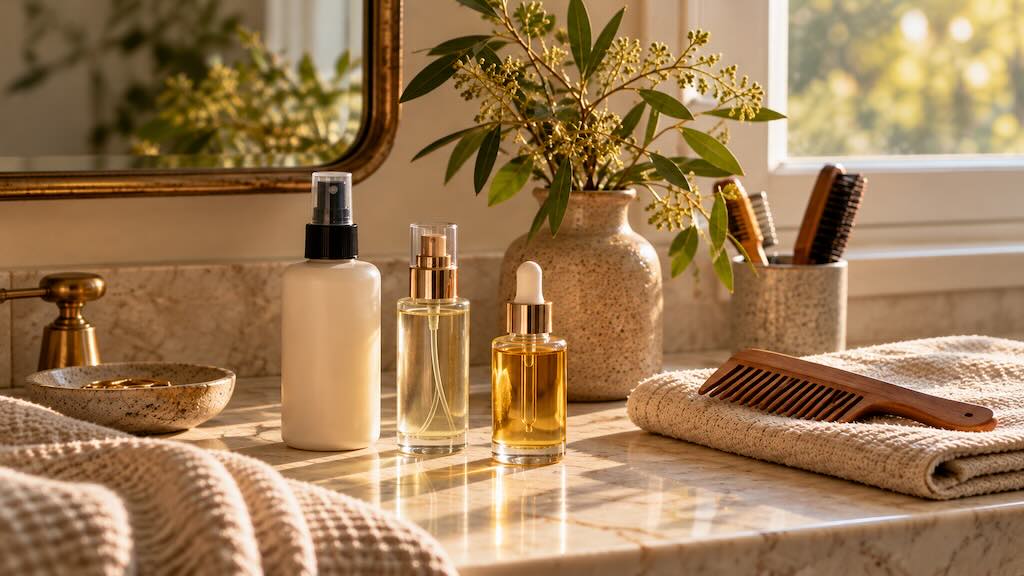
There is a particular kind of confusion that happens in the hair-care aisle. You pick up a bottle of serum promising smooth, glossy hair. Beside it sits a hair oil promising almost exactly the same thing. Both claim to tame frizz, soften dry ends and make your hair look healthier.
One might cost considerably more than the other. Neither makes it especially clear why you would need both.
The difference between hair serum and hair oil is not always as straightforward as the packaging suggests. Some serums contain oils. Some products labelled as oils are blends of plant oils, silicones and other conditioning ingredients. Two bottles with different names may do remarkably similar jobs.
Before buying either, it helps to look past the label and consider what you actually want to change about your hair.
Hair serum vs hair oil: What’s the difference?
Hair serum is a broad name for a product designed to deliver a particular cosmetic or care benefit. When people compare serum with oil, they usually mean a finishing serum: something applied to the lengths to smooth flyaways, improve shine or make the hair feel more polished.
These serums often contain silicones or other conditioning ingredients that spread across the hair’s surface, helping strands feel smoother and reducing friction. Some formulas are particularly lightweight, while others are richer.
Hair oil, meanwhile, may contain plant oils such as argan, coconut or jojoba oil, sometimes blended with other ingredients. Depending on the formulation, an oil can soften the lengths, add shine, improve manageability or be used as a treatment before washing.
But the distinction is not absolute. A product sold as hair oil may contain silicones, and a serum may be largely oil-based. That is why the ingredient list and directions for use tell you more than the name on the front of the bottle.
| Hair serum | Hair oil | |
|---|---|---|
| Common purpose | Smoothing, shine and finishing | Softness, shine and conditioning |
| Typical formulation | Often silicone-based or a conditioning blend | Oil-based or a blend of oils and other ingredients |
| Useful for | Flyaways, rough-looking lengths and a polished finish | Dry-feeling lengths and ends that benefit from extra softness |
| When to apply | Depends on the formula; often damp or dry hair | Depending on the product, before washing or as a finishing step |
| Main caution | Too much can leave hair coated or limp | Too much can make hair look greasy or separated |
Neither category is automatically better. The most useful choice depends on your hair, the result you want and the particular formula.
Choose a serum if frizz and flyaways are your main concern
Imagine your hair feels reasonably soft after washing, but a few hours later the surface looks fuzzy. Small hairs stand away from the rest, and the ends lose their smooth appearance.
A lightweight finishing serum may be a sensible first choice.
Many serums are designed to spread easily through the hair, creating a smoother feel without requiring a large amount of product. They can be useful when you want a neater finish after blow-drying or simply want to settle a few flyaways.
Start with a small amount, distribute it between your palms and apply it where the hair needs smoothing. For many people, that means the mid-lengths and ends rather than the roots.
Don’t assume every serum is suitable for use with heated styling tools. If you blow-dry, straighten or curl your hair, choose a product specifically labelled for heat protection and follow its instructions. A glossy finish alone doesn’t establish that a formula provides adequate protection.
And remember that not every serum belongs on the hair lengths. Scalp serums and targeted treatments are different products with different purposes.
Choose an oil if your lengths need extra softness
Hair oil may be more appealing when the problem isn’t simply how your hair looks, but how it feels.
Perhaps your ends feel rough between washes. Perhaps your hair is thick, curly or coarse and benefits from a richer finishing product. Or perhaps you want to experiment with applying an oil before shampooing.
Different oils behave differently, and so do different hair types. Coconut oil, for example, has been studied for its interaction with the hair fibre, but those findings shouldn’t be extended automatically to every oil or every commercial blend.
In its guide to hair oiling, Cleveland Clinic explains that oiling may suit some hair types better than others. Dry, coarse or tightly curled hair may benefit, while fine, straight hair can become weighed down by richer oils.
For a finishing application, begin with a very small amount on the ends. You can add more if necessary, but removing excess oil usually means washing your hair again.
Also, oil doesn’t need to be applied to the scalp to benefit the lengths. If you have dandruff, scalp irritation or another scalp condition, don’t assume an oil treatment will help. Some scalp conditions can be aggravated by oiling.
What if you have fine hair?
Fine hair can make the difference between a good product and too much product particularly noticeable.
A formula that gives thick hair a soft, glossy finish may leave finer strands looking flat or separated. That doesn’t mean fine hair can never benefit from oil. It means the amount and texture matter.
If your main concern is flyaways, try a lightweight serum designed for fine hair. If the ends feel dry, a tiny amount of a light oil or oil-based serum may be enough.
Apply the product to the areas that need it rather than distributing it automatically from root to tip. Give yourself time to see the result before adding more.
Fine hair doesn’t necessarily need more bottles. It often needs a lighter hand.
What about thick, curly or colour-treated hair?
Thick, curly and textured hair can have very different care needs, but some people with these hair types find that richer conditioning products help the lengths feel softer and more manageable.
An oil may be useful as a finishing step, particularly on dry-feeling ends. A serum can also help with shine or flyaways, depending on the desired finish.
For colour-treated or heat-damaged hair, neither product should be mistaken for a complete repair treatment. Oils and serums may temporarily improve the feel and appearance of damaged lengths, but they cannot permanently rejoin split ends or undo every form of structural damage.
Gentle washing, appropriate conditioning and reducing unnecessary heat are still important. The American Academy of Dermatology’s hair-care guidance recommends choosing products suited to your hair type, using conditioner and limiting excessive heat.
When neither serum nor oil is what you need
Sometimes the real problem is that your hair tangles easily after washing, feels difficult to comb or needs more conditioning before styling.
In that case, a leave-in conditioner may be more useful than either a finishing serum or an oil.
Leave-in conditioners are designed to remain on the hair, improving slip and manageability. They can make detangling easier and help reduce the friction that contributes to breakage.
The American Academy of Dermatology recommends leave-in conditioners or detanglers as one way to help limit breakage, split ends and frizz, particularly when hair is fragile.
If your hair already feels soft and manageable after using a leave-in conditioner, you may not need a separate serum or oil at all.
Can you use hair serum and hair oil together?
Yes, but being able to use both doesn’t mean you need to.
Some people prefer a serum for smoothing and a little oil on particularly dry ends. Others find that one well-chosen product does everything they want.
Before layering products, check what is already in the formula. A serum containing oils and silicones may provide much the same finish as a separate hair oil.
If you want to try both, begin with small amounts and follow the individual directions. Some products are designed for damp hair, some for dry hair and others for use before shampooing.
There is no universal rule that serum must always come before oil, or that oil must always be the final step.
How to tell when you’re using too much
Hair products can create their own problems when you use more than your hair needs.
The ends begin to look separated rather than smooth. The lengths lose movement. Hair feels coated, sticky or unusually heavy. You add another product to correct the result, and the problem gets worse.
When that happens, the answer may be to use less rather than buy something new.
Try reducing the quantity, applying the product only to the ends or using it less frequently. If your hair feels better after washing and becomes heavy again once you apply your finishing products, that is useful information.
Be careful with products around the hairline, too. The American Academy of Dermatology notes that oils in certain hair-care products can contribute to breakouts on the forehead and along the hairline.
More shine doesn’t always require more product. Sometimes a smaller amount gives a better result.
The easiest way to choose
Before buying another bottle, think about what bothers you most on an ordinary hair day.
- Flyaways or a rough-looking finish? Start with a lightweight smoothing serum.
- Dry-feeling ends that need softness? Consider a small amount of hair oil or a richer conditioning serum.
- Fine hair that becomes greasy easily? Choose a light formula and apply sparingly, whatever the label says.
- Thick or curly hair that benefits from richer products? An oil may be worth trying, especially on the lengths and ends.
- Tangles and difficulty combing after washing? Try a leave-in conditioner before adding another finishing product.
These are starting points, not rules. Hair texture, previous colouring, styling habits and the formulation itself all affect how a product performs.
And if the product you already own gives you the result you want, there is no particular reason to replace it because something else has become popular.
Frequently asked questions
Is hair serum better than hair oil for frizz?
A lightweight smoothing serum is often a useful first choice for flyaways and surface frizz, particularly if you want a polished finish without much weight. Some oils can also smooth frizz. The best option depends on the formula and your hair type.
Should hair oil go on wet or dry hair?
It depends on the product. Some oils are intended for use before washing, while others are formulated for damp or dry lengths. Follow the directions on the bottle rather than assuming every hair oil works the same way.
Can hair serum repair damaged hair?
Some serums can improve manageability, reduce friction and temporarily smooth the appearance of damage. However, an ordinary cosmetic finishing serum cannot permanently repair split ends. Products marketed for specific damage-related benefits should be assessed according to their ingredients and supporting evidence.
Do you need both hair serum and hair oil?
Not necessarily. Many products combine smoothing and conditioning ingredients, so one may be sufficient. Try the product that best addresses your main concern before deciding whether another step is useful.