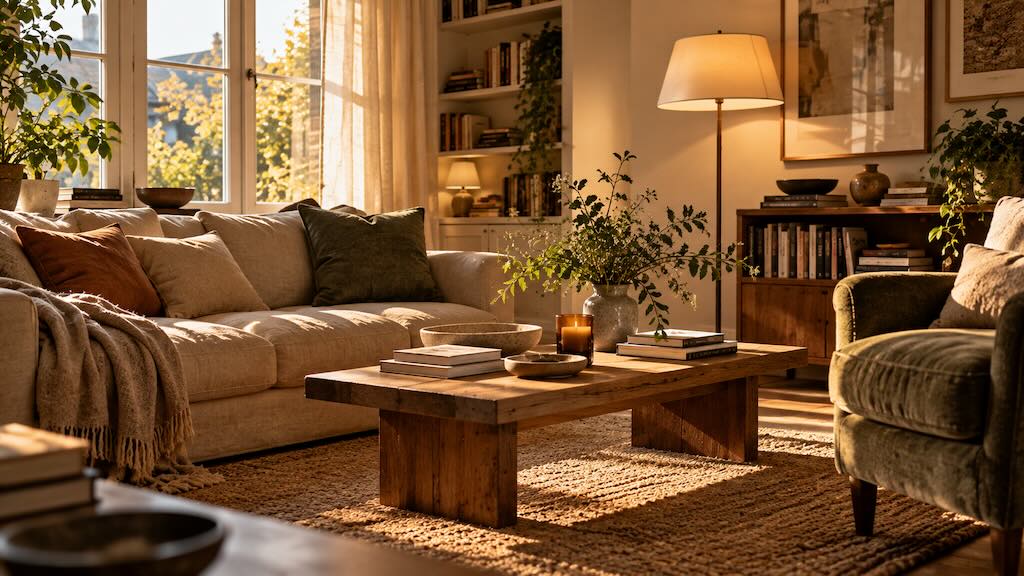
The sofa has been in three different positions. The armchair has returned to the corner where it started. A side table that seemed unnecessary last month is back beside the window. Nothing is particularly wrong with the living room, but it never quite feels finished.
There are rooms we settle into and rooms we keep trying to solve. The second kind can be frustrating because every change seems promising at first. The furniture looks better from the doorway. The rug finally sits straight. The lamp gives off a softer light. Then, after a few evenings, the familiar feeling returns.
Perhaps the room needs something. Perhaps it needs less. Or perhaps we’ve become so accustomed to looking for improvements that we’ve forgotten what it feels like simply to live in it.
When a room looks right but doesn’t feel right
A photograph can tell you whether the colours work together, whether the furniture is balanced and whether the room has an appealing atmosphere. It can’t tell you how it feels to sit there on a Tuesday evening.
That distinction matters.
A living room might look beautiful from one angle while making everyday movement awkward. The coffee table sits too far from the sofa. The reading lamp is on the wrong side of the chair. The television catches reflections from the window. There is nowhere convenient to put a cup of tea.
These aren’t decorating failures. They’re small disagreements between how a room looks and how it is used.
Before moving anything, pay attention to the moments when the room bothers you. Is it uncomfortable when several people are sitting together? Does it feel exposed at night? Is there a corner you avoid because it is too dark?
A specific problem is much easier to address than the general feeling that something needs changing.
The furniture keeps moving, but the problem stays
Rearranging furniture can be satisfying. A familiar room becomes unfamiliar for an afternoon. The view from the sofa changes. A forgotten corner suddenly has a purpose.
Sometimes that’s enough. A room that has felt stale for months can become pleasant again without buying anything.
But moving furniture doesn’t solve every problem.
If the sofa is uncomfortable, placing it against another wall won’t change how it feels to sit on. If the room lacks useful lighting, turning the armchair towards the window may only help during the day. If there are too many objects competing for space, a new arrangement may simply redistribute the clutter.
It helps to separate the room’s appearance from its practical difficulties. A layout problem calls for a different solution from a storage problem. Poor lighting is not the same as too much furniture.
Once you know which one you’re dealing with, you may discover that the sofa can stay exactly where it is.
The room you imagine isn’t always the room you need
Living rooms carry a surprising number of expectations. They’re supposed to be comfortable enough for a quiet evening, attractive enough for visitors, practical enough for everyday life and orderly enough to look presentable without much effort.
Sometimes we also expect them to resemble the rooms we save in photographs.
Those images can be useful for noticing colours, materials and arrangements we like. But they rarely show the less photogenic details of living: the charging cable beside the sofa, the blanket that never stays folded, the book left open on the armrest.
A room arranged for a photograph has a different purpose from one arranged for an ordinary evening.
Consider where you actually sit. Not where you intended to sit when you bought the furniture, but where you end up. Perhaps the expensive armchair is rarely used because it faces away from everyone else. Perhaps the corner of the sofa nearest the lamp has become the most comfortable place in the house.
Those habits are useful information. A living room should make room for them rather than continually asking you to behave differently.
Start with the light
Before changing the furniture, try changing the lighting.
A room that feels flat in the evening may simply rely too heavily on one overhead fixture. The same space can feel more comfortable with a table lamp beside the sofa, a floor lamp near a reading chair or a small light on a shelf.
The position of the light matters as much as the lamp itself. A bright bulb visible from the sofa can create glare. A lamp placed behind a chair may illuminate the wall beautifully while leaving a book difficult to read.
Try switching off the ceiling light and using only the smaller lamps for an evening. Notice which areas feel comfortable and which disappear into darkness.
You may find that the furniture arrangement was never the real issue. The room simply looked and felt different once the sun went down.
A room needs somewhere for the eye to rest
Not every surface needs an object. Not every corner needs a chair, plant or basket.
When a room feels unsettled, it’s tempting to add something that might bring it together. Another cushion to connect the colours. A side table to fill a gap. A picture above a piece of furniture that looks too bare.
Occasionally, the better adjustment is to remove something.
Take a few smaller objects out of the room and put them somewhere safe for a week. Leave the larger furniture in place. The change may reveal that a shelf was too crowded or that several decorative pieces were competing for attention.
Empty space doesn’t have to be a sign that a room is unfinished. It can make the objects you care about easier to notice.
A favourite chair, a painting or a well-made wooden table often needs very little around it.
The temptation to buy the missing piece
There’s often an imagined object that will finally make the living room work. The right coffee table. A larger rug. A better lamp. The armchair you’ve been considering for months.
Sometimes that object genuinely is missing. A room without enough seating or useful storage may need another piece of furniture.
But buying something before understanding the problem can create another arrangement to solve.
A larger coffee table may make the room feel crowded. A new armchair may interrupt the route to the window. A rug that looked perfect online may turn out to be too small for the furniture around it.
Before spending money, try describing exactly what the new object is supposed to improve. If the answer is only that the room will look more complete, give yourself time to reconsider.
Living with an empty corner for a while is rarely a serious problem. Buying furniture that doesn’t fit can be.
Let the room stay the same for a while
There is a point at which adjusting a room stops being useful.
The furniture works. The lighting is comfortable. There’s enough space to move around. The things you use regularly are within reach. Yet the room still invites another small change.
It may be worth resisting that invitation.
Leave the furniture where it is for a few weeks. Don’t buy anything for the room. Notice what you genuinely miss and what you stop thinking about.
A room becomes familiar through use. You learn where the afternoon light falls, which seat is warmest in winter and where visitors naturally put their bags. Small routines develop around the furniture.
Constant rearranging can interrupt that familiarity before it has a chance to settle.
Of course, homes change. Furniture wears out, households grow and the way we use a room shifts. There will always be reasons to move things around.
But a living room doesn’t have to be a continuing project.
Some evenings, the most satisfying thing you can do for the room is turn on a lamp, sit down and leave everything where it is.