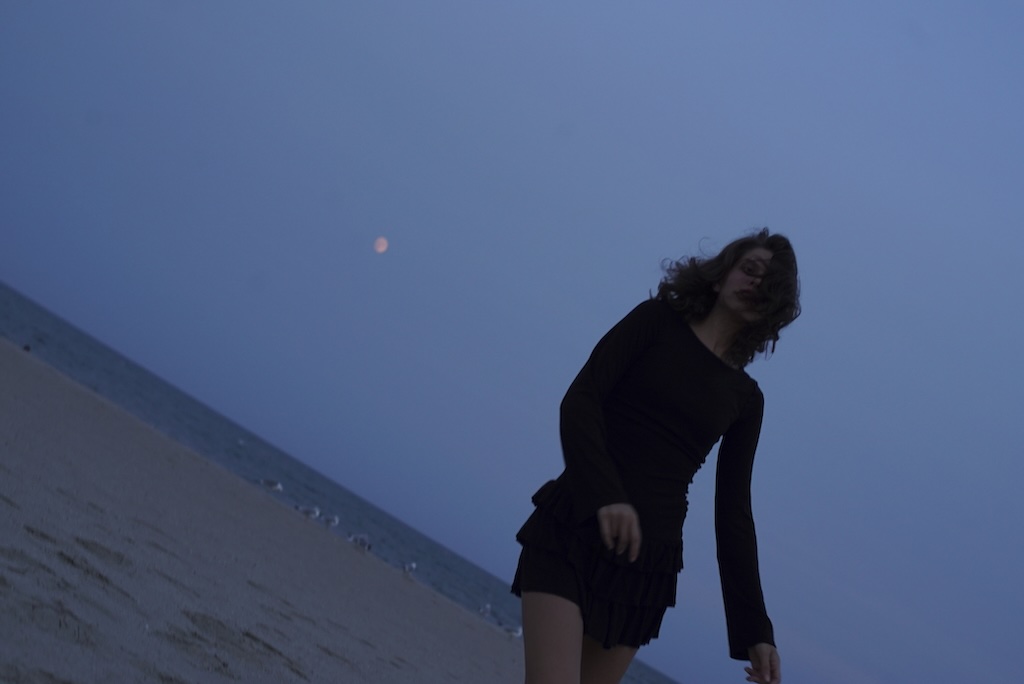
At 13, Sarah Smith was listening to CHVRCHES and imagining a version of herself who might be a little bolder. She was a shy, introverted teenager growing up in suburban New Jersey. The band’s commanding vocals and expansive synths gave her somewhere to put feelings she wasn’t yet ready to act on.
She remembers one song in particular, “By the Throat,” and the confidence she heard in Lauren Mayberry’s voice. The music offered a kind of permission to imagine another self, even if everyday life felt considerably quieter.
Smith had already spent years expressing herself through movement. She began dancing at four and later worked on professional projects involving the Brooklyn Nets and Nickelodeon. Dance taught her how to inhabit someone else’s creative vision. Songwriting, she discovered, asked something different of her: to decide what she wanted to say.
Now making music in New York City, Smith is exploring that difference through pop songs that leave room for emotional uncertainty. Her single “Point of No Return” examines the strange experience of wanting someone close while resisting the very intimacy you’re asking for. In the lyrics, she moves between “I” and “she,” as though watching her own behaviour from a distance.
The song took shape with her twin brother Jason, who helped refine its melodies and lyrics, and producer Carlos Ruiz, whose work with Smith has helped her translate those feelings into sound. Its busy pre-chorus gives way to a more restrained chorus, allowing the central emotion to sit in the open.
In conversation with Good Hours, Sarah Smith talks about the humour in recognising her own contradictions, the music that helped her imagine who she might become, the familiarity of writing with her brother and why an ideal day away from New York might simply involve a book and some time outdoors.
Good Hours / Music
Artist File — 2026
Artist
Spotlight
Good
Hours
In Conversation
Sarah Smith
Singer-Songwriter / New York City
“Songwriting has challenged me differently, pushing me to tell my own stories and confront feelings more directly.”
Sarah Smith / On Finding Her Voice
Watching Yourself From a Distance
Good Hours: In “Point of No Return,” you divide the narrator into an “I” and a “she,” almost as though you’re watching yourself from outside. Where did that idea come from, and did writing about yourself at a distance make it easier to explore feelings that might have been uncomfortable to address directly?
It was definitely more instinctive than intentional. I think referring to myself as “she” was a subconscious way of creating some emotional distance. It allowed me to explore certain feelings from a different perspective, some of which I didn’t fully understand until the song spelled them out for me.
Good Hours: The song revolves around wanting to be chosen while simultaneously resisting the closeness you’re asking for. What interests you about the moments when our behaviour seems to contradict what we genuinely want?
I think contradictions are what make a story interesting. We as humans don’t always behave in ways that align with what we want, and I find that cognitive dissonance a compelling and honest way to explore songwriting.
Good Hours: You’ve described the song as being for the “anxious-avoidant girlies.” There’s humour and self-awareness in that phrase, but also something quite vulnerable. How do you find the balance between making fun of your own patterns and taking the feelings underneath them seriously?
I don’t think there’s a “balance” per se that I’m consciously trying to strike. It feels natural to joke about things that might otherwise feel scary or a little too real. On the other side of the coin, I think you have to acknowledge something seriously before you can make light of it, don’t you think?
From Movement to Words
Good Hours: You began dancing when you were four and eventually performed professionally. Did spending so much of your life expressing yourself through movement change the way you understand emotion, especially now that you’re trying to communicate through songwriting?
I don’t think dancing necessarily changed the way I understand emotion, but rather how I work through it. Dancing always came naturally to me because, in a way, I was a vessel for someone else’s emotions. Songwriting has challenged me differently, pushing me to tell my own stories and confront feelings more directly, which I still find challenging but also incredibly rewarding. On the other hand, dancing has absolutely informed my sense of musicality and melody, which in turn informs so much of my lyric writing.
Good Hours: There’s a difference between performing a character onstage and recognising that we sometimes perform versions of ourselves in relationships. Has your background as a dancer made you more conscious of that distinction?
To be honest, I don’t think dance has to do with that. I think we’re all performing different versions of ourselves to some extent.
The Music That Made Room for Possibility
Good Hours: You grew up loving the dramatic, maximalist pop of the Tumblr era. What did that music give you as a teenager that perhaps the quieter or more realistic parts of everyday life couldn’t?
I was a pretty shy, introverted kid, and that kind of music gave me something to connect with during my coming-of-age years. I remember listening to “By the Throat” by CHVRCHES when I was 13. The main lyric is “I’ll take this thing by the throat, and walk away,” — and at that age, I was taking absolutely nothing by the throat, haha. But it was exciting to imagine a version of myself capable of that. Between the conviction in Lauren Mayberry’s voice and the SYNTHS, that music gave all those “what ifs” a place to exist.
Writing With Someone Who Knows You
Good Hours: Your twin brother Jason helped refine the lyrics and melodies. What’s it like writing about emotionally complicated experiences with someone who has known you since the very beginning? Are there things you can communicate to each other without explaining them?
I rarely have to explain much to Jason. He knows me so well, which makes him great at pushing ideas further and challenging what’s already there. The song was nearly fully formed when I brought it to him, and his melodic choices ended up informing some of the lyrics. Our focus is always on how we can make the song better. He just sort of worked his magic.
Good Hours: Carlos Ruiz encouraged you to experiment and develop your own voice. Can you remember a particular moment during that process when something you created finally felt unmistakably like you?
I think the hook itself felt unmistakably me from the beginning. It captured a sentiment I’d been trying to articulate for a while, and once that foundation was there, Carlos understood how to translate that feeling into the production through prior experimentation and listening to music I’d drawn inspiration from.
Good Hours: Your music combines very personal feelings with a deliberately cinematic, larger-than-life sound. When you’re working on a song, how do you decide which emotions need to be exaggerated and which are more powerful when they’re left relatively exposed?
That’s something Carlos and I often brainstorm together. He has a great instinct for push and pull, knowing when to go all out and when to strip things back. The pre-chorus is probably the busiest part of the song, with the production reflecting all that imagery. The chorus is more restrained, allowing the sentiment at the heart of the song to speak for itself.
The Hours Away From Music
Good Hours: You’re building your music career in New York, but I’m curious about the hours when you’re not rehearsing, writing or performing. What does an ordinary day look like when you feel most like yourself, without needing to present any particular version of Sarah to the world?
Hmm, my ideal day when I’m not making music would honestly involve touching grass somewhere in suburbia, haha. I grew up in the suburbs of New Jersey, so as much as I love the city I definitely seek out opportunities to escape it every now and then. It would probably involve waking up early, reading a book, just taking it easy — I can be spontaneous at times, but I’m really a homebody at heart.
Learning What She Wants to Say
Good Hours: You’re still at the beginning of releasing music under your own name. What has surprised you most about the difference between being a performer interpreting somebody else’s creative vision and becoming an artist who has to decide what she wants to say herself?
I think it’s really forced me, in a good way, to consider who I am and what I want to say. It’s one of the few professions where you’re constantly asked to examine yourself, not in an egotistical way, but as part of the creative process. What surprised me most was how much courage and discipline it takes to be honest with yourself and articulate your own experiences. That said, the love of the process and the reward of creating something meaningful make it all worthwhile.
For Smith, songwriting has made the act of performing more personal. Dance gave her a way to interpret feeling through movement; writing asks her to recognise and describe her own, even when they seem contradictory.
There is still room for the larger-than-life sounds she loved as a teenager. But the questions inside the songs are increasingly her own.
Listen to “Point of No Return” on all streaming platforms:
https://distrokid.com/hyperfollow/sarahsmith1/point-of-no-return
Sarah Smith: Frequently Asked Questions
Who is Sarah Smith?
Sarah Smith is a New York City-based singer-songwriter with a background in professional dance. She grew up in suburban New Jersey and began dancing at four years old before developing her own music.
What is Sarah Smith’s song “Point of No Return” about?
“Point of No Return” explores the contradictions of wanting emotional closeness while struggling to accept it. Smith uses shifts between first- and third-person narration to examine those feelings from a distance.
Who worked with Sarah Smith on “Point of No Return”?
Smith worked with her twin brother Jason, who helped refine the song’s lyrics and melodies, and producer Carlos Ruiz, who helped develop its sound.
How has dancing influenced Sarah Smith’s songwriting?
Smith says dancing shaped her sense of musicality and melody. She also sees an important difference between interpreting someone else’s emotions through dance and expressing her own experiences through songwriting.
What music influenced Sarah Smith growing up?
Smith was drawn to the dramatic pop and synth-driven music associated with the Tumblr era. She specifically remembers listening to CHVRCHES as a teenager and finding confidence in the music’s emotional intensity.
What does Sarah Smith enjoy outside music?
Although she enjoys living in New York City, Smith likes returning to quieter suburban surroundings. Her ideal day away from music includes waking up early, reading and spending time outdoors.
https://www.instagram.com/iamsarahhsmith