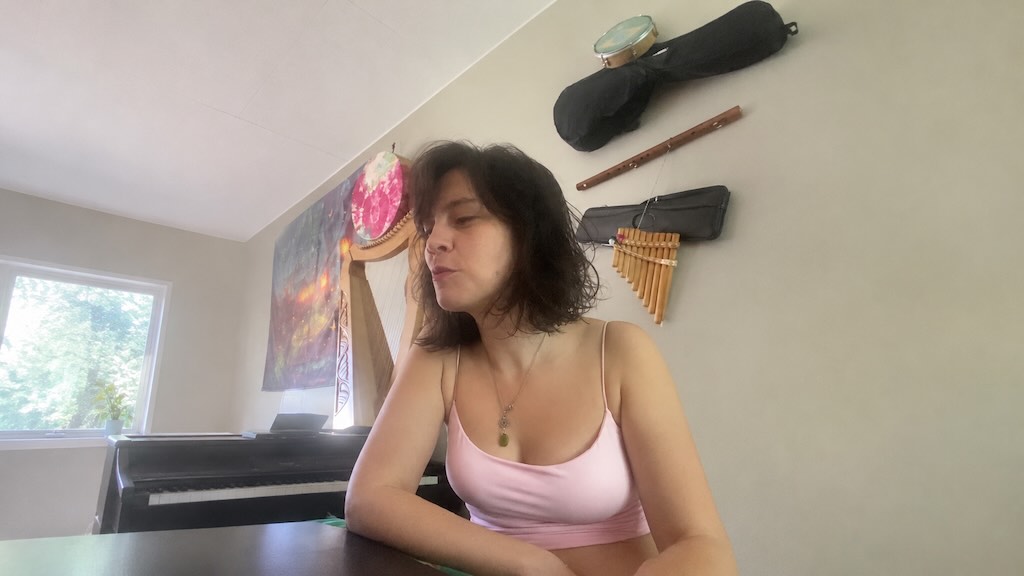
As a child in Brazil, Gabi Gal used to fill sheets of A4 paper with her name. She would write it again and again, practising an autograph for a future she could already imagine. Years later, after working as a songwriter, producer and ambient composer under other artistic identities, she returned to that name.
Getting there was not straightforward. Gal grew up surrounded by music, learning piano through a woman at her family’s church and attending free music theory lessons arranged by her mother. She sang in a city choir, wrote songs from an early age and developed a curiosity about music in other languages. Swedish songs eventually caught her attention. She taught herself the language and later moved to Sweden.
The first years were difficult. Away from her family, she found herself isolated and struggling with the cold and quiet. She remembers sitting at an old, untuned piano in her university building, playing and crying. Music remained present, even when she was trying to build a life through other kinds of work.
Gal went on to work in social initiatives, healthcare and therapeutic fields, while continuing to write and produce music. She developed ambient projects, including Namora and Zenquility, and gained experience as a signed artist. But singing under her own name felt different. It meant allowing people to hear something she had spent years keeping private.
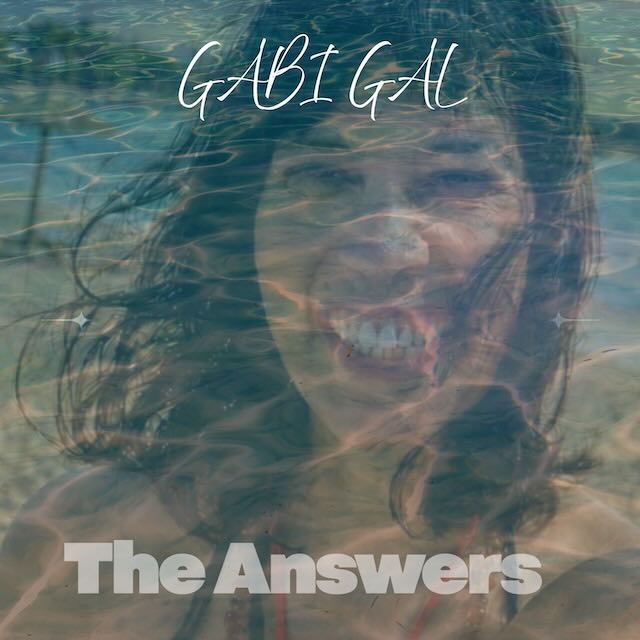
That changed during a songwriting workshop in Sweden. Asked to create a contemporary pop song, Gal found herself recording her own voice. The song became “The Answers,” which later gave its name to her 12-track album released in October 2026. She describes the experience as a turning point, one that made it difficult to return to the background.
In conversation with Good Hours, Gabi Gal reflects on the childhood memories behind her music, the challenges of starting again in another country, her relationship with independence and the creative instincts she is learning to trust.
Good Hours / Music
Artist File — 2026
Artist
Spotlight
Good
Hours
In Conversation
Gabi Gal
Singer / Songwriter / Composer
“After this song, I realized I could not hold back from sharing my voice anymore.”
Gabi Gal / On “The Answers”
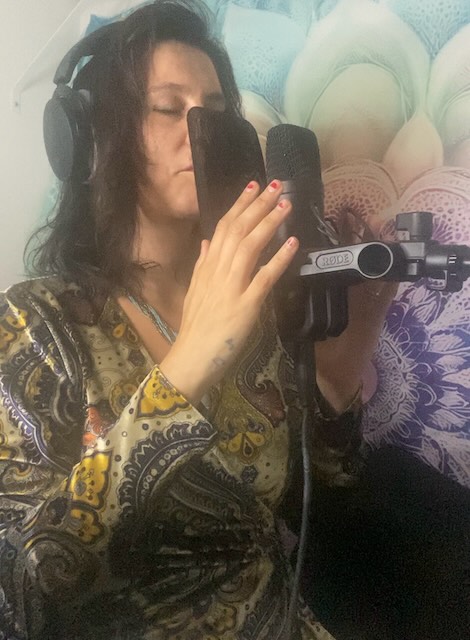
The Song That Brought Her Voice Forward
Good Hours: You mentioned that “The Answers” began during a songwriting workshop in Sweden, and that you initially had no intention of releasing it. Can you take me back to that workshop? What do you remember about the moment the song first began to take shape?
I remember I had to create a more pop and contemporary song, which I hadn’t been used to for years because I had been an ambient artist signed to a huge label. But that required me to use my voice in the recording, and I didn’t feel quite comfortable with it, though I really love singing in the dark!
I built the song really organically. I felt somewhat at that moment that it was part of my destiny to step up and start showing my voice. I’ve also been on a journey of mastering the mind for many years and helping people. Somehow I felt that, when you are on the right path in your life, you will just know. There will be no questions.
So the song “The Answers” came up, with that deep text and melody. Your fate is in your blood. Your fate is like the sea, already flowing through love… It’s here. You know. And you will know… It was a deep text, and it was deeply emotional. After this song, I realized I could not hold back from sharing my voice anymore.
Good Hours: You said sharing your singing voice was something you initially found challenging because you were more comfortable behind the scenes. What made that step feel difficult, and what eventually gave you the confidence to take it?
Everyone around me would support me being behind the scenes. When I started on my ambient music path and became good at it, I would bring up the idea of sharing my voice and I was turned down. It had also been many years since I’d been singing. Many years ago I stopped singing when I moved to Sweden. I felt my voice was never enough when singing in a group back in Brazil. It’s been a deep inner process for me to regain my confidence and share my message through my songs, and I am still working on that.
From Brazil to Sweden
Good Hours: You were born in Brazil and now live in Sweden. How have those two places shaped your relationship with music, and are there sounds, memories or everyday experiences from Brazil that still find their way into your compositions?
I grew up with music around me in Brazil and usually wrote songs from the age of six or seven. I won different writing and songwriting tournaments back then. I could have melodies and whole songs in my mind all the time until they were upsetting, and they would disappear when I went to write the songs.
My parents were always dancing, so I started to dance and got engaged with art when I was very little. I had an opportunity to join a theatre group and started to play the piano with a woman in a church my parents went to. After that, I joined a city choir and began touring with them.
My parents couldn’t afford formal music education. There was no music at school, and they couldn’t play any instruments, but my mother found a university teacher who was teaching the community free theory lessons for a couple of months. She would take me there every week when I was around 12, and I’d learn all I could about reading music and solfeggio. I would learn as much as I could in a few months and started writing some of my songs.
I would listen to music from many countries and in different languages in my early teens. I would meet friends from all over the world who shared music from different countries at that time. A Polish man living in Sweden had a lot of Swedish songs on a platform I was part of. I started listening to a lot of Swedish songs, and I loved the melodies and how Swedish sounded. That led me to learn Swedish on my own, then I moved to Sweden years later.
I was really sad during my first years in Sweden without my family. I had almost no friends and was isolated in the silence of the forest, in the cold weather where people would not even say hi to one another many times. I would go to the university building where I studied and sit by an old, untuned piano, play and cry.
For many years, I would just feel depressed, until I found my way back to music and life closed all other doors, even though I tried. I realized I had to embrace it fully. In Sweden, I was obliged to bring back my voice and my art, daring to hear myself and embrace my fate.
Making Room for Her Own Work
Good Hours: Your professional life has included healthcare, research, therapeutic work and human development. Was there a particular moment when you realised that music deserved a more central place in your life, rather than remaining something alongside your other work?
When I moved to Sweden, I was engaged with different kinds of social work and human development activities. I started different organisations to connect people and bring forward their talents and workplace inclusion, until I realized there was something deeper behind unemployment and separation amongst people.
That took me into health, therapy and research, looking behind the traumas each of them had gone through. During my education, I had to work on myself before taking in clients. That took me into an inner process of meeting and healing my own traumas and scars. It was many years of inner searching.
I was used to giving other people a voice, helping them say what they couldn’t or didn’t understand, or translating what groups couldn’t say, giving them hope. But then I realized I had to give that to myself, give my own voice more focus because it tended to be far back in the background.
And that came as a shock with a divorce I went through that broke me into pieces and a doctoral education where I felt I couldn’t voice my truth. The professor would instead tell me to go write new age stuff. I realized there was some deeper pain within myself with my self-expression.
Then I was working at the hospital and I would use my intuition and say things that came through to help some patients, using the intuitive gifts I’ve learned to embrace in my years of therapy. But that turned against me in a centralized organisation where only certain decided procedures and voices were allowed.
That made me feel I couldn’t work as a nurse, so I had to leave behind years of studies there and in doctoral education in health and intuitive coaching that I felt I couldn’t use to help people. I had a huge student loan and I didn’t know what to do because it felt like life was only throwing situations at me that I shouldn’t be in.
I started teaching music again in a school. Then I was threatened by a student and injured my hand against a door, so I couldn’t play for months. I sent a message to an old counselling client asking if she wanted help, but her sister knocked at my door threatening me, for something I hadn’t even done and didn’t even understand.
All these situations led me to not want to work openly anymore, only to choose whom I wanted to work with, people who respected and valued me, and I found medicine in my music and my art.
At that time, I wrote more than 20 books, channelled many paintings and started to write songs again. The songs would come at different times of the day and would not let me sleep if I didn’t allow them to come out.
Listening for the Answers
Good Hours: You’ve described “The Answers” as exploring love, vulnerability, self-discovery and the idea that some answers are already within us. Was there a particular experience or question in your own life that helped bring those themes together?
Yeah, it was a deep awakening moment when I received the whole lyrics for “The Answers.” Then I read it, and I realized the deeper message I received from the universe was that you can’t fight against your fate. Sometimes you don’t need to search for more answers. The answers are within you… I didn’t need to search for more answers in people, situations, education, etc. I started to accept my inner knowing, my gifts and my life path.
Good Hours: You create music across contemporary R&B, indie pop and ambient styles. When a new musical idea comes to you, how do you recognise whether it needs lyrics and a human voice or whether it might communicate more naturally through instrumental sound?
Music just comes to me, sometimes in a whole form with lyrics and melodies all at once, sometimes with melodies and background all in my head. But I can just channel lyrics as well if there is a deeper message that comes through me to be communicated further to people, and sometimes to myself too.
I think I just go with the flow without thinking what should or shouldn’t be, and allow what needs to come forth to do so without judgement. Then I hear what just came forth, like birthing a baby… and see, feel, experience and think, oh… that’s your name, that is what you want to say… that’s your gift to me and to others… It’s like talking to a whole different, independent kind of intelligence I was just an instrument for.
Same thing with my instrumental music. I just know, oh, this sound, and this sound now, now this feeling, and that, and it suddenly becomes something beautiful. And I am honoured to witness that. Different voices from nature coming together to say something in harmony, that touches me and others.
Good Hours: Your playlists bring together your own compositions and music by other independent artists. When you’re putting together a listening experience such as “Dreamy Forest,” what makes two pieces of music feel as though they belong together?
Nature is the master music producer. I just go with the feeling of what fits a natural picture of nature and the dream world. Some nature voices and sounds merge together like they just belong.
Returning to the Name Gabi Gal
Good Hours: You’ve worked under different artistic projects, including Namora and Zenquility, and have experience as a signed artist. What did those different creative identities allow you to explore, and what feels different about releasing music independently as Gabi Gal?
My first project was an independent project with a producer from the Caribbean. He came back to me a year later and asked how I was moving forward, and told me I had to take music production seriously. After that song, I felt so proud of myself, like a kid listening to my voice for the first time.
I was teaching music at secondary school and I decided to study music production seriously, so I did it day and night. I didn’t believe until later that this was actually a call to direct my path somehow. But I would receive intuitive, synchronistic messages whenever I went out. A record or a microphone or recording device would come up. I just knew I would have to go and record more.
I got this opportunity from a big label to be signed and start these artistic projects, which have been amazing opportunities to grow my ambient compositions and learn other genres, understand the music market and also see the quality of my music, which I didn’t believe in for a long time — until I ended up in huge editorial playlists within a few months after release, which shocked me at first.
I realized there was something special with my music that I could not just put into a box as I had all these years, and think it was just a hobby or something I did at home in the dark.
But to be honest, I am not giving someone credit here. I was working day and night, even on weekends, and my partners would not even know or align with growing together towards the direction my soul was calling.
In six months, my husband, who’s also a music producer with over 30 years of experience, would look and say, you have grown ten years ahead in six months compared to me.
I would feel happy, at the same time sad, because I wanted to grow together with the label, but they were not really putting in the work, communication and efforts to honour the same goals and respect my authenticity, who I am.
So it was a great opportunity, but I had to leave behind what did not allow me to grow and expand together. I’ve learned I needed equal and transparent partnerships.
So at that time, Gabi Gal came back. Gabi Gal came back to me because it’s been a childhood project. I used to practise writing my autograph hundreds of times on an A4 paper as a child with Gabi Gal on it. So this project was old, but few people knew about it.
And I’ve even heard from those who did know me to instead only focus on continuing the ambient path merely because “that was my biggest chance,” they said.
I love creating ambient music still. But something in my heart felt wrong about only following what people want to place me in. I feel I am bigger than that and cannot be put in a specific box.
Something in my heart told me I have to follow what my creative energy tells me to do, and not what other people who do not have my whole life vision believe I should be better off doing. I thought, they do not know God’s plan. And sometimes neither do I, but I follow.
So my independent path came, not as a clear choice, but because I had to allow myself to be fully myself with others.
When the Music Reaches Someone Else
Good Hours: You mentioned hearing from people who connected with “The Answers” after you released it. Is there a particular response or conversation that has stayed with you and changed the way you think about sharing your music?
Definitely. That my voice touched them so deeply and it was so healing for them. I would never think my voice would make people feel that way, help them, bring them peace and grace.
Being part of someone else’s healing, awakening and reconnection with their divine potential is certainly a gift I felt honoured and grateful to share with others.
That took me away from perfectionism and all the technical stuff I’ve been told about music, composition, voice and music production, to realize that touching people does not have a specific formula. There was something in my voice that cannot be copied and that’s just there because it’s part of me sharing my gift with others. Not because it’s better or worse. But because it’s authentic.
Good Hours: With such a varied professional and creative background, I’m curious about your everyday life. What does an ordinary day look like for you now, and how do you make room for songwriting, listening and moments away from work?
This is my work. I sleep, wake up, eat, create.
What Comes After “The Answers”
Good Hours: You’ve recently released both “The Answers” and “Universal Timing.” Looking back at the path that brought you here, what has making these records taught you about trusting your own creative instincts, and what would you like to explore next?
These records bring me and others a deep message… There’s something deeper within each one of us that moves us and brings us direction, path, purpose and a higher intelligence that is part of us.
Trusting my creative instincts has been a long process of self-discovery and erasing that voice of judgement and pain from myself, but also from the world I picked up on.
I’ve met a lot of voices and you probably do too. But I am so highly sensitive I can go from a room and still pick up deeper messages people haven’t talked about, what’s been unsaid and a bigger picture of a group’s stories and shared experiences. This has been both a gift and a challenge I’ve learned to manage over the years because I can still process things afterwards. I channel that into my art.
So “The Answers” and “Universal Timing” have been things I’ve been encountering in many people, including myself. “The Answers” has a clear message you should listen to and tell me what you relate to.
“Universal Timing” is an ambient channelled album, so I share particular soundscapes to ignite that inner knowing within you so your higher intelligence, visions and creativity can awaken too.
I am already creating the next albums. By the end of October, three new albums are coming up: “Oahu,” “Magical Healing Forest” and “Deepest Reconnection.” These albums share deeper messages from different levels of consciousness in nature and within the self.
Next project is a surprise only for those who are following me on major streaming platforms.
For Gal, releasing music under her own name is connected to something she has been working towards for much longer than the making of one album. She remembers being a child who wanted to write songs, a young woman learning Swedish through music, and an adult who spent years supporting other people’s voices while struggling to share her own.
The name she once practised on paper now belongs to the work she is putting into the world.
Gabi Gal: Frequently Asked Questions
Who is Gabi Gal?
Gabi Gal is a Brazilian-born, Sweden-based singer, songwriter, composer and music producer. Her work includes contemporary R&B, indie pop and ambient music.
What is Gabi Gal’s album “The Answers” about?
“The Answers” explores love, vulnerability, self-discovery and trusting one’s own instincts. Gal describes its title song as an important moment in her decision to sing and release music under her own name.
When was “The Answers” released?
Gabi Gal’s 12-track album “The Answers” was released in October 2026.
Where is Gabi Gal from?
Gabi Gal was born in Brazil and now lives in Sweden. She began writing songs as a child and later taught herself Swedish after discovering Swedish-language music.
What are Namora and Zenquility?
Namora and Zenquility are artistic projects Gabi Gal has worked on alongside her music under her own name. They are part of her experience creating ambient compositions and exploring different musical styles.
What is “Universal Timing”?
“Universal Timing” is an ambient album by Gabi Gal. She describes it as a collection of soundscapes intended to encourage reflection, imagination and a connection with one’s inner life.
https://www.instagram.com/gabigal.se