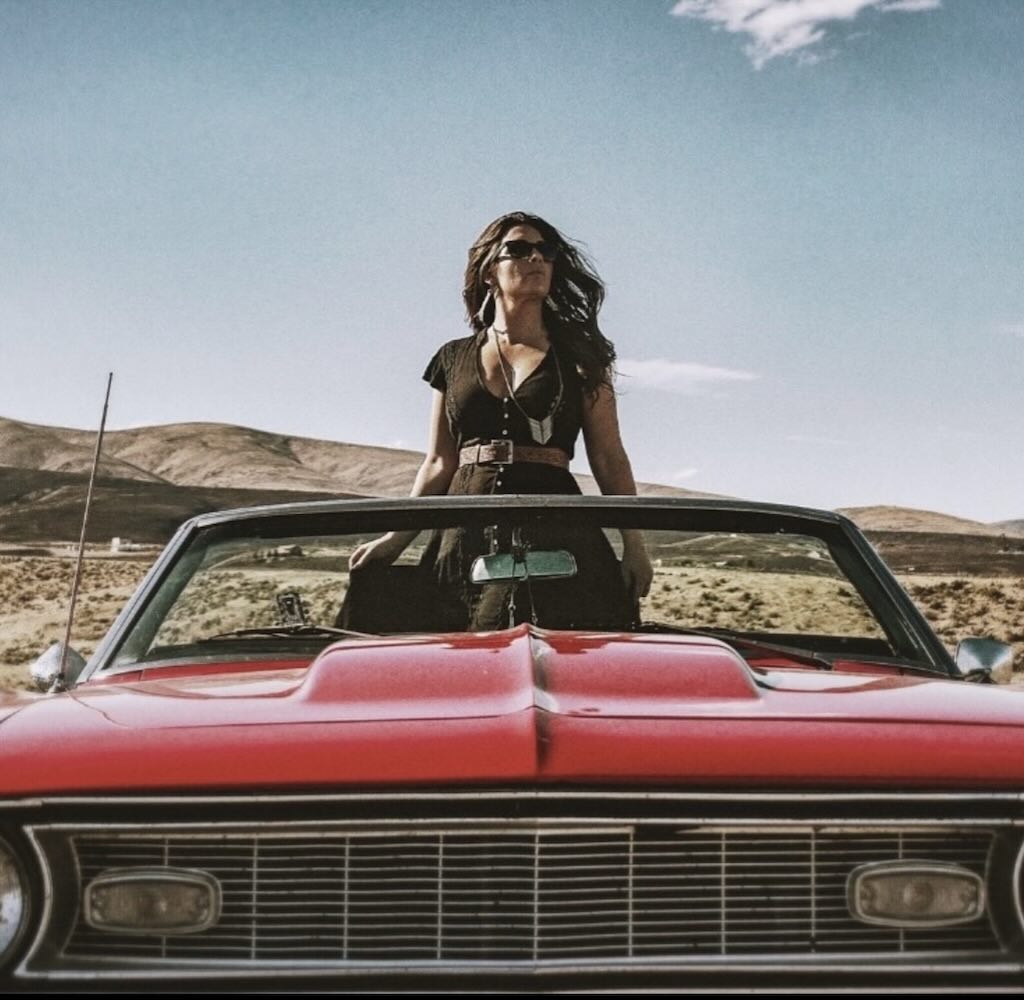
When Kara Hesse was eight, she watched one of her father’s bands rehearse from a basement staircase. She remembers very little about the performance itself. What stayed with her was the song, Linda Ronstadt’s “You’re No Good,” and the singer’s white leather fringe bodysuit. For a moment, she could picture herself up there.
That early fascination grew into something more demanding. As a teenager in Boulder, Colorado, Hesse spent lunch breaks alone at a piano backstage in her school theatre, working through songs that had been forming in her head during class. At 15, she began sneaking out to open mics at a café called Penney Lane. Performing frightened her, but the need to share what she was writing kept bringing her back.
She went on to play Red Rocks at 22, an achievement she still looks back on with disbelief. Nearly twenty years later, she has a more complicated understanding of those moments. A memorable stage can be followed by a four-hour café set where nobody seems to be listening. Both are part of a working musician’s life.
Originally from Seattle and now based in Nashville, Hesse has built a creative life that extends beyond music. Her album Devil & the Dove gathers songs written across nearly two decades, while Roadworn, her handmade wearable line, gives her another place to experiment. The work takes different forms, but both begin with an urge to make something and see where it goes.
In conversation with Good Hours, Kara Hesse talks about the music her father passed down to her, the changing meaning of success, the long making of Devil & the Dove, and why a good day might involve a fishing rod, a lawn mower or an afternoon lost in her studio.
Good Hours / Music
Artist File — 2026
Artist
Spotlight
Good
Hours
In Conversation
Kara Hesse
Singer-Songwriter / Maker
“I think what really excited me then, and still does now, was the idea that something I created in my own little world could mean something to someone in theirs.”
Kara Hesse / On Why She Creates
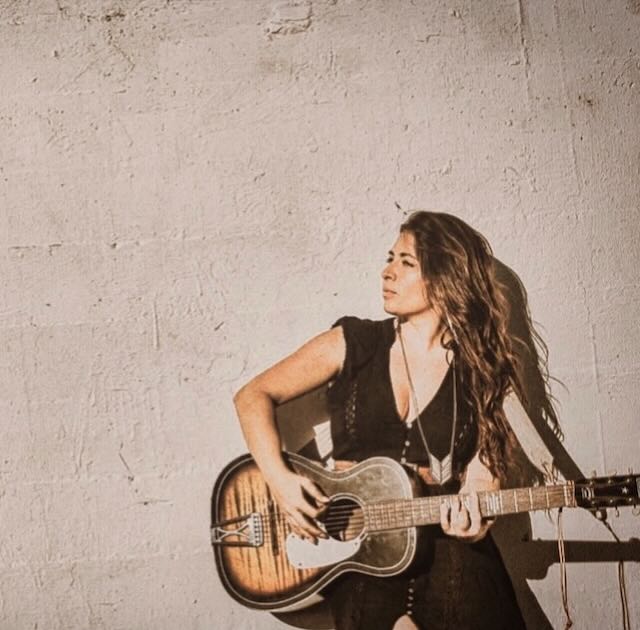
The Basement Staircase
Good Hours: You grew up surrounded by music, and you’ve described watching a female-fronted band perform Linda Ronstadt’s “You’re No Good” from a basement staircase when you were about eight. What do you remember most vividly about that moment, and why do you think it stayed with you?
It was one of my dad’s many bands, and he brought us along to rehearsal. I don’t remember her voice or much about the band at all. All I remember, besides the chipped ice I’d never seen coming out of the fridge upstairs that would stick to my tongue, was the song, her brown hair, and what she was wearing, which was almost the spitting image of Cassandra in Wayne’s World in the full-on white leather fringe bodysuit.
I think, for a moment, I saw myself as an older woman, and she was me. Not ironically, as I would totally get down with that bodysuit, but it just looked like a hell of a time. It seemed like a pretty fun way to spend your life.
Good Hours: Your father introduced you to Carole King’s Tapestry and challenged you to write something of your own. Looking back, what did that experience teach you about songwriting that you still carry with you?
My father was a songwriter himself, and I think he probably recognized something in me before I even knew what to call it. I was always picking apart songs I loved, learning them by ear, studying how they were put together, all the while finding my footing on my instruments and developing my own voice. I think it’s fair to say that’s really how a lot of songwriters begin.
I don’t remember ever announcing to him that I wanted to write songs. I may have already been dabbling in it by then. I think he just saw what I was naturally drawn to and decided to give me a little homework. Looking back, I don’t think there was some grand intention behind it, but rather just an encouraging gesture to keep studying the craft. I think he probably realized I loved a good challenge. Perhaps the greatest thing I took from it was how to really listen, study the great artists of our time, the structure of songs and their tricks, and then go off and make something of my own.
Finding Her People at Penney Lane
Good Hours: At 15, you were sneaking out to perform at open mics in Boulder. What were you looking for in those rooms that you couldn’t find anywhere else at that age?
I think I was just looking for a place where I felt at home, surrounded by musicians, poets, and people who had this need to express themselves in a safe setting, and I found it in a cafe called Penney Lane down on the Boulder strip. I was always drawn to people older than me, and while I had plenty of friends my own age, I wasn’t necessarily interested in the same things they were. I was a bit of a dork, I suppose.
I was the kid who came home from school and went straight to the piano. In fact, I spent a lot of my lunch hours in high school alone backstage in the dark theater, where there was a piano, trying to get some song out of my head that had been brewing during the class before.
I don’t think I was sneaking out because I loved performing. Truthfully, getting onstage scared the shit out of me. But I had this overwhelming need to share what I was writing, and maybe some youthful notion that I could help or heal somebody with it and, at the very least, push myself to get over my fears. I knew that if I wanted to get better, I had to keep putting myself in situations that terrified me. I guess I understood early on that was part of paying my dues.
As for sneaking out, I think I just wanted to experience that world on my own terms for a change. Of course, when I got caught, I was in the doghouse. But I kept going back.
What Red Rocks Taught Her About Success
Good Hours: You set yourself the goal of performing at Red Rocks and eventually achieved it at 22. Did standing on that stage feel the way you’d imagined, or did reaching such a significant goal change your understanding of what success actually means?
I’m not sure I’d even lived enough then to know how amazing it was. Of course, I was over the moon, but I may have been more focused on how annoying it was that they took me for some loopy groupie when I pulled up to the load-in zone for soundcheck. I still look back at Red Rocks and pinch myself. It’s a wild reminder of what can happen when you really put your mind to something, paired with a touch of luck along the way. Of course, I’ve put my mind to plenty of things that haven’t happened yet, too.
I think there’s this sort of strange dual reality that happens onstage, especially in those larger-than-life moments. In the span of a 20-minute set, you’re staring out at rows of people filing in, figuring most of them probably couldn’t care less about the opener. Your imposter syndrome kicks in, and you have to convince yourself that you’re a badass and that you deserve to be there, while simultaneously reminding yourself how lucky you are. All the while, you’re trying to perform at your best and somehow take it all in, and before you know it, it’s over. There’s a lot going on upstairs! So much of that day is still a blur, as are many of the pinnacle moments in my career. I wonder if that’s what time traveling would feel like.
But at 22, I absolutely thought this was my moment. I thought I’d finally “made it.” I’d reach for those pinnacle moments and cling to them. But nearly twenty years later, I’ve learned that you can play one of the most iconic stages in the world and find yourself right back in a cafe playing four hours for a hundred bucks with a sea of voices drowning you out. I see guys down here on Broadway doing it all the time. That’ll humble you pretty quickly! Those glory gigs, as I call them, are wonderful and look great on a résumé, but they don’t necessarily define a career, especially in the day-to-day that nobody gets to see.
I wish I could say I’ve outgrown the need for those defining moments, but I haven’t. I still chase them, cling to them, and sometimes measure myself against them. I think the difference now is that I’m more aware of how fleeting they are. You reach one pinnacle and almost immediately start looking for the next. It’s a funny thing, spending your life chasing something you can never quite hold onto.
But I suppose that’s part of what keeps me going. It’s been one hell of a rollercoaster, but if money or fame were my motivations, I would’ve quit a long time ago. I may wake up every day believing I choose this life, but I think the obvious truth in my insanity is that it chooses me, and I just have no say in the matter.
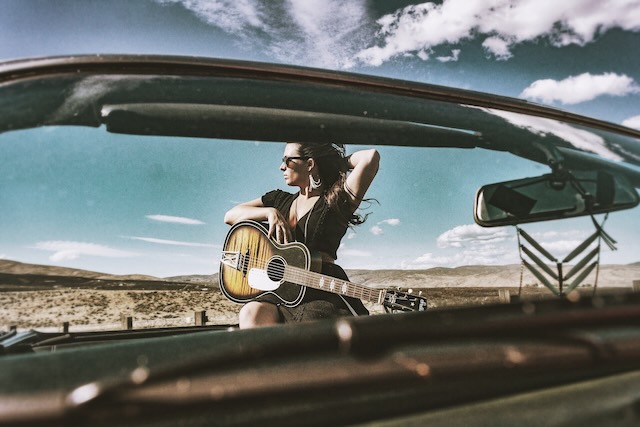
A Bull Skull Named Clarence
Good Hours: Your trip to Nashville in 2019 involved a guitar, Roadworn inventory, a mannequin, and a bull skull named Clarence. That’s quite a collection of travelling companions. What do you remember about that trip, and at what point did Nashville begin to feel like somewhere you might belong?
I knew Nashville was a musical mecca, but I never really saw it as my one destination. I was probably more drawn to LA, although that might’ve had more to do with the weather. Ha!
I had a friend from the West Coast who was living in Nashville and had been encouraging me to come out for a while. She offered me a room and helped get me into a pretty reputable artisan festival, so I figured I could make a little money with Roadworn while getting to know the city. It was really just an adventure to see what might happen.
And of course, Clarence came along! I’ve always gone a little overboard with my Roadworn displays. People still walk into my booth and ask where the boutique is, and I tell them, “I don’t have one. This is just shit from my house!” I’ve since graduated to deer antler chandeliers, but only when I can reach the top of the tent. I love creating an atmosphere that makes shopping feel like more of an experience.
That first trip ended up opening some unexpected doors. I played an open mic at a venue called Winners that’s since closed, and within days, I was invited to perform at Whiskey Jam. Honestly, I had no idea how significant that was at the time. I just pulled a random band together, showed up, and played. My friend was the one who took me there, and I’m pretty sure she knew exactly what she was doing.
I figured maybe there was something here, so I kept coming back for extended stays, digging deeper into the scene and somehow finding myself in a lot of good rooms at the right times. It took me a few years to make the move official in ’22.
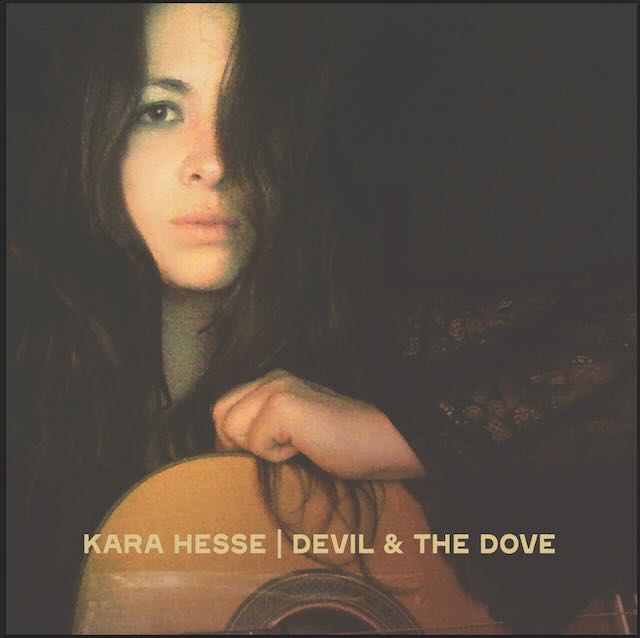
Nearly Twenty Years of Songs
Good Hours: Devil & the Dove took five years to make and brings together music recorded in different places and periods of your life. Was there a moment when you realised the songs were telling a larger story than you’d originally intended?
I don’t know if there was any particular moment of revelation. I was just putting together what I felt were some of my strongest songs, ones that resonated with me at the time. I knew what I was writing about with each of them, but I wasn’t necessarily thinking about how they all fit into some larger narrative.
In some ways, the making of the record became its own story, too, as I navigated my way through a new city, new studios, new engineers, and, in turn, a whole lot of lessons about myself as a producer, how to cast players, and how to stick to my vision with all the chefs in the kitchen.
It wasn’t until I was nearing the end of the record and looking at the collection as a whole that I started to recognize a thread running through some of the stories. Each song really has its own identity and message, but I suppose you could string a few of them together and find this sort of journey from pain toward freedom.
And while the record took five years to make, a lot of the songs themselves represent nearly twenty years of my life. They’re little chapters from different places and periods, all collected in one place. I think that’s what makes the album feel cohesive to me, even though I never really set out to make a concept record.
Good Hours: You’ve described the album as the closing of one chapter and the beginning of another. What does starting again mean to you now, compared with what it meant when you were younger?
For me, this record was much more about accepting certain realities in my personal life that I simply can’t change, some of which I’ve carried with me since childhood. I think as we get older, we begin to understand that not everything gets a resolution. Some doors we wish would close never quite do, and some things that are broken cannot be fixed, but they stick with you regardless.
I’m beginning to understand that letting go doesn’t necessarily mean something stops mattering to you. Sometimes it’s simply making peace with what is, rather than spending your life wishing it were different. And perhaps the biggest part of that reset was giving myself permission to be happy without feeling guilty about it.
I suppose I’ve learned that you don’t always get to choose how a chapter ends, but you can still choose how to turn the page.
Roadworn and the Pleasure of Making
Good Hours: Roadworn began with handmade pieces created while you were travelling and has now been part of your life for a decade. What does working with your hands give you that writing and performing music doesn’t?
I think the biggest difference is that making handmade pieces puts me into this wonderful creative flow without quite so much pressure. Writing and recording music can be incredibly demanding, and unless you’re lucky enough to have one of those songs that just falls out of you, it can take an enormous amount of time, money, and emotional energy to bring something to life. With my wearable line, I can get lost in the process for hours and have something tangible to hold in my hands at the end of the day. A quicker little dopamine hit, you could say!
There’s also something refreshing about how people respond to it. Someone can walk into my booth and fall head over heels for a piece that I’ve already lost interest in, and suddenly I’m seeing it in a whole new light. With music, you can pour years into a record and still wonder whether it’s reaching anyone. But watching someone light up over something you’ve made by hand is pretty immediate, and I love that.
Ultimately, I think it’s just another sandbox for my creativity. I’ve never been very good at sitting still, and I honestly don’t know what boredom feels like. My hands are always moving, and Roadworn gives me a place to explore new ideas, learn new techniques, and create without all the weight that sometimes comes with music. Plus, there are no other chefs in my Roadworn kitchen!
Good Hours: Both a handmade object and a song can become attached to someone’s memories. Have you ever heard from someone who connected with something you created in a way you hadn’t anticipated?
Great question. I’ve found that art, in all its forms, has a way of binding us together, and while music trends come and go and material things like my wearable designs may eventually dissolve into the earth a hundred years from now, I think art is one of the most beautiful and defining parts of our humanity. There are so many stories I can think of, but I’ll just share a few from each side of my creative life.
With the new record that just came out, I also released a music video for one of the singles, “Get Where You’re Going.” I wrote a story that entailed three characters, all living miserable lives, and by the end of the three-and-a-half-minute song, they are all living the best versions of themselves. A mechanic becomes a winemaker, a waitress becomes a pilot, and a cubicle worker becomes a drag queen. Shortly after the release of the video, I received a message from a guy who told me the song had just inspired him to finally quit his job and pursue what he really loved. Ear to ear, my face hurt from smiling. Life is too short to spend it doing something that makes you miserable.
With Roadworn, I remember a little girl who just loved this particular piece and couldn’t afford it. She meandered around my booth for who knows how long. Some time later, she reached out to me with pictures of her own designs that she had started making and selling around school. I think so much of what we connect with in life is a reflection of something within ourselves. She must have seen a little of herself in me and then took that inspiration and made something entirely her own. I’m not sure there is a greater compliment than inspiring someone else to go out on a limb and start their own little business.
Where Home Begins
Good Hours: You’ve spent years moving between cities, studios, and stages. What are the small, ordinary things that make somewhere feel like home to you, regardless of where you’re living?
Oh, for the love of fur! My kitties, of course. There’s nothing quite like coming home and watching them figure out who I am again. They’re always the cuddliest when I first return. Meanwhile, my suitcase will sit open and half-unpacked for longer than I like to admit.
I usually burrow pretty quickly into this almost hermit-like routine where the world gets really still, and I have this creative explosion of ideas. I’ll disappear into my studio and forget about makeup, look like an absolute slob, and just float between making things, chasing ideas, and spending time with my family.
But I also feel at home on the road. Maybe, having traveled so much in my life, being on rolling wheels just feels natural to me. There’s something about seeing new places that stirs the brain and makes me feel incredibly alive. Traveling gets me out of my own head, broadens my perspective, and reminds me how much of the world there is beyond my little corner of it. As I’ve gotten older, I’ve come to appreciate being home more, but eventually, I get restless and need to get moving again. I’ve never really felt like I’ve landed somewhere I’m meant to stay forever. I guess home is wherever I can feel comfortable being myself.
Good Hours: After everything you’ve experienced in music, I’m curious about the person away from the stage. What does a genuinely good, unremarkable day look like for you now, and how different is it from the life you imagined when you first started writing songs?
I rarely give myself permission to do absolutely nothing, not because I’m hard on myself, but because it honestly doesn’t sound like much fun! If I’m not making something, I’m probably outside, getting my hands in the dirt. I actually love mowing the lawn, and there’s something just so satisfying about a weed wacker and a leaf blower. I also love fishing. Before moving to Nashville, I was out kayak fishing almost every weekend. Lakes were always a little less stressful than navigating the ocean tides, although the fish were definitely better out there!
As for the life I imagined when I first started writing songs, I think I was more fascinated by songwriters themselves than the idea of being famous. I used to collect books filled with behind-the-scenes stories about how songs were born. I could spend hours at the piano trying to write the perfect song, often just working through whatever I was feeling at the time.
Of course, I imagined what it might be like to stand onstage in front of thousands of people and hear the world singing something I’d written. And I absolutely caught myself subconsciously rehearsing my Grammy acceptance speech in the mirror on more than one occasion. But whenever I pictured the fame part of it, something felt a little contrived, and I struggled with that. I think what really excited me then, and still does now, was the idea that something I created in my own little world could mean something to someone in theirs.
There is a pleasing continuity between the teenager trying to finish a song at the school piano and the woman who now spends hours making pieces for Roadworn. Hesse still wants to make things, and she still wants them to find their way into somebody else’s life.
The scale has changed, from open mics to Red Rocks and back to smaller rooms, but she has become less certain that any single stage can define success. There is always another song to write, another object to make, or another stretch of road ahead.
Kara Hesse: Frequently Asked Questions
Who is Kara Hesse?
Kara Hesse is a Nashville-based singer-songwriter originally from Seattle. Her creative work also includes Roadworn, a handmade wearable line.
What is Kara Hesse’s album Devil & the Dove about?
Devil & the Dove brings together songs from different periods of Hesse’s life. She describes recurring themes of pain, acceptance and finding freedom, although she did not set out to make a concept album.
What is Roadworn?
Roadworn is Kara Hesse’s handmade wearable line. She creates pieces by hand and sells them at events, where she also builds elaborate displays using objects collected from her home and travels.
When did Kara Hesse move to Nashville?
Hesse first visited Nashville in 2019 and returned for extended stays before making the move official in 2022.
Did Kara Hesse perform at Red Rocks?
Yes. Hesse says she performed at Red Rocks when she was 22. The experience remains meaningful to her, although her understanding of success has changed with time.
What does Kara Hesse enjoy outside music?
Hesse enjoys making handmade pieces, spending time with her cats and family, gardening, maintaining her yard, fishing and travelling.
https://www.instagram.com/karahesse