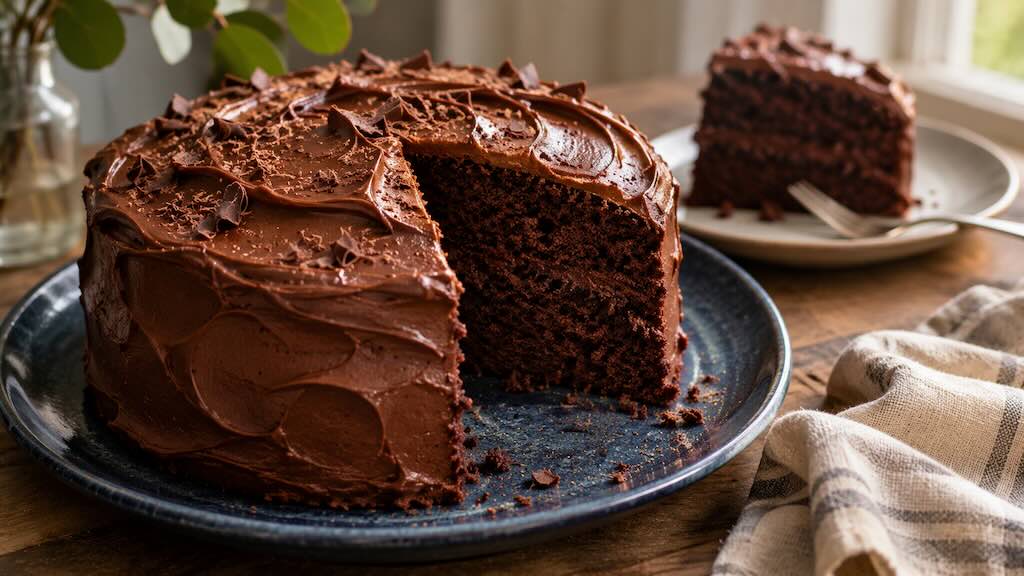
There’s a disappointing moment in baking when a chocolate cake looks exactly as it should, but the first slice tells a different story. The frosting is lovely, the kitchen smells of cocoa, and the cake itself is dry enough to need a glass of milk.
It doesn’t necessarily mean you’re a bad baker. Chocolate cake is sensitive to small changes in measurements, oven temperature, baking time, and even the pan you use. A recipe that works beautifully one weekend can produce a much drier result the next.
The good news is that most of these problems are preventable. Understanding what makes a cake tender and moist is far more useful than collecting another complicated recipe.
The most common mistake: Too much flour
If your chocolate cake is dense, crumbly, or dry around the edges, start by looking at how you measure flour.
It’s surprisingly easy to add more flour than a recipe requires. Scooping directly from the bag with a measuring cup can pack the flour tightly, especially if you press the cup down to fill it.
That extra flour absorbs more of the liquid in the batter, changing the balance the recipe was designed around.
The most reliable solution is to use a kitchen scale. If the recipe provides measurements in grams, follow them. If you’re using cups, loosen the flour first, spoon it into the measuring cup, and level the top without pressing it down.
According to King Arthur Baking’s guide to dry cakes, scooping flour incorrectly can add substantially more than intended. It’s one of the simplest baking mistakes to correct.
Your chocolate cake may simply be overbaked
Chocolate cake is harder to judge by appearance than vanilla cake. You can’t rely on a golden surface to tell you when it’s ready, and the dark color can disguise overbaked edges.
A few extra minutes can make a noticeable difference, particularly with thinner cake layers.
Instead of waiting until the very end of the recommended baking time, start checking several minutes earlier. Insert a toothpick into the center. Depending on the recipe, it should emerge clean or with a few moist crumbs, rather than wet batter.
Look for a surface that springs back gently when touched and edges that are beginning to pull away from the pan. You don’t need to wait until the cake feels completely firm.
King Arthur Baking offers a useful explanation of how to tell when a chocolate cake is done, including why appearance alone isn’t reliable.
Your baking pan matters more than you think
A recipe written for an 8-inch square pan won’t necessarily behave the same way in a larger rectangular pan. Spread the batter too thinly, and the cake may bake faster than expected.
Pan materials also affect how heat reaches the batter. Dark metal pans can produce more pronounced browning around the edges, while glass and ceramic behave differently from metal.
For predictable results, use the pan size and material recommended by the recipe whenever possible. If you substitute another pan, you’ll need to monitor the cake rather than assume the original baking time will still apply.
The difference between butter and oil
Butter and oil both contribute to the texture of chocolate cake, but they don’t behave identically.
Butter brings flavor and richness. Oil, which remains liquid at room temperature, can help a cake retain a soft, tender mouthfeel even after it has cooled.
That’s one reason many moist chocolate cake recipes use oil, or a combination of butter and oil.
It doesn’t mean you should replace all the butter in your favorite recipe with oil. Baking formulas depend on the proportions of fat, liquid, sugar, and flour. Changing one ingredient without considering the others can alter the texture and structure.
If a recipe consistently produces a dry cake despite accurate measurements and baking, trying a different, well-established oil-based recipe may be more successful than improvising substitutions.
Why cocoa powder can make chocolate cake tricky
Cocoa powder provides much of the flavor we expect from chocolate cake, but it also affects how the batter handles moisture.
Unlike melted chocolate, cocoa powder contributes relatively little fat. Adding extra cocoa because you want a stronger chocolate flavor can make a cake seem drier if you don’t adjust the other ingredients.
Different cocoa powders also have different properties. Natural and Dutch-process cocoa aren’t always interchangeable because their acidity can affect recipes that rely on baking soda.
Use the type and quantity specified by the recipe unless it explicitly allows a substitution. For a deeper chocolate flavor, choose a recipe developed for that result rather than adding several extra tablespoons of cocoa to one you already use.
Mix the batter enough, but not endlessly
Mixing develops the structure of a cake. Too little mixing can leave pockets of dry flour, while excessive mixing after adding flour can encourage gluten development and produce a tougher texture.
Follow the method in your recipe. Some cakes require creaming butter and sugar thoroughly. Others are simple oil-based batters that need little more than a whisk and a bowl.
Don’t assume every cake should be mixed until perfectly smooth for several minutes. Once the ingredients are incorporated, additional mixing isn’t necessarily helpful.
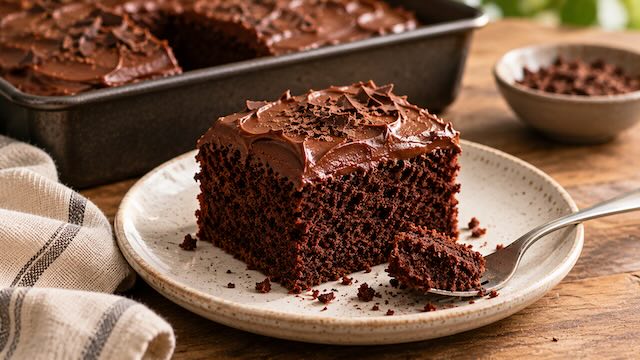
A simple chocolate cake recipe to try
If you’ve had repeated trouble with dry chocolate cake, a straightforward oil-based recipe is a sensible place to start.
The following one-pan cake is adapted from King Arthur Baking’s Chocolate Cake Pan Cake, a published recipe that uses oil, water, cocoa powder, and vinegar. It requires no mixer, eggs, or butter.
Recipe attribution: King Arthur Baking Company. The original published recipe is the reference for the quantities and baking method below. This adaptation has not been independently kitchen-tested by Good Hours.
Easy one-pan chocolate cake
Yield: One 8-inch square or 9-inch round cake, approximately 8–10 servings
Preparation: About 15 minutes
Baking: 30–35 minutes
Oven: 350°F (175°C)
Ingredients
- 1½ cups (180 g) all-purpose flour
- 1 cup (198 g) granulated sugar
- ¼ cup (21 g) unsweetened cocoa powder
- 1 teaspoon baking soda
- ½ teaspoon salt
- 1 cup (227 g) cold water
- ⅓ cup (67 g) neutral vegetable oil
- 1 tablespoon white vinegar or apple cider vinegar
- 1 teaspoon vanilla extract
Method
- Prepare the oven and pan. Preheat to 350°F. Lightly grease an 8-inch square or 9-inch round cake pan at least 2 inches deep.
- Combine the dry ingredients. In a mixing bowl, whisk together the flour, sugar, cocoa, baking soda, and salt, breaking up any lumps.
- Combine the liquids. In a separate bowl or measuring jug, stir together the water, oil, vinegar, and vanilla.
- Make the batter. Pour the liquid mixture into the dry ingredients and stir until evenly combined, with no visible pockets of flour.
- Bake. Transfer the batter to the pan and bake for approximately 30–35 minutes. Begin checking near the lower end of the range. A toothpick inserted into the center should come out clean or with a few moist crumbs.
- Cool and serve. Let the cake cool in its pan on a rack. Serve plain, with a dusting of powdered sugar, or with your favorite chocolate frosting.
Why this recipe is useful: Oil contributes tenderness, the water supplies moisture, and the vinegar reacts with the baking soda to help the cake rise. The short mixing method also makes it approachable for occasional bakers.
For the original recipe, optional icing, and additional baking notes, see King Arthur Baking’s published instructions.
Can you rescue a chocolate cake that’s already dry?
Sometimes. You can’t reverse overbaking, but you can improve the eating experience.
A simple syrup is one option. Heat equal parts sugar and water until the sugar dissolves, then let the syrup cool. Brush a little over the cake before frosting, allowing it to absorb gradually rather than soaking the entire surface at once.
Chocolate frosting, ganache, whipped cream, or a scoop of ice cream can also make a slightly dry cake more enjoyable.
If the cake is particularly dry, consider turning it into a layered dessert with cream and fruit instead of serving it as a traditional slice.
These are ways to make the best of a disappointing bake, not substitutes for getting the measurements and baking time right.
Don’t let a good cake dry out in storage
Even a beautifully baked chocolate cake can lose its softness if left uncovered.
Once completely cooled, keep an unfrosted cake or one with a shelf-stable topping in an airtight container at room temperature for the period recommended by the recipe. For longer storage, wrap it well and freeze it.
Refrigeration can make some cakes feel firmer and drier, particularly those containing butter. However, cakes with perishable fillings or frostings must be refrigerated according to food-safety guidance.
If you’ve refrigerated a cake that can safely be brought to room temperature before serving, allowing it to lose some of its chill may improve its texture.
A quick guide to what went wrong
| Problem | Possible cause | What to try next time |
|---|---|---|
| Dry, crumbly cake | Too much flour | Weigh ingredients rather than scooping flour directly |
| Dry edges, firmer center | Overbaking or unsuitable pan | Check earlier and use the specified pan |
| Tough texture | Excessive mixing | Follow the recipe’s mixing method |
| Dense, heavy crumb | Incorrect leavening or ingredient substitutions | Check baking soda, baking powder, and cocoa requirements |
| Cake seems dry the next day | Storage or refrigeration | Store airtight and refrigerate only when needed for safety |
The secret isn’t a secret ingredient
There’s no shortage of advice promising that mayonnaise, coffee, sour cream, or an extra egg will transform every chocolate cake. Some of these ingredients work very well in recipes designed around them. None is a universal fix.
A moist chocolate cake is usually the result of something less mysterious: a balanced recipe, accurately measured ingredients, a suitable pan, and careful baking.
Start with those basics. Once you understand how they affect the finished cake, you can experiment with more confidence—and spend less time wondering why the last slice was so much drier than you hoped.
Frequently asked questions
Why is my chocolate cake dry even when I follow the recipe?
Your oven may run hotter than its setting, your flour measurements may be inaccurate, or your pan may differ from the one specified. An inexpensive oven thermometer and a kitchen scale can help identify these problems.
Does oil make chocolate cake moister than butter?
Oil can help cakes maintain a soft texture at room temperature because it remains liquid. Butter contributes flavor and richness. Both can produce excellent cakes when used in recipes developed for them.
How do I know when chocolate cake is fully baked?
Check the center with a toothpick and follow the recipe’s doneness instructions. Look for a gently springy surface and avoid leaving the cake in the oven longer than necessary. Chocolate cake’s dark color makes visual browning a less useful indicator.
Can you make a dry chocolate cake moist again?
You can’t undo overbaking, but a small amount of simple syrup, frosting, or a creamy accompaniment can improve the texture and make the cake more enjoyable.