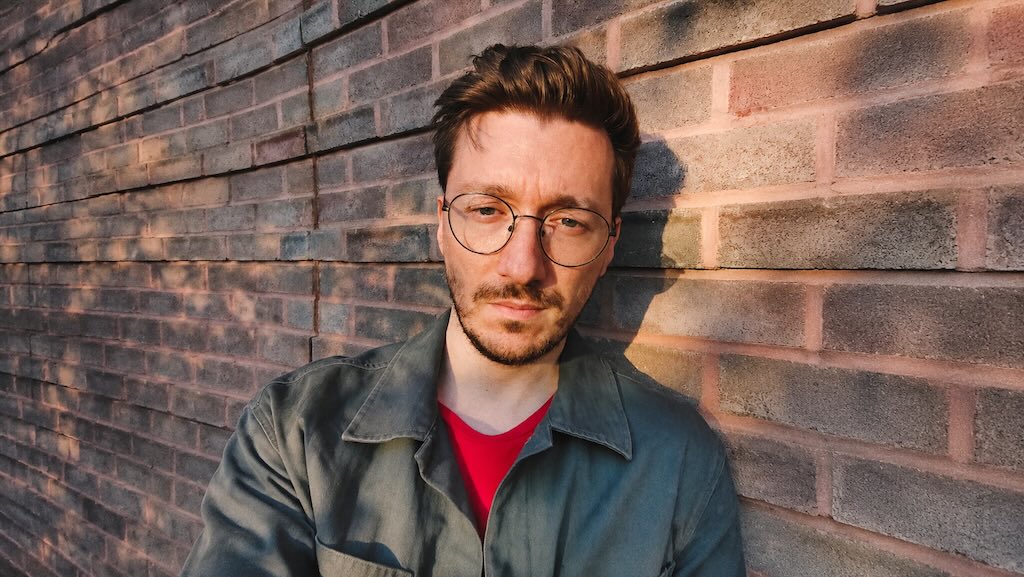
In one of Cataldo Cappiello’s earliest memories, a tank of goldfish sits in front of an open window. Sunlight fills the room. From where he stands, the fish appear to be swimming through the sky, enormous and strangely unfamiliar.
Another memory takes him to a sunny morning in 1995. His father has found a Game Boy in a wardrobe and is showing him Wario Land before school. Cataldo remembers the brightness of that morning as clearly as the game itself. It was an introduction to a world of music and storytelling that would stay with him for decades.
These images help explain the thinking behind Blind Films, a collection of orchestral and instrumental compositions by the Italian musician, composer and visual artist, now based in London. The title describes an unusual kind of cinema: one without a screen, where the listener supplies the images.
Cataldo knows what some of his compositions mean to him. “Endovento” began with a dream in which he stood in a field, feeling warm wind pass through his hollow bones. In the dream, he was a pipe organ in the shape of a man. Yet when other people listen to his music, they often describe entirely different scenes. He welcomes that distance between his own memories and theirs.
The collection brings together pieces written between 2019 and 2026. Revisiting them has been an unexpected exercise in remembering. Listening to “Wall Of Stars” brought back a former loft apartment, snow settling on skylights and a bedroom tinted teal. Another composition, “To Live in a House of Wind”, revealed a desire to escape city life that he hadn’t recognised when he wrote it.
Home is a recurring presence in Cataldo’s work. Leaving Italy for the United Kingdom meant leaving behind familiar people and a language that had itself felt like home. He has lived in many houses since, some comforting and others difficult. Each has left something in his music.
In conversation with Good Hours, Cataldo reflects on the childhood memories that shaped his imagination, the influence of video game soundtracks, the quiet work of bringing older recordings together and why he would rather offer listeners a place to imagine than tell them exactly what to see.
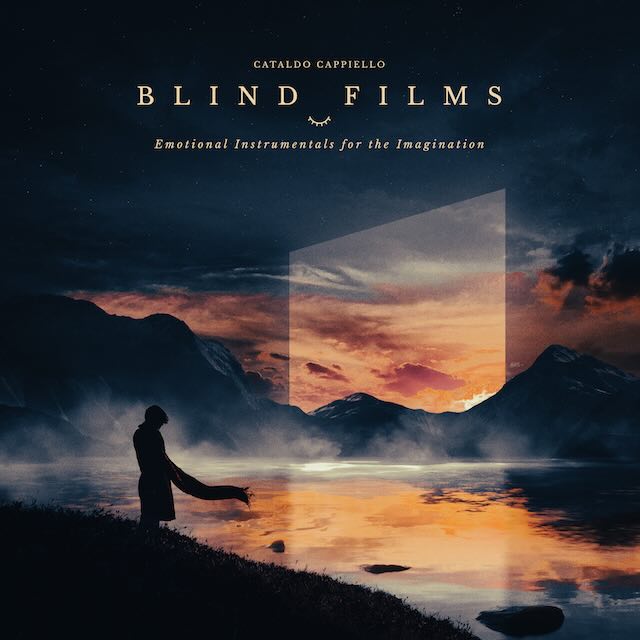
Blind Films is a collection of 12 remastered orchestral, cinematic and ambient compositions, set for release on 8 April 2027. Bringing together music originally written between 2019 and 2026, the album is guided by a simple invitation: films to watch with your eyes closed. For Cataldo, the project also carries a deeply personal intention — to confront the ugliness and suffering he sees in the world through beauty, without compromise.
Good Hours / Music
Artist File — 2026
Artist
Spotlight
Good
Hours
Featured Artist / In Conversation
Cataldo
Cappiello
Composer / Guitarist / Producer / Visual Artist
“All my homes have talked to me, and I’ve never forgotten them. In exchange, I’ve filled them with notes, and I still do so to this day.”
Cataldo Cappiello / On Home and Music
A Film That Exists in the Listener’s Mind
Good Hours: The idea behind Blind Films is that listeners create their own images rather than watching a film you’ve made for them. When you’re composing, do you see specific scenes in your own imagination, or does the music sometimes arrive before you know what it might represent?
My creative process is often unpredictable and tends to take a different route and form every time I sit down to write music. Sometimes, it starts with a memory or a complex emotion that I cannot express through words. Writing music gives a voice to a part of me that struggles to communicate.
In the track “Endovento”, I describe the outlines of an ephemeral dream I once had. I was in a field, and a warm wind was blowing through my hollow bones. I was a pipe organ in the shape of a man, I was Mother Nature’s vessel, and everything was melancholically beautiful.
And then, as you guessed, there are times when the music appears in my mind on its own, slowly uncovering its meaning and story as I unravel its secrets on the piano roll of my DAW or explore it on my guitar.
Good Hours: If someone listens to one of your compositions and imagines something completely different from what inspired you, does that feel like the music has taken on a life of its own, or is there ever a temptation to explain what you originally had in mind?
One thing that happens very often when I play my music for someone is that they start narrating a story out loud as the track evolves. Sometimes, these are very elaborate stories, complete with characters, plot twists, and so on.
More often than not, these stories stray from my original inspiration, and that, to me, is invaluable. As you suggested, it means the music has taken on a life of its own. That’s the core concept behind Blind Films. The music is merely the seed of a story, but the beautiful tree of internal narrative can only sprout and fully express itself in the listener’s mind. If asked, I’ll explain my original inspiration, but that’s about me, not about Blind Films and its purpose.
Good Hours: Your album artwork shows an enormous screen suspended in the sky, yet the films themselves are meant to exist inside the listener. How did that image come to you, and what does the screen represent in your own imagination?
The setting of the album artwork is a direct consequence of the feedback I’ve received from my listeners. They often mention imagining or envisioning beautiful natural scenery while listening to my music: a lake, a sunset, a thicket, and so on. So it only made sense that the blank canvas of their enormous imagination should appear in the sky above such a beautiful landscape. In that space, a glowing window into their own imagination, they can project their Blind Films.
In a way, the scene portrayed in the album artwork is a symbol of the listener’s mind. That’s the theatre where the actual show takes place.
The Rooms We Remember
Good Hours: The collection brings together compositions created between 2019 and 2026. When you revisit a piece from several years ago, do you remember the circumstances in which you wrote it, or can the music surprise you by revealing something you didn’t recognise at the time?
I mostly remember the circumstances in which I wrote my music, but more often than not, I do get surprised when I revisit a track after a while.
It happened with “Wall Of Stars”, for example. As I was about to listen to it while preparing Blind Films, I expected to reconnect with the cathartic narrative behind its inspiration. What came back instead was the house where I used to live at the time. The low ceiling of the loft apartment. That one day when it snowed on my skylights, tinting the bedroom with a teal hue. The succulent plants I had been lovingly propagating for years, until they had multiplied into enormous numbers. It’s like a snapshot of a time that was.
Another valuable example is “To Live in a House of Wind”. While I was working on it, some of my collaborators pointed out that the composition sounded as though it came from a need to escape the duties and hardships of life in a big metropolis. Upon hearing that, I promptly denied it. Now, just a couple of years later, it has become clear that the composition did indeed come from a place of hypothetical escapism.
Good Hours: These recordings originally belonged to different moments in your creative life. What made you realise they could belong together as one album, and did you discover any unexpected connections between them?
One thing my friends and collaborators often point out is my “artistic signature”. Although I cannot recognise or identify it myself, it’s apparently very evident throughout my music, both old and new. It’s something genuinely mysterious that ties together all of Blind Films, as well as the music that predates it.
Aside from this, my catalogue spans a lot of different genres. On the one hand, that’s a neat advantage when presenting my portfolio as a composer. On the other, it can sometimes leave new listeners feeling overwhelmed or lost as they browse through my music.
Blind Films fulfils the mission of gathering my strongest orchestral and instrumental works into a single, coherent package. Sometimes, it’s comforting to know what you’re getting, and this collection offers exactly that.
What Music Can Say Without Words
Good Hours: Instrumental music leaves certain things unsaid. Without lyrics to direct the listener, how do you know when a composition has communicated enough — and when adding another instrument or melody might actually take something away?
In my experience, while lyrics are certainly important in conventional songwriting, they can sometimes set semantic boundaries. They allow an artist to communicate with precision, but can also limit their ability to convey things that, by their very nature, cannot be spoken.
Just as in narrative arts such as writing and cinema, the concept of “show, don’t tell” is an invaluable lesson and resource. It’s up to the listener to fill in the blanks that my Blind Films create: personal memories, feelings, emotions, ambitions, fears. All of these, like a liquid being poured, take the shape of the container created by the power of instrumental music.
Of course, as an author, I’m not immune to these emotions myself. When I’m composing a track and the arrangement starts reaching an ideal balance, its power begins to resonate back with me. I respond to the first results by adding or subtracting elements, and this exchange continues until it becomes apparent that even the tiniest change would compromise the story’s delivery.
Good Hours: You work as a composer, guitarist and producer, as well as creating visual art. Do those different disciplines satisfy different parts of your imagination, or do they all begin with a similar feeling that you’re trying to understand?
I strongly believe the answer depends on the context of each project. In most cases, my ideas find their natural expression through music, since what I need to say doesn’t have a shape or a description.
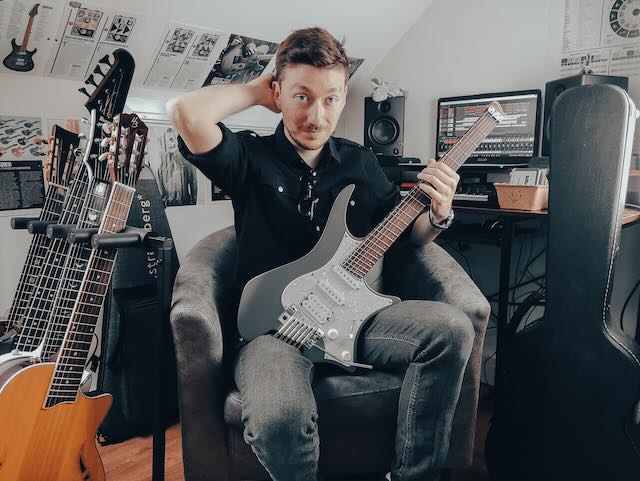
My love for the guitar plays an important role in this process, because I can use the instrument both to come up with new ideas and to enrich existing ones. As a result, guitars can be heard throughout Blind Films. Although it’s not particularly common, I believe an orchestra accompanied by one or more guitars can be a beautiful thing.
I graduated from the Academy of Fine Arts in Naples, so visual arts are also extremely important to me. I’m an enthusiastic photographer, illustrator, and graphic designer. These skills all come together as tools that support my endeavours in music.
For the more curious readers, here’s the step-by-step workflow behind the album artwork.
A Game Boy, a Sunny Morning and the Music That Stayed
Good Hours: You’ve described the music as cinematic without an actual film. Is there a film scene, landscape or ordinary moment from your own life that has stayed with you primarily because of the way it sounded rather than how it looked?
I’m a huge video game fan, and I’ve always been fascinated by how music can shape the way we experience a story. Composers like Nobuo Uematsu, Koji Kondo, Michiru Yamane and Toby Fox have all influenced me in different ways. From Uematsu, in particular, I learned to think of a soundtrack as a collection of interconnected compositions, where recurring themes can give a story an emotional continuity that goes beyond any individual scene. His work also taught me that music doesn’t have to follow predictable structures or compromise its expression to fit a particular market.
Final Fantasy VI is perhaps the most striking example of this for me. The game’s story and world are already wonderful, but the soundtrack is so breathtakingly beautiful that, at times, it almost overshadows them. The music feels like an extraordinary work of art in its own right, one that could stand independently of the game while somehow making the experience of playing it even more profound. Dancing Mad, in particular, left an indelible mark on me. I still believe it’s one of the greatest compositions of all time.
Perhaps my love for this kind of music goes back to a sunny morning in 1995, when my late father showed me a Game Boy with Wario Land on it before I went to school. He had unearthed it from a wardrobe like an ancient relic, even though it was brand-new, and carefully inserted the cartridge after blowing into it. I can still remember the almost impossibly bright, sunny feeling of that morning. It’s a memory that has stayed with me for decades, and the flame it lit in me has never gone out.
Bringing Different Years Into One Collection
Good Hours: The album has been newly remastered to bring recordings from different years into a cohesive collection. How did you decide which characteristics of the original recordings needed to remain untouched, even as you brought them into a shared sonic world?
This is something I could only accomplish thanks to Ivan Alfio Sgroi, the owner of Don’t Stop Studio, who handled the remastering process with great care. He’s been following my musical journey since the very beginning, so nobody could have been a better fit for the job.
He understands that each of these tracks, originally released as singles, has its own sound profile and acts as a world of its own, with its own rules. Ivan and I deliberately avoided altering the balance between the instruments within individual tracks, since doing so would have destroyed their identity.
Instead, we applied global adjustments to bring the tracks closer to one another. Imagine them as lonely planets, originally scattered across a galaxy. The remastering brought them together into a new “solar system”, where they can coexist in a new balance based on synergy rather than compromise.
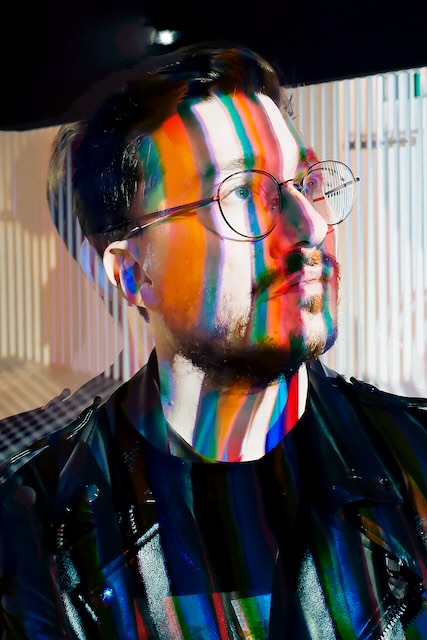
The Meaning of Home
Good Hours: You’re an Italian musician now based in London. Are there particular sounds, places or everyday experiences from either country that have quietly found their way into your compositions, perhaps without you consciously intending them to?
One constant that has defined the last twenty years of my life is a peculiar lack of balance, which eventually transformed into a need to keep moving from one place to another. Leaving my hometown and Italy to pursue a better life in the UK felt a lot like starting from scratch. My people and my language had been a home in themselves, and I had to leave that home behind to build a new life elsewhere.
I’ve lived in many houses, and I’ve loved each of them with all my heart, even when I felt imprisoned within them. The concept of “home” is central to my essence and my artistic expression.
My very first memory comes from my childhood home. It was blurry and insanely bright, but I clearly remember a tank of goldfish placed right in front of an open window on a sunny day. It looked as though the fish were swimming in the sky. They seemed massive and majestic, and oddly alien.
All my homes have talked to me, and I’ve never forgotten them. In exchange, I’ve filled them with notes, and I still do so to this day. The studio where I make art is a sacred space. I’m immensely grateful for it, and I spend my days out wishing to return to it, so that the barriers between myself and others can once again be shattered.
Leaving Space for Someone Else’s Story
Good Hours: Imagine someone listening to Blind Films while travelling alone, walking through an unfamiliar city or sitting at home after a long day. What would you hope the music gives them — not necessarily emotionally, but in terms of the freedom to imagine something of their own?
All I wish for is that Blind Films might act as a gentle guide, not a stoic script.
A word I really like is “maieutics”. The term comes from the Greek word for midwifery. In Plato’s dialogue Theaetetus, Socrates compares his philosophical practice to the work of his mother, Phaenarete, who was a midwife. He describes his role as helping people “give birth” to truths already latent in their own minds rather than teaching them new information.
This is the role I imagine for this collection of instrumentals. The Blind Films are already within the listener. The music doesn’t need to tell them what to see or feel; it simply helps bring something to the surface. Like a midwife, it can act as a catalyst, helping listeners give birth to stories, memories, and newfound beauty that were already waiting within them.
You can explore the rest of my untold stories on my website: cataldocappiello.com.
There is something quietly fitting about a composer who remembers his former homes through music making a collection that asks listeners to find their own memories within it. The images that return to Cataldo are particular: snow on a skylight, a tank of goldfish, a Game Boy on a bright morning. Someone else might hear the same compositions and see entirely different places.
For Cataldo, that difference is not something to correct. It is the reason Blind Films exists.
Cataldo Cappiello and Blind Films: Frequently Asked Questions
Who is Cataldo Cappiello?
Cataldo Cappiello is an Italian composer, guitarist, producer and visual artist based in London. He studied at the Academy of Fine Arts in Naples and works across music, photography, illustration and graphic design.
What is Blind Films?
Blind Films is a collection of orchestral and instrumental compositions created between 2019 and 2026. Its central idea is that listeners can imagine their own scenes and stories while listening, rather than being shown a fixed visual narrative.
Why is the project called Blind Films?
The title reflects Cataldo’s belief that instrumental music can suggest images and stories without defining them. Each listener creates a personal interpretation, making the imagined film different for everyone.
What inspired the album artwork?
Cataldo says listeners often describe natural scenery when hearing his music. The artwork uses a large screen suspended above a landscape to represent the space where listeners project their own imagined films.
What influences Cataldo Cappiello’s compositions?
His influences include personal memories, dreams, the places he has lived and video game music. He specifically mentions composers Nobuo Uematsu, Koji Kondo, Michiru Yamane and Toby Fox, with Final Fantasy VI holding particular significance for him.
How was Blind Films remastered?
Ivan Alfio Sgroi of Don’t Stop Studio handled the remastering. Rather than changing the internal balance of each composition, the process focused on broader adjustments to help recordings from different years sit together as one collection.
Where can I learn more about Cataldo Cappiello?
Visit Cataldo Cappiello’s official website to explore his music and other creative work.
https://www.instagram.com/cataldocappiello