There’s a particular kind of home expense that feels especially frustrating: the repair you suspect could have been avoided.
A slow leak becomes a damaged cabinet. A blocked dryer vent turns into a safety concern. Water that should have drained away from the house begins finding its way inside. None of these problems necessarily announces itself with much urgency at first.
Home improvement is often presented as a series of visible upgrades: new kitchens, better flooring, replacement windows and increasingly sophisticated appliances. But some of the most worthwhile improvements are much less exciting. They protect the parts of a home that are already working.
That doesn’t mean replacing everything before it gets old. Quite the opposite. Good preventive maintenance can help you avoid unnecessary replacement, provided you know what deserves attention and what can safely wait.
1. Deal with small water leaks before they become big repairs
Start beneath the kitchen sink. Then look around the dishwasher, washing machine, toilets, water heater and any other plumbing connections you can safely access.
You’re looking for more than obvious dripping. Swollen cabinet panels, discoloration, peeling finishes, a musty smell or an unexplained damp patch can all indicate a problem that needs investigating.
The Environmental Protection Agency recommends fixing leaks promptly and drying wet materials within 24 to 48 hours to reduce the risk of mold growth.
One useful improvement is installing water-leak alarms in vulnerable locations. Basic battery-operated models can alert you when water reaches a sensor. More sophisticated systems may monitor plumbing and automatically shut off the supply when a significant leak is detected.
Neither replaces regular inspection, and a sensor won’t prevent a pipe from failing. But early warning can make a considerable difference when water starts escaping somewhere it shouldn’t.
Worth doing: Check accessible plumbing connections, address recurring moisture and consider leak sensors near appliances or plumbing where leaks could go unnoticed.
2. Keep rainwater moving away from the house
Gutters aren’t especially interesting until they stop doing their job.
When leaves and debris block the flow of rainwater, water can overflow near siding, windows or the foundation. Downspouts that discharge too close to the building may also contribute to unwanted moisture around the house.
Walk around your home during or shortly after heavy rain, provided conditions are safe. Look for overflowing gutters, pooling water, erosion beneath downspouts and dampness near basement walls.
Clearing debris and correcting an obvious drainage problem may be relatively straightforward. But persistent pooling, foundation movement or water entering the building deserves professional assessment.
The EPA specifically recommends keeping roof gutters in good repair and ensuring that the ground directs water away from the foundation.
Worth doing: Maintain gutters and downspouts, investigate pooling water and correct drainage issues before they cause repeated moisture problems. Avoid climbing onto roofs or using ladders in unsafe conditions.
3. Replace failing seals, not necessarily entire windows
A drafty window doesn’t automatically need replacing.
Sometimes the problem is worn weatherstripping, a gap around the frame or an improperly adjusted window that no longer closes tightly.
These are worth investigating before committing to expensive replacement windows.
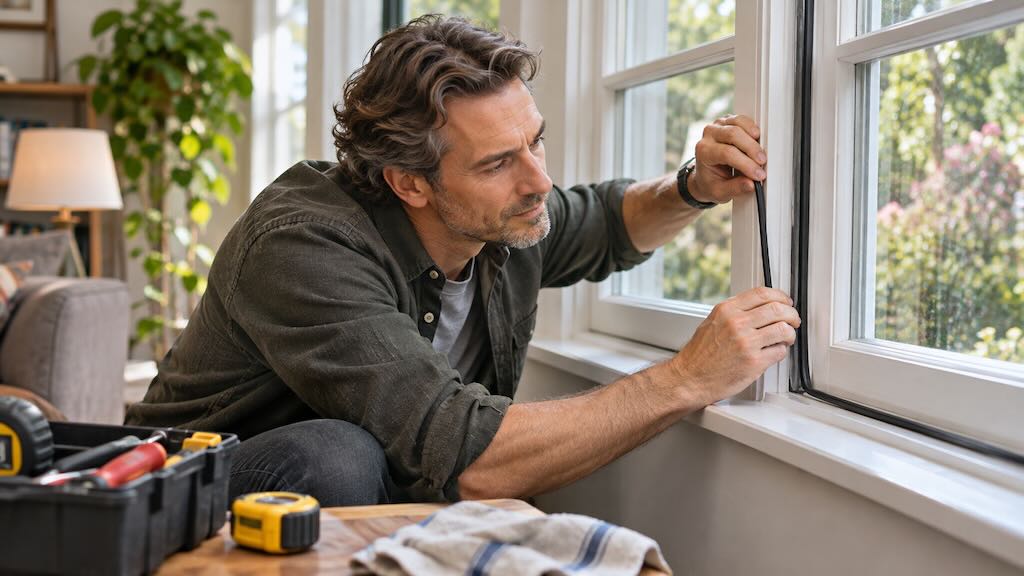
The US Department of Energy identifies caulking and weatherstripping as practical ways to reduce unwanted air leakage. Weatherstripping is generally used around moving parts, while caulk seals appropriate stationary gaps.
Start with the areas where you actually notice discomfort. A draft around an exterior door or a window that rattles in the wind is more useful evidence than a manufacturer’s claim that every older window needs replacing.
Be careful not to seal designed drainage openings or ventilation pathways. If condensation appears between panes of insulated glass, the problem may involve the glazing unit rather than ordinary weatherstripping.
Worth doing: Repair damaged weatherstripping and appropriate frame seals before considering full replacement. If drafts remain widespread, a professional energy assessment may help identify the real sources.
4. Give bathroom ventilation more attention
Bathrooms are designed to get wet. They’re not designed to stay wet.
Persistent condensation, peeling paint, darkened grout and damp surfaces can indicate that moisture isn’t being removed effectively.
Check whether the exhaust fan is working properly and whether its cover is clogged with dust. If the fan is noisy, ineffective or vents into an attic instead of outdoors, the installation may need professional attention.
It’s also worth inspecting the sealant around showers, tubs and sinks. Cracked or separated caulk can allow water to reach places that are difficult to dry.
However, applying new caulk over a persistent leak or visible mold doesn’t solve the underlying problem. The source of moisture needs to be corrected first.
The EPA recommends keeping indoor relative humidity below 60%, ideally between 30% and 50% where practical. A simple hygrometer can help you understand whether moisture is becoming a recurring issue.
Worth doing: Keep exhaust fans functional, investigate recurring condensation and repair deteriorated seals after confirming the surrounding area is sound and dry.
5. Check the dryer vent before it becomes a fire hazard
Most people clean the lint screen after doing laundry. The less visible exhaust duct deserves attention too.
Lint can accumulate inside the dryer exhaust system, restricting airflow and creating a fire hazard.
According to the US Fire Administration, failure to clean was the leading contributing factor in home clothes-dryer fires during 2018–2020.
Warning signs can include clothes taking longer than usual to dry, unusually hot laundry or a dryer that repeatedly shuts down because of overheating.
Check that the exterior vent opening is unobstructed and that the duct is installed according to the appliance manufacturer’s instructions. Cleaning may be a manageable task for an accessible system, but long or concealed ducts may require professional service.
Worth doing: Clean the lint screen regularly, inspect the exhaust outlet and arrange duct cleaning when needed. Never ignore overheating or a burning smell; stop using the dryer until the cause is addressed.
6. Maintain heating and cooling equipment before it fails
A heating or cooling system often gives subtle signs of trouble before it stops working: unfamiliar noises, weak airflow, unusual cycling or rooms that no longer reach a comfortable temperature.
Replacing or cleaning an accessible air filter according to the equipment manufacturer’s guidance is one of the simplest maintenance tasks. A heavily clogged filter can restrict airflow and affect system performance.
Also keep outdoor units clear of debris without obstructing the clearances specified by the manufacturer.
For systems that burn gas, oil or other fuels, maintenance is particularly important. The Centers for Disease Control and Prevention recommends annual servicing of heating systems, water heaters and other fuel-burning appliances by qualified technicians.
Professional inspection is also appropriate when equipment develops persistent performance problems, unusual smells or suspected refrigerant or combustion issues.
Worth doing: Follow the equipment maintenance schedule, change filters as specified and arrange qualified servicing where needed. Don’t wait for a complete breakdown to investigate repeated warning signs.
7. Make sure essential safety equipment is actually working
Some of the most important home improvements are inexpensive and barely noticeable.
Working smoke alarms and carbon monoxide detectors are examples. Check their placement, test them according to manufacturer guidance and replace units at the end of their specified service life.
Carbon monoxide is especially dangerous because it cannot be detected by smell. Homes with fuel-burning equipment, attached garages or other potential sources need appropriate protection.
Electrical warning signs deserve similar attention. Frequently tripping breakers, warm outlets, flickering lights accompanied by other symptoms, or a burning odor shouldn’t be dismissed as ordinary household annoyances.
Don’t attempt repairs inside an electrical panel or modify fixed wiring unless you’re qualified and legally permitted to do so. Have concerning conditions assessed by a licensed electrician.
Worth doing: Test and maintain safety alarms, replace expired units and investigate electrical warning signs promptly. Safety improvements take priority over cosmetic upgrades.
What deserves attention first?
Not every home needs the same work. A house in a rainy climate may require more attention to drainage, while a home with older fuel-burning equipment may have different maintenance priorities.
Rather than following a universal replacement schedule, use the condition of your home to decide what to do next.
| Priority | What to look for | What to do |
|---|---|---|
| Act promptly | Active leaks, burning smells, unsafe wiring, failed safety alarms, significant water intrusion | Make the situation safe and arrange appropriate repairs or professional help |
| Plan soon | Deteriorated caulk, blocked gutters, persistent drafts, poor ventilation, equipment performance changes | Investigate the cause and schedule maintenance before conditions worsen |
| Monitor | Minor cosmetic wear, functioning older appliances, sound but dated finishes | Maintain, document and reconsider when there is a practical reason |
These are general priorities, not a substitute for professional assessment. If you suspect an immediate fire, gas or carbon monoxide hazard, leave the affected area and contact emergency services or the appropriate utility.
What you probably don’t need to replace yet
Preventive maintenance is not an argument for replacing things early.
A working refrigerator doesn’t automatically need upgrading because a newer model is more efficient. Older windows may perform adequately with maintenance and air sealing. Kitchen cabinets can remain useful for decades, even when their finish is no longer fashionable.
Before replacing a major component, ask whether there’s a specific problem, whether it can be repaired and whether the proposed replacement offers a meaningful benefit.
If you’re considering a major purchase, our guide to making an expensive purchase without regretting it explores the questions worth asking before committing. Editorial note: Confirm this article’s published URL before retaining the link.
For expensive systems, compare repair costs, remaining expected service life, efficiency and reliability. An energy audit or independent inspection may provide more useful information than a sales pitch.
Make one small improvement before planning a big renovation
There’s nothing wrong with wanting a more beautiful kitchen or a better-designed bathroom. A home should be enjoyable as well as functional.
But the improvements that make the biggest difference aren’t always the ones anyone notices.
A dry cabinet beneath the sink, a clear dryer vent, a properly sealed exterior door and a functioning bathroom fan don’t make impressive before-and-after photographs. They do make a home easier to live in and less likely to surprise you with avoidable problems.
Before drawing up the next renovation wish list, spend an hour looking at the parts of your home you rarely think about. You may discover that the most worthwhile project is already waiting there.
Frequently Asked Questions
What home improvements should you prioritize first?
Start with safety hazards, active water leaks, drainage problems and essential equipment that shows signs of failure. Cosmetic improvements generally come after problems that could threaten health, safety or the building itself.
How often should you inspect your home for problems?
There is no single interval for every component. A seasonal visual inspection is a practical habit, while appliances, safety devices and mechanical systems should be maintained according to their manufacturers’ instructions and applicable professional guidance.
Are water-leak detectors worth installing?
They can be useful where leaks might otherwise go unnoticed, such as beneath sinks or near washing machines and water heaters. Basic sensors provide an alert, while some connected systems offer automatic shutoff. They do not replace plumbing maintenance.
Should you replace old windows to save energy?
Not automatically. Weatherstripping, appropriate air sealing and other improvements may address comfort problems at a lower cost. Replacement is more appropriate when windows are severely damaged, no longer function correctly or offer benefits that justify the full expense.