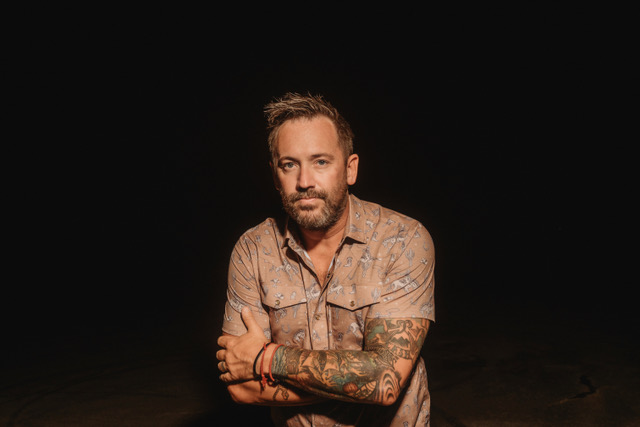
For more than a decade, Noah Smith has built his life around movement. The Cincinnati songwriter has toured across the U.S. and beyond, spending years moving between stages, unfamiliar towns, his home studio and Nashville. Somewhere in all those miles, his idea of home began to change.
That realization sits at the heart of his third studio album, No Strangers After All. Rooted in country, rock and heartland songwriting, the record looks at what accumulates over a life spent making music: family and faith, failures and resilience, rooms full of people who gradually stop feeling like strangers.
“I’ve spent a lot of my life thinking I was traveling farther away from home. Maybe I was actually just discovering how big home could be.”
It is an idea that reaches beyond the album itself. In Cincinnati, Smith created Crooner Circus, a songwriter showcase that has grown into an annual multi-stage festival, while years of touring have created their own network of familiar faces far from home.
For Good Hours, Smith talks about No Strangers After All, the years on the road behind it, the communities that form around songs, faith and family, learning that he doesn’t need to be for everybody, and why sometimes the best thing a songwriter can do is simply go and live a normal day.
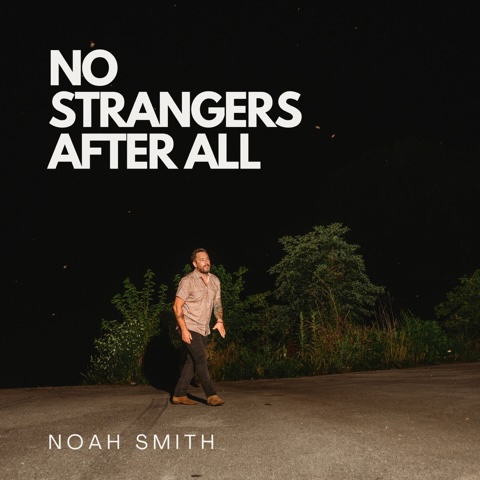
Noah Smith on No Strangers After All
“No Strangers After All” was released August 28 as your third studio album, and you’ve said it’s the closest you’ve come to explaining why you do this. What made now the right time to put that into words?
I think I finally understand why I’m still doing this. When I was younger, so much of it was about chasing the next thing. Bigger rooms, better opportunities, getting somewhere. Somewhere along the way, I realized I had spent all these years leaving home only to build a bigger version of home everywhere I went. Ten or 10,000, sharing music live in rooms with real people became the reason. It’s all about that community and finding those moments together. This record feels like me finally being able to say that out loud.
The album’s title captures something you’ve clearly lived — the way rooms full of strangers become familiar over years of touring. Was there a specific night or town that crystallized that idea for you?
I don’t know that there was one night. I think it was realizing how many towns I could walk into where I knew somebody. This just happened on our latest tour dates; in every town, there were fans there.
Denmark really drove that home for me because I’m thousands of miles away and somehow there are people there who know the songs, know my family, and have become real fans, and even friends. Then I come back and feel the same thing in Cincinnati, Nashville, Chicago, or some little bar somewhere.
At some point I realized I wasn’t constantly leaving home anymore. I was expanding it. I think people probably think that’s crazy, or maybe I am a little crazy, but it’s true, and I really think it’s part of why God has me in a place to make records and share my music.
You’ve said success stopped being about how many people you could get in a room, and became about what happens once everyone’s there together. How did that shift change the way you write and perform?
It took a lot of pressure off. Obviously I still want to grow and I want full rooms, but I’m way more interested in whether something real happened while we were all there. I want the show to feel alive and a little imperfect. I want people singing, yelling, laughing, maybe crying and feeling like they’re part of it instead of watching me perform at them.
I think my writing changed the same way. The more specific and honest I can be about my own life, somehow the more people seem to find themselves in it.
Musically, you’ve described this record as bigger, louder, more alive — while staying rooted in real stories. What did “bigger” mean once you were actually in the studio, and where did you have to hold the line to keep it honest?
Bigger never meant cleaner to me. It meant energy. Bigger moments, bigger guitars, bigger drums, gang vocals, moments that feel like my band actually feels when we’re firing on all cylinders in a room. We wanted to capture some of that chaos and life instead of sanding everything down until it was perfect. The line was always the song. If production started getting in the way of the story, we pulled it back.
From Cincinnati bar stages to Nashville Nights in Denmark, you’ve built a genuinely international following. What have overseas audiences taught you that you couldn’t have learned playing exclusively in the States?
Denmark taught me how little geography actually matters when a song connects. You can be standing halfway around the world with people who grew up completely differently than you, and somehow you’re singing about the same shit.
They also really listen. There’s an appreciation for the story and where a song came from that has made me a better storyteller onstage. It reminded me that you don’t have to chase whatever you think people want. Tell the truth well enough, and it travels.
You’ve shared bills with everyone from Lonestar and Ashley McBryde to Joe Diffie and The Steve Miller Band. Is there a moment from one of those shows — something said or done side-stage — that’s stuck with you?
I really need to find a way to remind Ashley that she mentioned taking us on tour, haha. There have been a bunch of those moments, but honestly what sticks with me most is getting to watch artists at that level work from side-stage. You realize really quickly that the great ones know exactly who they are when they walk out there. There’s a confidence in not trying to be everything for everybody.
My friend Sundae Drives told me that a few years ago, and it really gave me freedom. He said, “Dude, you’re not for everybody.” That was the first time in my life that I felt OK with that.
That has stayed with me as I’ve gotten older. I’m much more interested now in becoming the best version of what I actually do than trying to fit into somebody else’s version of success.
Family and faith run through this record alongside resilience and failure. How do you decide which parts of your own life become songs, and which parts stay private?
I don’t know that I have a formula for it. Usually if something keeps bothering me, making me uncomfortable, or coming back into my head, there’s probably a song somewhere in it. But I have a wife, kids, and people I love who didn’t necessarily sign up to have every part of their lives turned into material. So I try to tell my truth without feeling entitled to tell everybody else’s.
Faith is similar for me. I’d rather write honestly about wrestling with God, failing, getting back up, and trying again than pretend I have everything figured out.
I think that’s something that we all could work on when it comes to “God” talks or songs. I think sometimes “I don’t know” is the best answer a person can hear. We weren’t designed to have all the answers.
Crooner Circus has grown from a local showcase into a multi-stage songwriter festival. Why has building a platform for other artists mattered as much to you as building your own?
Because I’ve never believed music has to be a competition. In the same note, when I walk on stage, I am there to destroy whoever comes on after us. I want my friends and other artists to work that way as well. That’s how we all actually grow.
Crooner Circus came from wanting to build the kind of room I wanted to exist in as an artist. Put great songwriters together, give people a reason to care, let artists meet each other and see what happens.
Some of the best things in my career have come from relationships and people giving me a shot. If I can create more of those collisions for somebody else while we’re building something meaningful in our own scene, that matters to me.
With a new song releasing every month on top of the album and a packed touring schedule, how do you keep the well full without burning out the thing that makes the songs feel real?
I’m still learning that one. I’m naturally somebody who wants to make the next thing before the current thing is even finished, and that can absolutely burn you out. I’ve been learning that concentration matters more than constantly creating motion.
Sometimes the best thing I can do for songwriting is go be a dad, be a husband, go to church and lead worship, get on the road, sit somewhere quietly, or just live a normal day. You need an actual life to have anything worth writing about.
Everyone coming up always wants to quit their job and make music. I always tell folks if they want to quit their job, then quit. But having a job that helps you keep the water bill paid, as well as puts you in motion every day to observe the stories of life, is simply perfect for songwriting.
If someone presses play on “No Strangers After All” without knowing anything about you, what do you want them to feel by the last track?
Less alone.
That’s really it. There’s failure on this record: faith, love, family, getting older, chasing stupid dreams, and trying again when it doesn’t work. I don’t need somebody to finish it thinking they understand Noah Smith. I’d rather they finish it feeling like maybe somebody understands them.
If that happens, then there really are no strangers after all. This record feels alive, and I believe it’s going to go out there and reach who it needs to.
Noah Smith and No Strangers After All: FAQ
What is Noah Smith’s new album?
No Strangers After All is Noah Smith’s third studio album, drawing on country, rock and heartland songwriting while exploring touring, family, faith, failure, resilience and community.
What is the idea behind No Strangers After All?
For Smith, the title reflects a realization formed through years of touring: leaving home repeatedly had also allowed him to build a wider sense of home through the people and communities he encountered along the way.
Where is Noah Smith from?
Noah Smith is a songwriter from Cincinnati, Ohio. He also spends time working in Nashville and has toured internationally, including multiple visits to Denmark.
What is Crooner Circus?
Crooner Circus is a songwriter-focused showcase created and hosted by Smith in Cincinnati. It has developed into an annual multi-stage songwriter festival.