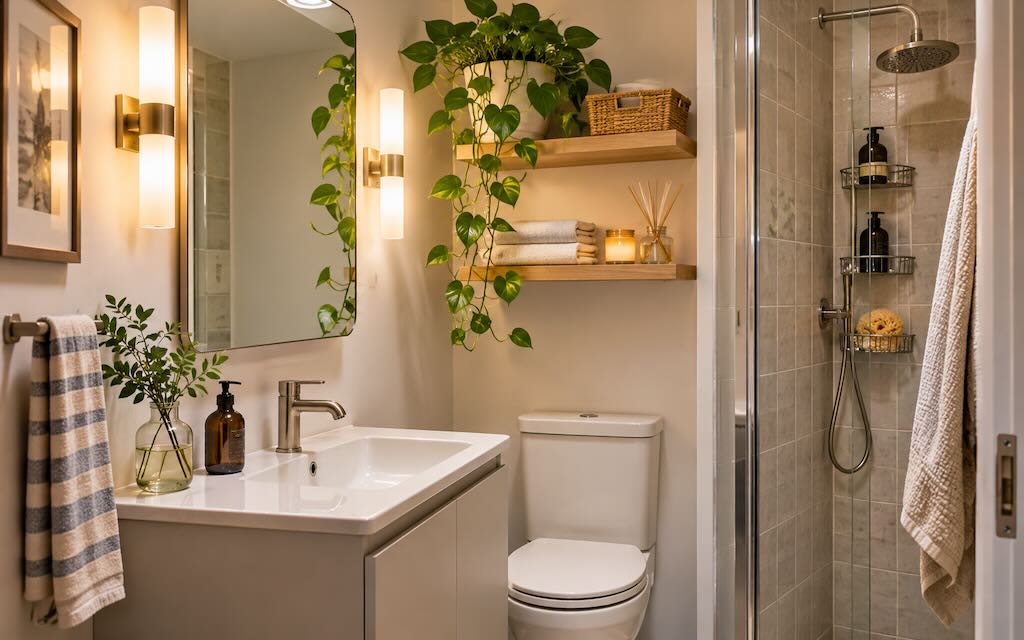
Some bathrooms are small but perfectly pleasant. Others seem to make every ordinary task more difficult than it needs to be. There’s nowhere to put your clothes before a shower, the cabinet door catches on the towel rail, and the products you use every morning are somehow always behind something else.
It’s easy to blame the size of the room. But square footage isn’t always the problem. A poorly positioned shelf, inadequate lighting or a countertop crowded with things you rarely use can make a bathroom feel more restrictive than it actually is.
Renovation might solve some of these problems, but it isn’t the only answer. Before replacing fixtures or changing the layout, consider how the bathroom works during an ordinary morning. Where do you reach? What gets in your way? Which small inconvenience do you encounter every single day?
Improving those details can make a surprisingly noticeable difference, even if the room stays exactly the same size.
Find out what’s making the bathroom difficult to use
Spend a day paying attention to the small annoyances. Perhaps you have to move three bottles to reach your toothbrush. Maybe the bathroom door hits a laundry basket, or the towel is always too far from the shower.
These details offer a better starting point than deciding the room needs a complete makeover.
Try identifying the three things that frustrate you most. Be specific. “Not enough storage” is less useful than “I have nowhere convenient to keep a spare towel.” “Bad lighting” becomes easier to address when you realize the mirror is bright above your head but leaves your face in shadow.
Then consider whether each problem needs a purchase at all. Moving a shelf, changing where towels hang or removing products you no longer use may solve something that initially seemed to require new furniture.
Make storage work harder without taking up more room
The usual response to a small bathroom is to add storage. More baskets, more shelves, another cabinet above the toilet. Sometimes that helps. Sometimes it simply fills the remaining space.
Before adding anything, look at where the objects you use most often are kept. Daily essentials should be easy to reach. Spare supplies, cleaning products and occasional-use items can usually live somewhere less convenient, provided they’re stored safely.
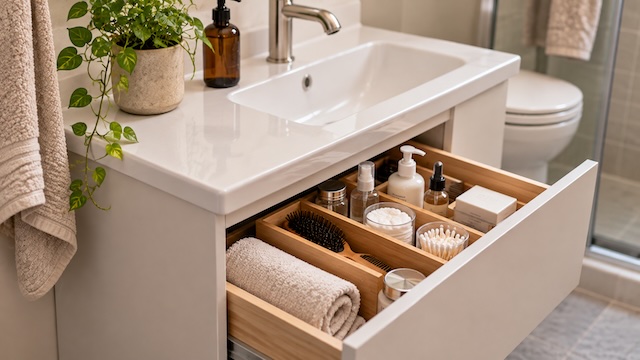
A shallow wall cabinet can be more useful than a deep shelf that projects into the room. A narrow drawer organizer may keep small items accessible without requiring another countertop container. If you already have a vanity cabinet, adjustable organizers can sometimes make better use of its existing space.
Be cautious with over-the-toilet shelving. It can be useful, but a unit that feels bulky, obstructs access or isn’t securely installed may create more problems than it solves.
The goal isn’t to store as much as possible inside the bathroom. It’s to keep the things you need in sensible places without making the room harder to move around or clean.
Give the sink some breathing room
In a small bathroom, the sink often becomes the default home for everything: soap, skincare, toothbrushes, hair products, medication and whatever you happened to put down yesterday.
That makes a compact vanity feel even smaller.
Try keeping only the items you use during your daily routine within immediate reach. A soap dispenser and toothbrush holder might be enough. Other products can go into a drawer, cabinet or a nearby organizer.
If several people share the bathroom, give each person a designated place for their essentials. A small divided drawer may work better than a collection of separate containers on the countertop.
Leave enough clear surface to set something down temporarily. That modest amount of working space can be more useful than a decorative arrangement that looks attractive but needs moving every morning.
Improve the light where you actually need it
A bathroom can be brightly lit and still have poor lighting.
If the only fixture is directly above the mirror, it may cast shadows across your face. That’s inconvenient when shaving, applying makeup or checking your appearance before leaving home.
The US Department of Energy’s residential lighting guidance identifies the vanity mirror as an important task-lighting area. Light arriving from the sides as well as above can reduce shadows.
You may not need to install new fixtures. Start by checking whether your existing light is working properly, whether the bulb is appropriate for the fixture and whether the mirror is clean and unobstructed.
If the lighting is still inadequate, consider whether a suitable fixture replacement would help. Choose lighting specifically approved for its intended bathroom location and have fixed electrical work completed by a qualified professional.
Don’t improvise with ordinary plug-in lamps, extension cords or electrical accessories near the sink or shower. Bathrooms have electrical safety requirements that depend on the fixture’s location and local codes.
Good lighting should help you see clearly without making the room feel harsh. A mirror that works well in the morning may do more for everyday comfort than a decorative fixture chosen purely for its appearance.
Make the shower easier to use
A small shower becomes frustrating when every movement involves avoiding a bottle, reaching around an organizer or fighting with a curtain that clings to you.
Start by removing products you don’t regularly use. If the shower floor has become a storage area, find a safer place for those items. Bottles left underfoot can create a slipping or tripping hazard.
A compact shower caddy can help, but check how it attaches and whether it obstructs the showerhead, controls or movement. Suction-mounted accessories may be convenient, although their reliability depends on the surface, product and installation. Avoid putting heavy or breakable objects where a failed attachment could cause injury.
If you have a shower curtain, make sure it hangs properly inside the shower area and doesn’t interfere with movement. Replacing a damaged or poorly fitting curtain can be more useful than adding another decorative accessory.
Think about the routine around the shower, too. Is a towel within easy reach after you step out? Is there somewhere dry to put clean clothes? A well-placed hook can solve a problem that has been irritating you for years.
Don’t let accessories make the room feel smaller
Small bathrooms are often decorated with small objects. Several baskets, tiny plants, candles, trays and containers may seem harmless individually, but together they can occupy almost every available surface.
Instead, choose a few details that have a clear purpose.
A comfortable bath mat, a good-quality hand towel and a mirror that suits the wall may contribute more than a crowded collection of accessories. If you enjoy color, introduce it through towels, a shower curtain or artwork positioned away from moisture.
You don’t have to make everything white or neutral. Dark paint, patterned textiles and strong colors can work in small rooms. What matters is whether the arrangement feels intentional and leaves enough space for ordinary use.
Plants can be appealing, but don’t assume every bathroom is suitable for them. Light levels and ventilation vary, and a room without adequate natural or artificial growing light may be a poor place for a living plant.
Decorating should make the room more enjoyable, not create another set of objects to clean around.
Make sure the bathroom can dry properly
A bathroom that stays damp will rarely feel pleasant for long, however carefully it’s decorated.
Wet towels, lingering condensation and a musty smell deserve attention. The Environmental Protection Agency recommends controlling indoor moisture and using bathroom ventilation to help reduce humidity. Persistent dampness can contribute to mold growth and damage building materials.
Use an existing exhaust fan as intended and make sure its cover isn’t obstructed. Where appropriate and safe, opening a window may help. Give towels enough space to dry rather than leaving several folded together on a small hook.
A bath mat that remains wet between showers may need a different drying arrangement. The same applies to shower curtains that stay bunched together instead of drying.
If moisture continues to accumulate despite normal ventilation, investigate the cause rather than hiding the symptoms with fragrance or decorative finishes. Persistent leaks, visible mold or ineffective ventilation may require professional attention.
What can you change in a rental bathroom?
Renters often have less freedom to change fixtures, drill into tile or replace lighting. But that doesn’t mean every improvement requires permission or permanent installation.
Freestanding organizers, suitable removable storage, towels, shower curtains and better arrangements inside existing cabinets can make a bathroom more comfortable without changing its structure.
Check the lease and ask the property owner or manager before drilling, replacing fixtures or making other alterations. Even products advertised as removable can damage paint, finishes or waterproof surfaces when installed or removed incorrectly.
Avoid attaching accessories to surfaces where they could compromise waterproofing. And report plumbing leaks, persistent mold or ventilation problems rather than attempting repairs that fall outside your responsibilities.
For renters, the most valuable changes are often the ones that improve everyday use without creating problems when it’s time to move out.
Where should you spend your money first?
You don’t need a large budget to improve a small bathroom, but it’s easy to spend more than intended on organizers and accessories that don’t solve the underlying problem.
Use this guide to decide where a purchase might be worthwhile.
| Everyday problem | Try first | Consider buying only if needed |
|---|---|---|
| Crowded sink | Move occasional-use items into existing storage | Compact drawer dividers or a shallow organizer |
| Not enough towel space | Reposition existing towels and hooks | A suitable additional towel rail or hook |
| Shower feels cramped | Remove unused products and rearrange essentials | A compact, securely mounted shower caddy |
| Poor mirror lighting | Check the existing bulb, fixture and mirror position | An appropriately rated lighting upgrade |
| Too many things on display | Reduce accessories and organize existing cabinets | Only storage that solves a specific remaining problem |
Prices vary by product and installation, so compare the total cost rather than assuming a small accessory is automatically a good-value purchase. An inexpensive organizer that falls off the wall or blocks a cabinet isn’t much of an improvement.
A better bathroom doesn’t have to be a bigger one
There’s a difference between a bathroom that looks spacious in a photograph and one that works comfortably at seven in the morning.
The photograph may show an almost empty countertop, neatly folded towels and nothing around the shower. Real life involves toothbrushes, damp towels, cleaning supplies and several people needing the same room at different times.
A successful small bathroom makes room for those realities. The things you need are easy to find. The light works where it matters. The shower doesn’t feel like an obstacle course, and the room has enough clear space to move and clean.
Start with the one frustration you notice most often. Fix that before moving to the next. You may find that the bathroom you thought needed renovating simply needed to work a little better.
Frequently Asked Questions
How can I improve a small bathroom on a budget?
Start by reorganizing what you already own. Clear the sink, keep daily essentials accessible and remove shower products you rarely use. Then identify whether a small purchase, such as a suitable hook or drawer organizer, would solve a specific problem.
What kind of storage works best in a small bathroom?
Shallow cabinets, drawer dividers and compact organizers can be useful because they make items accessible without taking up too much room. The best choice depends on your layout, available wall space and what you actually need to store.
Can you make a small bathroom feel bigger without remodeling?
You can make it feel less crowded by keeping walking areas clear, improving lighting, reducing unnecessary accessories and choosing storage that doesn’t project too far into the room. These changes won’t increase its dimensions, but they can improve comfort and usability.
What bathroom improvements are suitable for renters?
Freestanding storage, drawer organizers, towels and shower curtains are generally easier to change without permanent alterations. Check your lease and obtain permission before drilling, replacing fixtures or installing anything that could damage walls or waterproof surfaces.