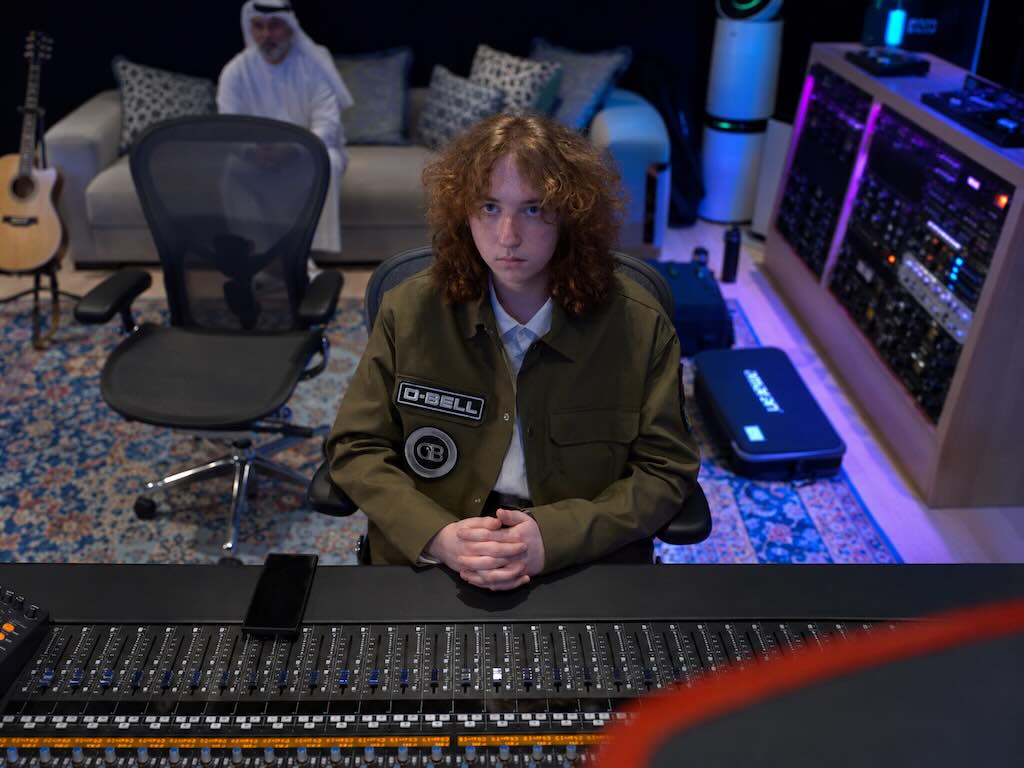
When Hlib Futymskyi moved from Ukraine to Dubai at eleven, he entered a city where different languages, traditions and ways of thinking were part of everyday life. He remembers the change as significant, though he doesn’t describe growing up between cultures as something he needed to resolve. Instead, it made him more interested in what people could create together without becoming the same.
That idea now runs through his work as D-BELL. At 19, the Ukrainian-born musician and producer is developing IRIS, a project that brings together music, science-fiction storytelling, visual art and contributions from more than 100 artists across different countries and creative backgrounds.
His first connection to music came through dance. Before he began composing, he was learning to understand rhythm through movement, paying attention to the way a piece of music could communicate without words. Gradually, his curiosity moved towards the sounds themselves: how instruments worked together, where a musical idea began and how he might build something of his own.
There was art at home, too. His mother is a visual artist, and Hlib grew up recognising that an idea could take different forms. He still rarely thinks of a composition as an isolated track. He imagines its atmosphere, its visual identity and the world in which it might belong.
His earlier project, Intersection, connected an original album with science-fiction storytelling. IRIS extends that interest on a much larger scale. The project includes orchestral and electronic music alongside visual storytelling, but its defining challenge may be the number of people involved.
Working with artists from different cultures, including Arabic and Emirati collaborators, has changed Hlib’s understanding of what it means to lead a creative project. He has learned that a clear idea is not enough. There are schedules to manage, different ways of working to understand and moments when another person’s contribution takes the work somewhere unexpected.
His interests outside the project are rather quieter. He enjoys listening to older recordings, experimenting with sound and spending time with vintage audio equipment. Cassettes and CDs interest him not simply as objects to collect, but as technologies he can understand, restore and use again.
For now, IRIS remains in production, with completion planned for January 2027. Hlib is also considering the possibility of presenting it in Dubai, the city that has shaped much of his understanding of cultural exchange.
In conversation with Good Hours, D-BELL talks about growing up between countries, finding his way from dance to music production, working with an international group of artists and learning that creative leadership sometimes means making space for someone else’s idea.
Good Hours / Music
Artist File — 2026
Artist
Spotlight
Good
Hours
Featured Artist / In Conversation
D-BELL
Hlib Futymskyi / Musician / Producer
“I don’t see creativity as something that needs to belong to one place or culture.”
D-BELL / On Growing Up Between Cultures
Growing Up Between Ukraine and Dubai
Good Hours: You moved from Ukraine to Dubai when you were young and have spent much of your life surrounded by different cultures. What do you remember most about that transition, and how has growing up between those worlds shaped the person you’ve become?
Moving from Ukraine to Dubai at 11 years old was a significant part of my life. I grew up surrounded by two quite different cultural environments, and I think that naturally influenced how I see the world. Living in Dubai exposed me to people, languages, traditions, and ways of thinking from all over the world.
I think growing up between cultures made me more open to different perspectives. It also influenced the way I approach music: I don’t see creativity as something that needs to belong to one place or culture. I’m interested in bringing different influences together and finding something new between them.
Good Hours: Your creative journey began with dance before you became interested in composing and producing music. Do you remember the moment when making your own music became more exciting than simply performing to someone else’s?
Dance was my first connection to music. It taught me to understand rhythm, movement, emotion, and how music can communicate without words.
Over time, I became increasingly curious about what was happening behind the music itself. I wanted to understand how sounds were created, how different instruments worked together, and how an entire musical world could be built from an initial idea.
Eventually, creating music became a natural next step. I realised I was just as interested in building the experience as I was in being part of it as a performer. Producing gave me the freedom to translate ideas directly into sound.
Good Hours: Your mother is a visual artist, and you’ve grown up with different forms of creativity around you. How has your family’s relationship with art influenced the way you think about making something of your own?
Growing up around visual art helped me understand that creativity isn’t limited to one medium. An idea can be expressed through an image, a sound, a story, or a combination of all three.
I think this influenced the way I approach music today. I rarely think about a composition as just a track. I often imagine its atmosphere, its visual identity, the world it belongs to, and the emotions it should communicate.
That’s also one of the reasons I enjoy combining music with storytelling and visual art. For me, these disciplines can strengthen each other.
From Intersection to IRIS
Good Hours: Your earlier project, Intersection, combined a science-fiction story with an original album. What did creating that project teach you about yourself, and what made you want to attempt something even more ambitious with IRIS?
Intersection was an important experience because it allowed me to explore the relationship between music and storytelling. It showed me that an album could be more than a collection of separate compositions — it could become part of a larger narrative.
It also taught me a lot about developing an idea from the initial concept into a complete creative project. There are many stages involved, and each one requires a different kind of thinking.
IRIS builds on that foundation, but its scale and collaborative nature are much bigger. I’m bringing together more than 100 artists from different countries and backgrounds. It has become a much broader exploration of music, identity, creativity, and the ways people can contribute to a shared artistic world.
Good Hours: IRIS involves more than 100 artists from different countries and disciplines. Can you tell us about a particular collaboration that surprised you or took the project somewhere you hadn’t originally imagined?
One of the most interesting parts of IRIS has been seeing how differently people interpret the same creative idea. Every artist brings their own background, musical language, and personality into the process.
Working with musicians from different cultural backgrounds, including Arabic and Emirati collaborators, has been especially meaningful because it allows the project to include influences and perspectives that I couldn’t create on my own.
I think the biggest surprise has been seeing how a project can grow beyond the original vision when other people become part of it. It becomes something shared rather than something controlled by one person.
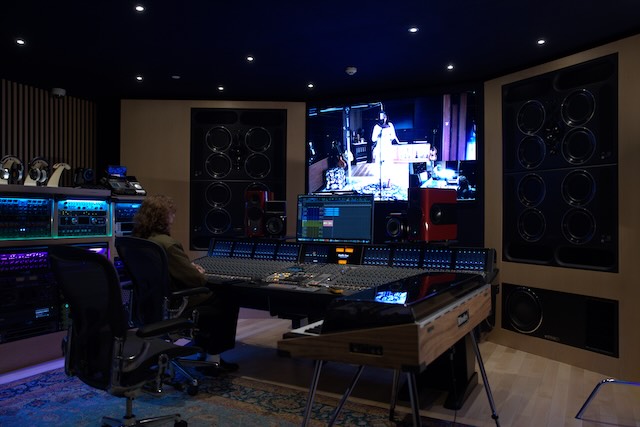
Making Room for Other Voices
Good Hours: When you’re responsible for such a large creative vision, how do you decide when to hold on to your original idea and when to let another artist change its direction?
I think this is one of the most important challenges in a collaborative project. I have a clear vision for IRIS — its story, atmosphere, musical direction, and overall identity — but I don’t want every contribution to sound as though it came from the same person.
My role is to give the project a direction and make sure everything belongs to the same larger world. At the same time, I want artists to bring their own character into it.
I don’t see collaboration as simply asking people to perform something I’ve already imagined. I want their individual voices to become part of the final result. The balance comes from knowing which elements define the project and which elements can evolve.
Good Hours: Science fiction and philosophy are important parts of your work. What questions about people, society or the future have been occupying your thoughts lately, and how have they found their way into the world of IRIS?
Science fiction gives us a way to look at the present from a different perspective. By imagining other worlds or possible futures, we can ask questions about who we are, what we value, and what kind of future we are creating.
IRIS explores ideas around identity, freedom, creativity, and the importance of music. One of the central ideas is that, despite our different backgrounds and experiences, people can connect through something universal.
Music is a particularly interesting medium for this because it can communicate emotions and ideas beyond language. I wanted IRIS to explore that connection not only through its story but also through the people and cultures involved in making it.
Good Hours: You’re only 19, yet you’re coordinating musicians, developing a comic and overseeing complex recordings. What’s been the hardest lesson you’ve learned about working with people, and has anything about the experience changed the way you see yourself?
The biggest lesson has probably been that having a strong creative vision is only one part of making a project happen. Working with people requires patience, communication, organisation, and an understanding that everyone has their own way of working.
When you bring together more than 100 artists, you quickly realise that creativity isn’t always predictable. Plans change, different perspectives appear, and you have to learn how to adapt without losing the direction of the project.
It’s made me more responsible and patient. I’ve also learned that being the person leading a project doesn’t mean having to do everything alone. It means creating an environment where other people can contribute and feel that their work matters.
Dubai, Sound and Everyday Curiosity
Good Hours: You’ve described Dubai as a place where different creative cultures meet. Is there a particular place, person or everyday experience in the city that has influenced your music in a way listeners might not expect?
Dubai has influenced IRIS in a very natural way. It’s a city where people from an enormous range of backgrounds live and work together. You can encounter different languages, musical traditions, and artistic perspectives in everyday life.
That multicultural environment connects closely with the idea behind IRIS. The project brings together artists from different parts of the world, and Dubai is a fitting place for that kind of collaboration.
I also think living here has made me comfortable with the idea that different influences can exist together without needing to become the same thing.
Good Hours: Outside music and the demands of IRIS, what does an ordinary good day look like for you? Are you still interested in collecting and restoring vintage audio equipment, and what draws you to those older technologies?
A good day for me usually involves having time to create without too many distractions. I enjoy experimenting with sounds, listening to old music, discovering new ideas, and spending time with things that inspire me creatively.
I’m also interested in vintage audio equipment, cassettes, and CDs. I enjoy the idea of understanding how something works, restoring it, and giving it another life.
I think that interest connects with music production in a broader sense: I’m curious about how sound is created, shaped, and experienced.
What Comes After IRIS?
Good Hours: After spending so much time developing IRIS, what do you hope people will feel when they finally experience it? And beyond completing the project, what would you personally like to discover or experience in the next few years?
More than anything, I hope people feel connected to something. I want them to experience IRIS as more than just an album or a story — as a world created through the contributions of many different people.
I hope listeners can find their own interpretations in it, recognise something familiar, or discover a perspective they haven’t encountered before. If the project encourages people to think differently about creativity, identity, or the role of music in bringing people together, that would mean a lot to me.
For the next few years, my main priority is to complete IRIS and bring it to life in the way I’ve imagined. Beyond that, I want to continue developing projects that connect music with other creative disciplines and allow artists from different backgrounds to work together.
Hlib’s immediate attention remains on completing IRIS. The project is planned for completion in January 2027, although neither a public release date nor a Dubai presentation has been confirmed.
What seems to have changed most through the process is his understanding of authorship. He began with a clear idea of the world he wanted to create. Working with other artists has required him to recognise how much that world can change when someone else brings their own experiences into it.
At nineteen, he is still learning how to make that space. The project continues to grow through the people involved, and Hlib is learning to trust that not every worthwhile idea has to begin with him.
Learn more about D-BELL and his work at his official website.
D-BELL and IRIS: Frequently Asked Questions
Who is D-BELL?
D-BELL is the artist name of Hlib Futymskyi, a Ukrainian-born musician and producer based in Dubai. At the time of the interview, he is 19 and developing the multidisciplinary project IRIS.
What is IRIS?
IRIS is a multidisciplinary creative project combining original music, orchestral and electronic production, science-fiction storytelling and visual art. According to D-BELL, it involves contributions from more than 100 artists from different countries and backgrounds.
When will IRIS be released?
IRIS is planned for completion in January 2027. A public release date has not yet been confirmed.
What was D-BELL’s first creative discipline?
Dance was his first connection to music. It introduced him to rhythm, movement and expression before he became interested in composition and production.
What is Intersection?
Intersection is an earlier D-BELL project that combined an original album with science-fiction storytelling. He describes it as an important step towards the larger narrative and collaborative approach of IRIS.
Why is international collaboration important to IRIS?
D-BELL wants artists with different cultural backgrounds and musical approaches to contribute their own ideas. He sees the project as a shared creative world rather than a collection of performances directed by one person.
Will IRIS be presented in Dubai?
D-BELL is exploring the possibility of presenting IRIS in Dubai, but no presentation has been confirmed.
Where can readers learn more about D-BELL?
Readers can visit D-BELL’s official website for information about his creative projects.
https://www.instagram.com/officialdbellmusic