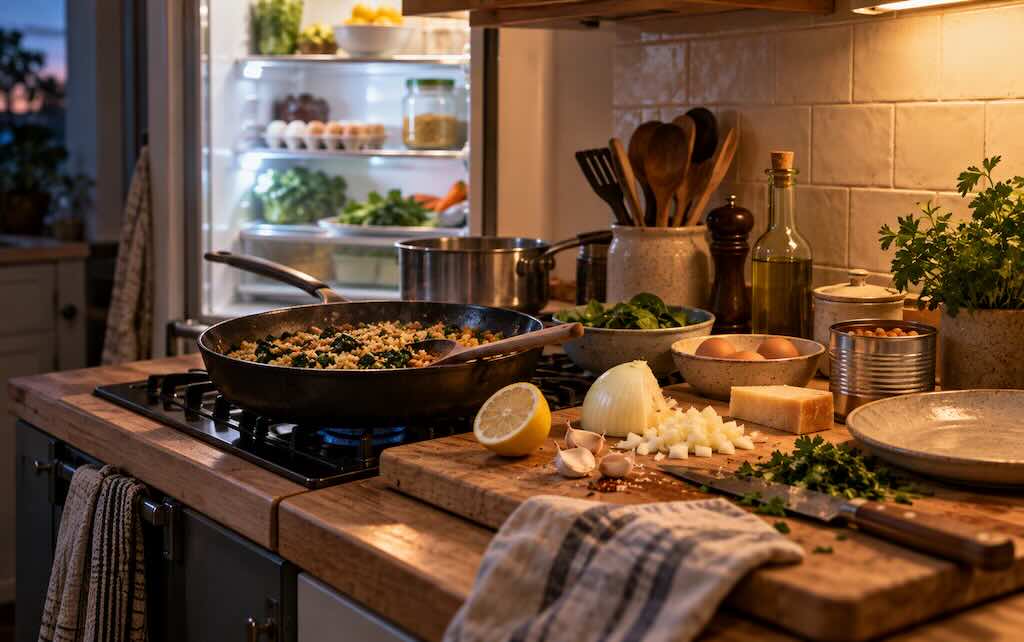
There is a particular kind of dinner that begins by opening the refrigerator twice.
The first time, you are looking for something to cook. The second time, a few minutes later, you are hoping something new might have appeared.
There is half an onion. Three eggs. A jar of mustard. Parmesan that may or may not still be good. In the cupboard: pasta, canned tomatoes, beans, rice, breadcrumbs. Perhaps a tortilla or two in the freezer.
It does not look much like dinner.
Knowing how to turn it into one is a small domestic skill worth having.
A pantry meal should survive substitutions
The most useful meals are rarely the ones with the shortest ingredient lists. They are the ones that can lose an ingredient without collapsing.
Fried rice is good at this. So are simple pasta dishes, soups, frittatas, quesadillas, grain bowls and beans served with something toasted underneath them.
The exact vegetable often matters less than the fact that there is one. Cheddar can replace Monterey Jack. Frozen peas can do the work you imagined for spinach. A fried egg can make leftover rice feel deliberate.
This is different from improvising recklessly. Some ingredients perform particular jobs, and substitutions are not always interchangeable. It is more about knowing which parts of a familiar dinner are fixed and which are negotiable.
That knowledge usually comes from making the same thing more than once.
Keep ingredients that can become several different dinners
A useful pantry is less about having a great deal of food than having ingredients with somewhere to go.
Pasta is obvious because it can take canned tomatoes, garlic and olive oil in one direction, or butter, cheese and black pepper in another. Rice can sit underneath beans, become fried rice the following day or stretch a small amount of vegetables into dinner.
Canned beans can become soup, go into a tortilla, sit on toast or be warmed with tomatoes and spices. Eggs fill similar gaps. Frozen vegetables are useful precisely because nobody needs to remember to rescue them on Thursday.
Then there are the smaller things that make basic ingredients taste less like provisions: lemons, vinegar, hot sauce, soy sauce, mustard, Parmesan, spices, garlic.
The exact list should depend on what you actually cook.
A cupboard full of worthy staples you never reach for is just a cupboard full of future decluttering.
Learn the shape of the meal, not only the recipe
The first few times you cook something, the recipe stays beside you.
Eventually you begin to remember the sequence instead.
Heat the pan. Cook the onion. Add the garlic later so it does not burn. Tomatoes go in. Pasta water loosens things. Cheese goes on at the end.
That is when a recipe becomes particularly useful.
You understand its shape well enough to notice that you do not have an onion and continue anyway. You know roughly how wet the sauce should look. You taste before adding more salt. The quantities become less important because you recognize what you are trying to make.
There is a difference between cooking without a recipe because you are guessing and cooking without one because you have learned it.
The freezer counts as part of the pantry
A good no-store dinner does not need to emerge entirely from dry goods.
Frozen peas, spinach, corn and other vegetables can make an otherwise beige dinner considerably better. Bread freezes well. Tortillas do too. Ginger can be kept frozen and grated as needed. A portion of something cooked earlier can become the beginning of dinner rather than an inadequate collection of leftovers.
The useful distinction is between food you are storing for a hypothetical future and food that regularly helps you cook.
If you keep buying an ingredient for emergencies and never use it, it probably is not one of your staples.
Five dinners are probably enough
You do not need a repertoire of thirty improvised meals.
You need a few that solve different versions of the problem.
One pasta. One rice-based dinner. Something involving eggs. Something built around beans. Something that uses bread or tortillas.
The categories can overlap. They can also be completely different in your kitchen. The point is not the five meals themselves but reaching the stage where looking at a can of beans or three eggs produces an answer without requiring a search.
After enough repetition, you also learn what each dinner needs to feel complete. Maybe beans on toast need something acidic. Fried rice needs a crisp edge on the egg. Pasta with very little in it needs more black pepper than seems reasonable.
These are tiny pieces of knowledge, but dinner is often made of tiny pieces of knowledge.
One dinner to know without a recipe
Start with a can of beans and a can of tomatoes. This is less a recipe to follow precisely than a useful shape to remember.
Tomatoey Beans on Toast
Serves 2
- 2 tablespoons olive oil
- 1/2 onion, chopped
- 2 garlic cloves, chopped
- 1 15-ounce can white beans or chickpeas, drained and rinsed
- 1 14- or 15-ounce can diced or crushed tomatoes
- 1/2 teaspoon red pepper flakes, smoked paprika or another spice you like
- Salt and black pepper
- 4 slices bread
- Parmesan, lemon, herbs or a fried egg, if you have them
Warm the olive oil in a skillet over medium heat. Add the onion with a pinch of salt and cook until softened, then add the garlic and spice and cook briefly. Pour in the tomatoes and beans. Let everything simmer for 10 to 15 minutes, until the tomatoes have thickened and the beans are hot. Taste and adjust the salt and pepper.
Toast the bread and spoon the beans over it. Finish with whatever makes sense from the kitchen: grated Parmesan, a squeeze of lemon, chopped herbs, another drizzle of olive oil or a fried egg.
The useful part is what can change. No onion? Begin with the garlic. No fresh garlic? Use garlic powder. Chickpeas instead of white beans are fine. Add spinach if it needs using, frozen peas if the freezer has them, or a little leftover cooked sausage if that is what is there. If you have beans but no tomatoes, warm them with olive oil, garlic and a splash of water or broth instead.
After making it a few times, the ingredient list becomes unnecessary. What remains is the pattern: something aromatic, beans, enough liquid to make them saucy, something sharp or salty at the end, and toast underneath.
Some nights, the store can wait
The point is not to avoid grocery shopping or become impressively resourceful.
Sometimes you simply do not want to go.
It is raining. It is late. You have already taken your shoes off. The day has used whatever enthusiasm you had for deciding what to eat.
On those evenings, dinner does not need novelty.
It needs to be possible.
Open the cupboard again.
There is probably more there than it seemed the first time.