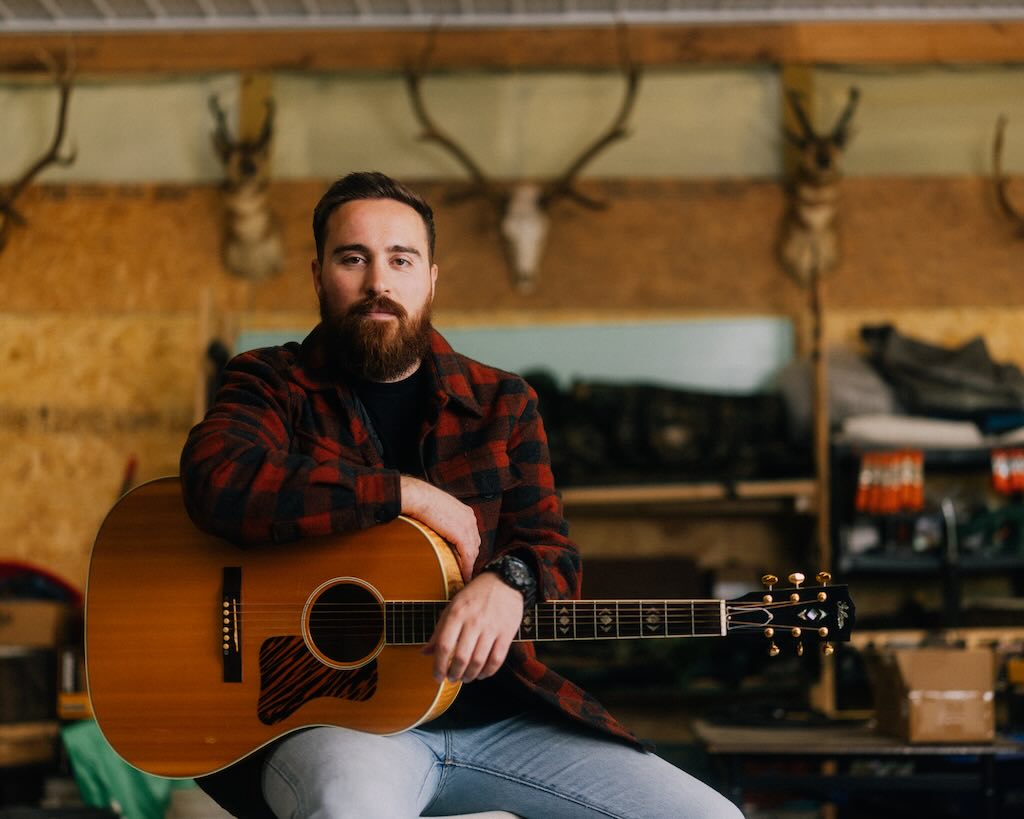
At eight years old, Dylan Bradley wanted to play rock music. His grandmother had given him his first guitar, and he spent hours in his bedroom learning songs by AC/DC and Guns N’ Roses. On Saturdays, his parents would put on CDs in the living room. Pearl Jam might be followed by Brooks & Dunn, Meat Loaf or Counting Crows.
His father leaned toward rock. His grandmother loved country. Bradley grew up somewhere between the two, eventually finding himself drawn to the storytelling in country and Americana music.
Those early memories belong to Oakdale, Pennsylvania, where Bradley grew up before moving to Nashville in 2019. He spent more than six years performing with November Blue before pursuing music under his own name. In Nashville, playing several nights a week taught him how to hold a room, read an audience and perform even when the evening wasn’t going his way.
But Pennsylvania remains close. Bradley wears a whitetail deer necklace connected to his late grandfather, a reminder of his family and the place that shaped him. The details of home also find their way into his songwriting. On “Read My Mind,” a song that began during a month-long writing challenge, a possible future takes shape through rose beds, children’s drawings and pencil marks on a door.
Those images came from conversations with co-writers John Wilcox and Liam Slater, but their roots are personal: his grandparents’ garden, drawings his parents kept on the fridge, and the kind of family life he imagines building himself.
In conversation with Good Hours, Bradley talks about the music he heard growing up, learning his craft on Nashville stages, writing with people he trusts and how his understanding of home has changed with time. He also describes a perfect day back in western Pennsylvania, involving baseball, sandwiches, old friends and a family card game.
Good Hours / Music
Artist File — 2026
Artist
Spotlight
Good
Hours
In Conversation
Dylan Bradley
Singer-Songwriter / Nashville, Tennessee
“I’m always going to carry where I came from with me, but I’m also learning that home can be something you build along the way.”
Dylan Bradley / On the Meaning of Home
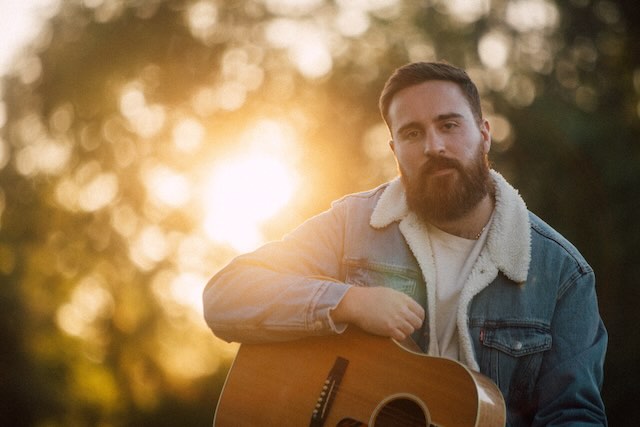
The Pennsylvania He Carries
Good Hours: You describe Pennsylvania as something you try to carry with you in everything you are. After living in Nashville for several years, what parts of home have become more important to you precisely because you no longer live there?
Honestly, the longer I’ve been away from Pennsylvania, the more I’ve realized how much of it shaped who I am. When you’re growing up there, a lot of things just feel normal. The mountains, the seasons, the small towns, the old buildings, the blue collar people. It wasn’t until I moved away that I started to understand how much I loved all of that.
The people have become especially important to me. There’s a certain toughness and humility to where I come from where people take pride in what they do. They look out for each other, and there’s not a whole lot of pretending to be something you’re not. I try to carry myself like that, especially in my music. I want the songs to feel honest and lived-in. I never want it to feel like I’m putting on a character just because I live in Nashville and make country music.
Good Hours: Your grandmother gave you your first guitar when you were eight. When you think about that guitar now, what do you remember about actually being eight years old with it — what you tried to play, where you played it, or what you imagined music might become?
When I first got my guitar, all I wanted to play was rock music. I’d sit in my room for hours learning AC/DC and Guns N’ Roses songs. At the same time, my parents listened to such a wide range of music that, as a kid, I could never quite understand how it all fit together. Every Saturday, they’d go into the living room and put on CDs from their collection. It could be anything from Pearl Jam and Meat Loaf to Brooks & Dunn, Matchbox Twenty, or Counting Crows.
My dad leaned more toward rock, so naturally that was where I gravitated at first, while my grandmother was the one who really loved country music. Eventually, after I felt like I had played every rock song I could get my hands on, I started dipping into country. Something about it immediately felt comfortable to me. I loved the storytelling and how much a song could say without needing to be complicated.
I had always known that I wanted music to be a part of my life, but it wasn’t until I really started listening to country and Americana that I could picture myself singing, writing, and playing music for a living. By the time I got to high school, I had started a band, and that gave me the confidence to start taking that dream seriously. Looking back, I think all of those different influences were slowly leading me there — I just didn’t realize it at the time.
Finding His Place on Stage
Good Hours: You spent more than six years performing with November Blue before stepping forward under your own name. Was there a particular moment when “Dylan Bradley” stopped feeling like simply your name and started feeling like an artist you understood?
I think I always had a pretty strong sense of who I was and what I wanted to do musically. Being in a band has such a great collaborative aspect to it, and that was something I truly loved about November Blue. Everyone brings their own influences, ideas, and instincts to the table, and for a long time, that made us better. It taught me a lot about writing, performing, and learning how to create something that was bigger than just one person.
But as we got older, I think we naturally started seeing our futures a little differently. We all had different ideas of where we wanted to go musically and what we wanted our lives and careers to look like. It wasn’t necessarily that I needed to leave the band to figure out who I was. If anything, I think I already knew, and I reached a point where I had to stay true to that direction and see where it could take me. In that sense, Dylan Bradley didn’t suddenly become an artist I understood — I think stepping out on my own just gave me the opportunity to show people more clearly who that artist had always been.
Good Hours: You’ve said that playing several nights a week in Nashville changed music from a passion into a profession. What did doing it that often teach you that rehearsing, writing or dreaming about a music career never could?
Playing music is everything to me. It’s what constantly drives me to become a better artist, performer, and singer. Playing several nights a week in Nashville taught me who I am as a showman in a way that rehearsing in a room never could.
When you’re playing that often, you learn pretty quickly how to read a crowd. You learn when you have their attention, when you’re losing them, when to say something, when to just let the song speak for itself, and how to connect with people who may have never heard your music before. Every crowd is different, and you have to figure out how to make that room care about what you’re doing. You can rehearse a song a thousand times, but you can’t rehearse that connection.
It also taught me consistency. There are nights when you feel great and everything comes naturally, and there are nights when you’re tired or the room isn’t giving you much back, but you still have to get onstage and give people the same level of performance. I think that’s where music really started becoming a profession for me. I stopped thinking only about whether I could play or sing the songs well and started thinking about how I could make people feel something when I performed them. More than anything, those years of playing night after night gave me confidence in who I am onstage. You can dream about being an artist for your entire life, but getting onstage over and over again is where you actually learn how to become one.
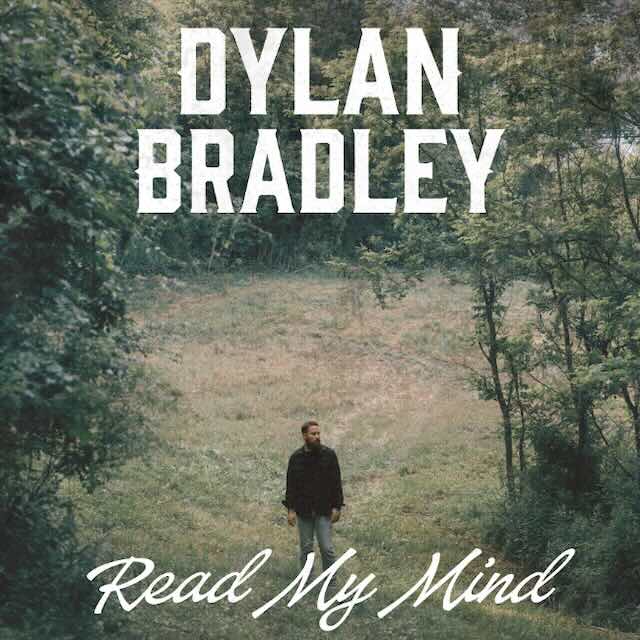
The Ordinary Future in “Read My Mind”
Good Hours: “Read My Mind” came from that strange early stage of a relationship when another person can feel almost impossibly familiar. Was there one small moment — outside the song itself — when you first thought, “How did you know I was going to say that?”
I don’t know if there was one specific moment as much as it was something that kept happening. We were still getting to know each other, but there were so many times where one of us would start a sentence and the other person would finish it, or I’d be thinking about something and she would bring it up before I ever had the chance to say it.
I remember thinking it was almost weird how quickly we seemed to understand each other. Usually, when you first start dating someone, there’s that period where you’re trying to figure each other out — what they like, how they think, what makes them laugh — but with us, a lot of that felt like it was already there. There were little moments where I’d just look at her and think, “How did you know I was about to say that?”
Good Hours: The song eventually starts imagining rose beds, a porch swing, children’s pictures and marks on a door. Those are very ordinary images compared with the grand gestures we often hear in love songs. Why were those the details that represented a future to you?
That second verse you’re referencing is actually the second verse John Wilcox and Liam Slater wrote with me. I hadn’t had the second verse of the song yet and I didn’t really know where I wanted to go. Then Liam said, “Well, where do you see this relationship going?” and then John said, “Yeah, what do you physically see when you two are together in the future?” Then that is how that second verse came to be.
It ultimately took from relationships I had witnessed growing up. For my grandparents it was the rose beds, for my parents it was the drawings I had made for them that they put on the fridge, and for future me and her it was pencil marking our kids’ height on the door, which we actually never did in my family. I like to draw back on the experiences I had with the people I love to really show how much love was in that second verse.
Writing Under Pressure, Writing Together
Good Hours: You were challenging yourself to write a song every day for a month when “Read My Mind” appeared. What happens to your inner critic when you’re simply not allowed enough time to overthink what you’re making?
The inner critic definitely feels the heat. But they say pressure makes diamonds and I really like to put myself in situations like that. Especially whenever I am not feeling as creative as I usually am. I truly try not to critique myself too hard though. The biggest thing I look at when I write a song is “Is this me? Do I truly see myself singing this twenty years down the road?” It doesn’t matter if it took me two hours or thirty days to write the song. What matters most is that I am true to myself.
Good Hours: You arrived at The Pasture without a second verse, and Liam Slater ended up helping you finish it while visiting the session. As a songwriter, how do you know when to keep wrestling with something yourself and when another person’s instinct is exactly what a song needs?
I really love writing with other people. I think collaboration is such an important part of songwriting because it gives you the opportunity to see an idea from a completely different perspective. You might hear something one way, while the person sitting across from you hears it in a way you never would have thought of. You might say red and they might say green, but somehow together you find a way to mix those ideas into yellow.
I also think it’s really important to write with people you’re comfortable with, especially people who genuinely know you. When you trust the people in the room, you’re more willing to be honest and say the things you might normally hold back. Sometimes they can even recognize when there’s more to something you’ve said and push you to dig a little deeper. That’s when a song really starts to come alive for me, because it stops being about finding the perfect line and starts becoming about putting some real feeling and truth into it.
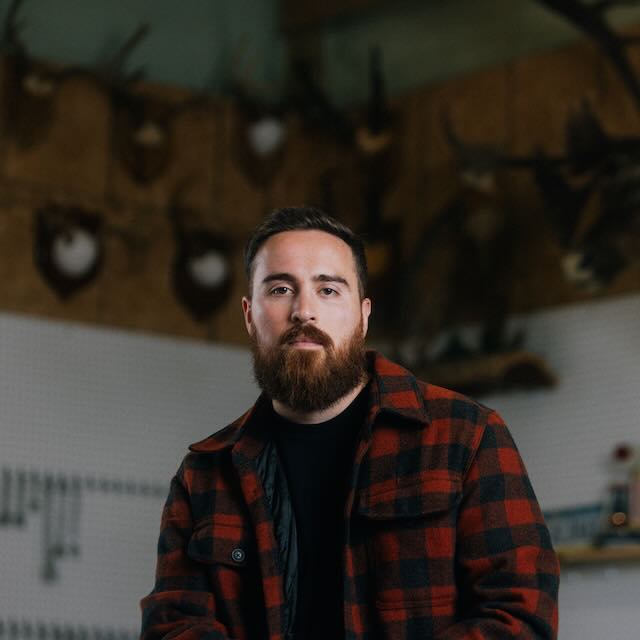
A Piece of Home
Good Hours: You wear a whitetail deer necklace connected to your late grandfather. Without giving the object more symbolism than you personally give it, what does putting it on mean to you in ordinary life?
It means everything to me. It’s so much more than just representing where I’m from. It means carrying my grandfather, my state, my family, my pride, and everything that helped shape me into the person I am today. No matter where music takes me or how far away from home I might be, those things are always going to be a part of me. They’ve shaped the way I look at life, the way I carry myself, and even the way I write my songs.
So when I say I carry Pennsylvania with me, I really mean I’m carrying a piece of my family and my history with me too. It keeps me grounded and reminds me that wherever I go, I’m still representing something much bigger than just myself.
Good Hours: A lot of your writing seems to exist somewhere between leaving and belonging — hometowns, relationships, growing up and now the possibility of building a future with someone. Has your definition of “home” changed since you left Pennsylvania?
I definitely think my definition of home has changed as I’ve gotten older. Growing up, home was always Pennsylvania. It was my family, my friends, the places I knew, and everything that was familiar to me. When I first left, I think I still looked at home as a physical place that I could always go back to. But the longer I’ve been away, the more I’ve realized that home is really the people and the things you carry with you.
Pennsylvania will always be home to me because it made me who I am. My family is there, so many of my memories are there, and there’s a part of me that I don’t think will ever completely leave it. At the same time, I’ve built a life for myself in Nashville. I’ve grown up here in a lot of ways, both personally and as an artist, and this city has become another version of home for me.
And now, as I get older and start thinking more about the future, I think home is becoming less about where I am and more about who I’m sharing my life with. There’s something really special about realizing you can build that feeling of home with another person. I think that’s probably why leaving and belonging show up so much in my writing. I’m always going to carry where I came from with me, but I’m also learning that home can be something you build along the way.
One Free Day in Western Pennsylvania
Good Hours: Suppose you had one completely free day back in western Pennsylvania tomorrow — no show, no writing session and nobody expecting anything from you. Where would you go, who would you want to see, what would you eat, and what would make the day feel unmistakably like home?
First things first I’m going downtown. I’d take all of my best friends to an afternoon Pirates game. Gotta stop down in the North Shore first and hit up some bars before we go in though, specifically Southern Tier. Then enjoy the Pirates game for the afternoon but after we gotta go to Primantis down in the Strip District. And if you don’t get everything on your sandwich, you’re gonna get some crap from the boys.
After that we’d probably hang out down in the Strip for a little. Probably go to Rolands for a little and then everyone would head home. Then to top it all off, I’d spend the night with my family playing Euchre. Always gotta end the night with some cards.
After talking about Nashville stages, songwriting sessions and the meaning of home, Bradley’s ideal day is wonderfully ordinary. A baseball game with friends. A sandwich eaten the right way. Cards with his family at the end of the night.
He has built a life in Nashville, but there are still some things that only western Pennsylvania can give him.
Dylan Bradley: Frequently Asked Questions
Who is Dylan Bradley?
Dylan Bradley is a Nashville-based singer-songwriter from Oakdale, Pennsylvania. His musical background includes rock, country and Americana, and he previously performed with the band November Blue.
Where is Dylan Bradley from?
Bradley grew up in Oakdale, Pennsylvania, near Pittsburgh. He moved to Nashville in 2019 but continues to draw on memories of western Pennsylvania in his music and personal life.
How did Dylan Bradley start playing music?
His grandmother gave him his first guitar when he was eight years old. He initially learned rock songs by bands such as AC/DC and Guns N’ Roses before becoming interested in country and Americana.
What is Dylan Bradley’s song “Read My Mind” about?
“Read My Mind” grew from the early stages of a relationship in which Bradley felt an immediate sense of familiarity with another person. The song imagines a shared future through ordinary details of family life.
Who helped write “Read My Mind”?
Bradley wrote the song with John Wilcox and Liam Slater. He credits their questions about how he imagined the relationship developing with helping shape the second verse.
Why does Dylan Bradley wear a whitetail deer necklace?
The necklace is connected to Bradley’s late grandfather. For him, it represents his family, Pennsylvania and the experiences that shaped his identity.
https://www.dylanbradleymusic.com
https://www.instagram.com/dylanbradleymusic