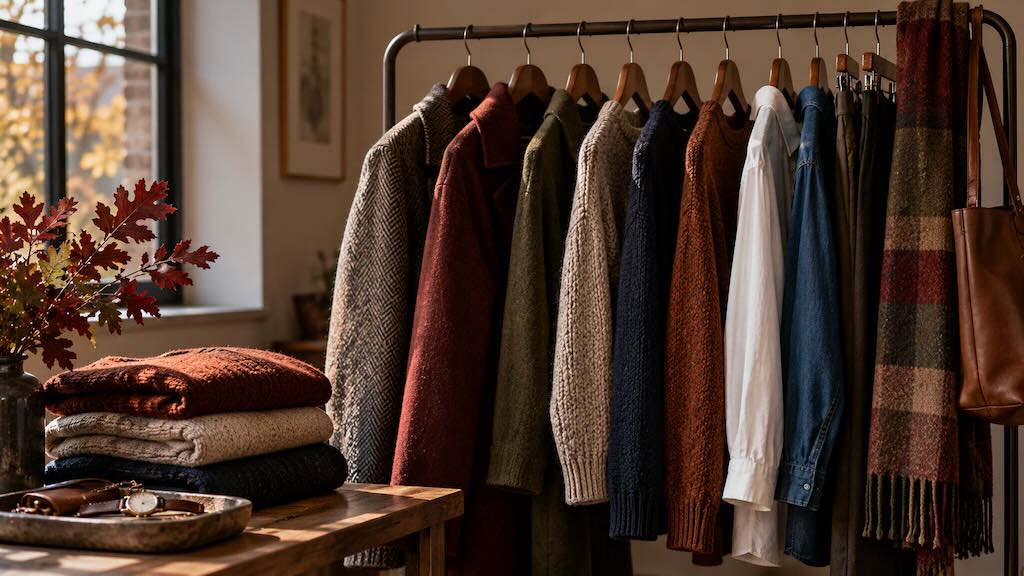
There is a familiar moment when the weather turns colder and getting dressed suddenly becomes more complicated. The light shirts you wore all summer are still hanging at the front of the wardrobe. Somewhere behind them are the wool trousers you forgot about, a coat that needs cleaning and a jumper you stopped wearing because the neckline never sat quite right.
Autumn has a way of making a wardrobe feel both full and strangely unhelpful. Before buying another knit or deciding you need an entirely new look, it is worth spending an hour with what you already own.
A wardrobe edit isn’t about reducing everything to a carefully counted collection of basics. It’s about finding the clothes that work for your life now, recognising what needs attention and making it easier to get dressed on an ordinary Tuesday morning.
Start with the clothes you actually wear
Before emptying every drawer onto the bed, think about what you wore during the past few weeks. Which trousers did you reach for repeatedly? Which shoes were comfortable enough for a full day? Was there a jacket you kept choosing even when you had other options?
Those habits tell you more about your wardrobe than a photograph of an ideal autumn outfit.
Take out your colder-weather clothes and try on anything you’re uncertain about. Don’t judge a garment only by whether it technically fits. Sit down in the trousers. Move your arms in the jacket. Check whether a jumper feels comfortable against your skin.
Then divide the clothes into four groups:
- Wear now: clothes that fit, feel good and suit your everyday activities.
- Repair or alter: pieces you would genuinely wear if a specific problem were fixed.
- Store: seasonal clothing that is still useful but doesn’t need to occupy accessible space.
- Let go: items you no longer want or need, provided you’re ready to part with them.
Don’t force yourself to make every decision immediately. If you’re uncertain about something, put it aside and return to it later. A thoughtful edit is more useful than an enthusiastic clear-out followed by regret.
Know what’s worth repairing
Some of the most useful clothes in a wardrobe are the ones that need a little attention.
A missing button, loose hem or small opening along a seam may be straightforward to repair. A favourite pair of trousers might need shortening. A wool jumper covered in pills may look considerably better after careful maintenance.
But not every garment is worth an expensive alteration. A jacket that has never fitted properly across the shoulders may remain uncomfortable even after adjustments. A jumper that irritates your skin won’t become more wearable because you’ve repaired a loose cuff.
Ask yourself a practical question: If this were repaired tomorrow, would I wear it next week?
If the answer is yes, investigate the repair. If you’re still imagining a different version of your life in which the garment might become useful, it probably isn’t a priority.
Check care labels before washing or treating fabrics. Wool, silk and other delicate materials may require particular care, and home treatments can sometimes cause more damage than the original problem.
Keep the repair pile small enough to act on. Three garments you can mend or take to a tailor this month are more useful than fifteen waiting indefinitely in a bag.
Build outfits before making a shopping list
One reason wardrobes feel incomplete is that we tend to think about individual garments rather than the combinations we actually wear.
You might own several beautiful jumpers but have only one pair of trousers that works with them. Or you may have plenty of autumn clothing but no comfortable shoes for wet days.
Instead of counting how many tops or jackets you own, put together five outfits for a normal week. Include the shoes, outerwear and layers you’d need to leave the house.
Think about the situations you regularly dress for: commuting, working, meeting friends, walking, shopping or spending time at home. Your wardrobe should reflect those activities rather than an imagined schedule of occasions that rarely happen.
Notice where an outfit becomes difficult. Perhaps you need a lightweight layer under a coat, or a pair of shoes that works with several trousers. These are more useful observations than deciding you need to follow this season’s colours.
If you identify a gap, write it down with enough detail to guide a purchase. “Comfortable waterproof shoes for everyday walking” is a better shopping note than “new autumn boots.”
Then wait a little. You may find another solution among the clothes you already own.
Make the wardrobe easier to use
Once you’ve decided what belongs in your autumn rotation, give those clothes the most accessible space.
Move lightweight summer pieces into suitable storage if you won’t need them for several months. Keep everyday trousers, shirts and layers where you can reach them without moving other garments aside.
Heavy knitwear often benefits from being folded rather than hung, which can help prevent stretching. Coats need enough room to hang without being compressed between other clothes. Store garments clean and dry, following their care requirements.
Arrange things in a way that makes sense to you. Some people prefer clothing grouped by type; others find it easier to keep regularly worn pieces together. The goal isn’t a perfectly colour-coordinated wardrobe. It’s being able to find what you need.
Consider keeping a few reliable outfit combinations in mind for busy mornings. A pair of trousers, a knit and a jacket that work comfortably together can save time without requiring you to dress the same way every day.
Buy less, but choose more carefully
After an edit, you may discover that something genuinely needs replacing. A worn-out coat, uncomfortable shoes or trousers that no longer fit can create a practical gap.
Before buying, consider how the new item will work with the rest of your wardrobe. Can you wear it with at least a few outfits you already own? Is the fabric suitable for your climate and routine? Does it require care you’re willing to provide?
Pay attention to fit and construction rather than assuming a higher price guarantees better quality. Check seams, closures, fabric composition and care instructions. When possible, try the garment on and move around in it.
Second-hand shops can be worth exploring, particularly for coats, knitwear and other pieces where you can assess condition carefully. Look for wear at cuffs, collars, seams and areas exposed to friction. A bargain is only useful if the garment is something you’ll wear.
And don’t feel obliged to replace something simply because it’s no longer fashionable. If your favourite coat is warm, comfortable and still in good condition, it has already passed the most important test.
A wardrobe that belongs to your life
There is a particular satisfaction in rediscovering a piece of clothing you’d forgotten you owned. Sometimes it only needs a button, a different combination or a little space around it to feel useful again.
An autumn wardrobe edit doesn’t need to end with matching hangers, an empty rail or a shopping trip. It can simply mean knowing what you have, taking care of what you like and finding fewer reasons to stand in front of a full wardrobe wondering what to wear.