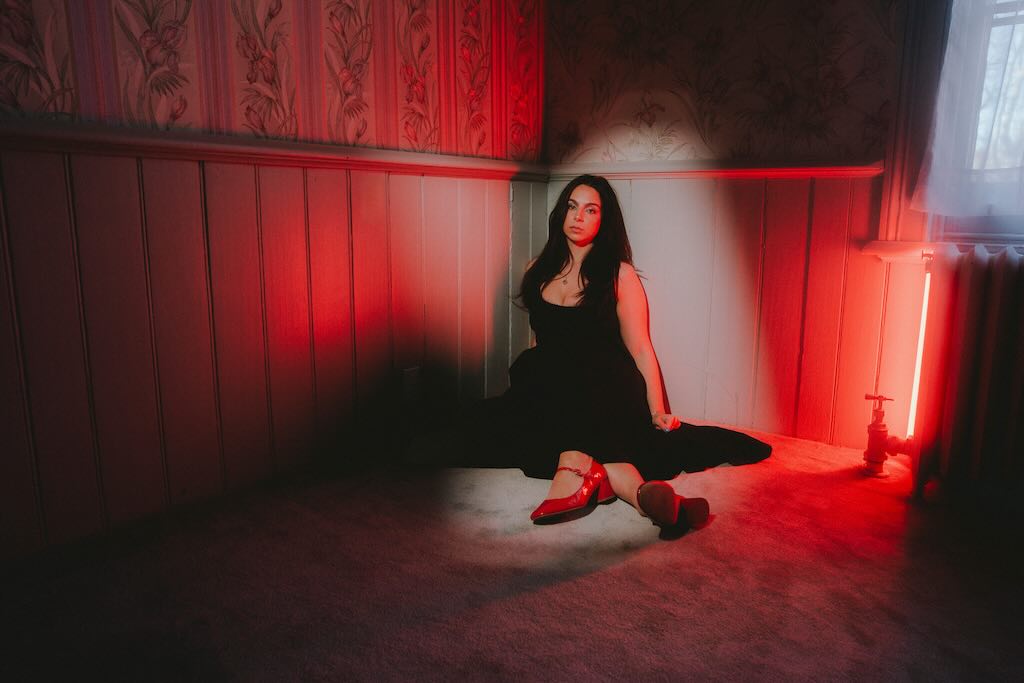
In autumn and winter, Ariana Fig would meet her co-writer Emma Whale at Catherine North Studios in Hamilton. They would sit with tea, talk for a while and return to a half-written song Fig had brought with her. The colder months suited her. She liked the darkness, the quiet and the feeling of having room to think.
Those evenings offer a small glimpse into the way the Hamilton, Ontario-born singer-songwriter works. Fig began with classical violin training, later teaching herself guitar and finding her way into songwriting without worrying too much about whether she was doing it correctly. Melody came naturally. The words sometimes took longer.
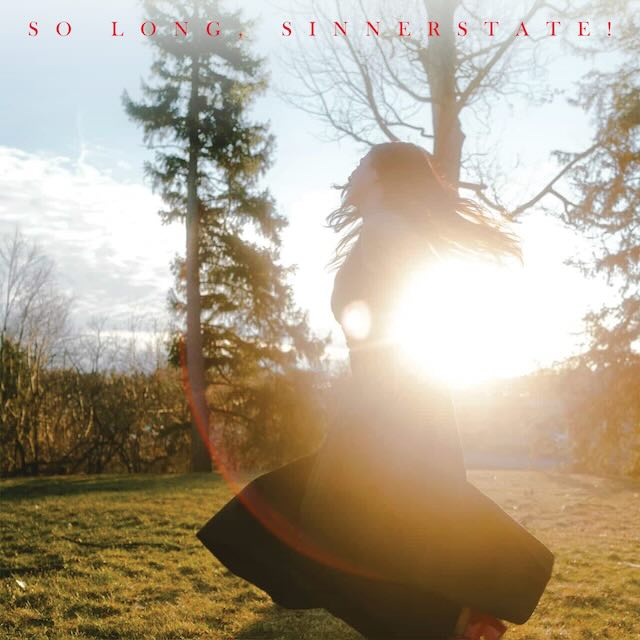
Her debut full-length album, So Long, Sinnerstate!, follows two independently released EPs and marks a wider approach to storytelling. Alongside her own experiences, Fig has drawn from books, films and imagined perspectives, allowing the songs to move beyond the details of her life. The title track looks back at the ambitions of her younger self while leaving the future unresolved.
There is a certain independence in that approach. Fig doesn’t spend much time deciding what genre a song should belong to, and she isn’t especially interested in repeating a sound simply because listeners recognise it. She would rather follow an idea wherever it goes.
In conversation with Good Hours, Fig reflects on learning to let go of perfection, the strange experience of hearing her younger self in old songs, the place melody holds in her writing and why making music remains a necessary outlet for her emotions.
Good Hours / Music
Artist File — 2026
Artist
Spotlight
Good
Hours
In Conversation
Ariana Fig
Singer-Songwriter / Hamilton, Ontario
“Melody is where my heart belongs.”
Ariana Fig / On Songwriting
Learning to Trust the Song
Good Hours: You began with classical violin training, which comes with structure, discipline and ideas about the “right” way to play. When you started writing your own music, did you have to unlearn any of that in order to trust something messier or more instinctive?
I definitely had to unlearn the idea of being perfect. That’s with any new thing you try out. But it wasn’t so much a conscious decision as it was just a lack of knowledge. I taught myself how to play guitar and write and having a music background from my violin training was extremely helpful when it came to writing melody. I trusted my gut a lot when it came to just playing. My guitar is and was the vehicle for my songwriting. I will never be the most amazing guitarist out there — but I learned fairly quickly that I don’t have to be.
Good Hours: Your music moves between indie, folk, rock and alternative sounds rather than settling comfortably into one place. When you’re writing, how much do you think about genre — and how much do you deliberately try not to?
I honestly don’t think about it ever. Genre is a funny thing, because it’s just a way to categorize, but I have never deliberately said “I’m writing a country song today!” Songs just flow out and the genre comes after whether that’s in the production or how you choose to sing it. I select instruments to play on a track based on what I think will add the most value to the song, not necessarily because it will make it lean into one genre more than another.
What Becomes Public
Good Hours: There’s often a moment when something private becomes a song and therefore stops belonging entirely to you. Is there a point in the writing process when you become aware that somebody else may eventually hear what you’re putting down?
I think it happens for me now at the beginning of the songwriting process. There’s a lot of back and forth with myself and my co-writers about whether this grammatically actually makes any sense. I never stress too much if the audience won’t interpret something the same way I do, but I do want to make sure that I am bringing my points across as clearly as I can, something I didn’t stress too much about early on in my career.
Good Hours: Vulnerability is frequently praised in songwriting, but being genuinely vulnerable can be uncomfortable. How do you distinguish between something that feels honest enough to share and something that still needs to remain yours?
Great question, the answer is I don’t. I think if when I decide it’s time to write and something so vulnerable comes out, then that deems it worthy to be heard.
Good Hours: Songs can preserve surprisingly specific versions of us. When you return to something you wrote several years ago, do you reconnect with the person who wrote it, or do you sometimes hear that person almost as a stranger?
I lean more towards hearing a stranger. Of course, I can remember when and where I was when I wrote those songs, but to actually feel what I felt when writing them is a bit unknown to me now. I think there’s beauty in art like this because it is a timestamp of whatever was going on in your life or your creative process, but you can let it all go with time.
Where Melody Begins
Good Hours: Your melodies often have to carry emotions that the lyrics can’t necessarily explain on their own. Does melody usually arrive alongside the words for you, or can the sound of a song tell you what you’re feeling before you’ve found language for it?
Melody is where my heart belongs. Sometimes the words and melody come together, but there have been so many times where I have a melody saved on my voice notes that I know I need to find the perfect words for to capture the feeling it gives me. Sometimes, there aren’t the right words to capture it though.
Good Hours: Recognition such as the SOCAN Young Canadian Songwriter Award can provide an external confirmation that your work is connecting. Did receiving that kind of recognition change anything internally, or did you still return to the next song with the same doubts and questions?
It definitely felt nice to be recognized, but music is subjective. I think it just means the song really landed with whoever was on the committee at that time. I love that song and that’s why I submitted it. If it didn’t win, I would still love that song.
From the Bedroom to the Stage
Good Hours: You’ve played everything from festivals to industry-facing stages, but songwriting itself can be an intensely solitary process. What happens to a song emotionally when something written alone suddenly has to live in a room full of people?
For me the song opens up into a being of its own. Something that used to feel like a little prayer I would recite in my bedroom then gets to become lyrics that people are singing along to or writing on their notebooks. It is an incredible feeling to see how music can connect us all, and to be just a small part in that connection.
Autumn Evenings in Hamilton
Good Hours: Hamilton is where your story begins. Are there particular places, routines, seasons or ordinary details from home that have quietly found their way into your writing, even when you weren’t consciously writing about Hamilton?
Catherine North Studios has become a place of solitude for me and my writing. My co-writer, Emma Whale, who is an engineer and producer out of Catherine North, would meet up in the evenings of autumn and winter, chat over some tea, and just write from a half-written song I would bring in. I definitely find myself more inspired in the fall and winter. I love the darkness and the cool temperature, it lets me zone out and write from a place of calm.
Keeping the Unexpected
Good Hours: As more people encounter your music, there can be pressure to understand what your “sound” is and repeat what works. How do you protect the unpredictable part of yourself — the part that might want the next song to go somewhere nobody expects?
I just always say that I make music that I like. If you take a look at my playlists, there is quite literally something for everyone. I never want to say I won’t make a certain stylistic choice because then I am closing myself off to new opportunities. There are some people who enjoy knowing what they will get from an artist they are listening to and a fan of, I am not one of those people. I love the element of surprise.
Good Hours: Away from releases, performances and everything that turns music into a career, what still brings you back to making something simply because you need or want to make it?
I am first and foremost, a drama queen. If I don’t make something or write or sing, my emotions will come out some way or another. I prefer to use that energy and put it towards the thing I am passionate about.
Fig’s answer is funny, but it also brings the conversation back to something simple. Making music isn’t only a matter of choosing the right sound or finding the right words. Sometimes it is what she needs to do with everything she is feeling.
And if the next song takes her somewhere unexpected, she seems happy to follow it.
https://found.ee/arianafig-solongsinnerstate
Ariana Fig: Frequently Asked Questions
Who is Ariana Fig?
Ariana Fig is a singer-songwriter from Hamilton, Ontario, Canada. She began with classical violin training before teaching herself guitar and developing her own songwriting practice.
What is So Long, Sinnerstate!?
So Long, Sinnerstate! is Ariana Fig’s debut full-length album, following two independently released EPs. Its songs explore identity, ambition, memory and personal change, with writing informed by both lived experiences and imagined perspectives.
What inspired the title track “So Long, Sinnerstate!”?
Fig has cited MJ Lenderman’s Manning Fireworks and Briston Maroney’s JIMMY among the music she was listening to while writing. The song reflects on the dreams of her younger self and the uncertainty of what comes next.
How does Ariana Fig approach genre?
Fig says she does not begin writing with a particular genre in mind. She chooses instruments and arrangements according to what she feels the song needs, allowing its style to emerge during writing and production.
Where does Ariana Fig write music?
One important place in her songwriting life is Catherine North Studios in Hamilton, where she has worked with co-writer, engineer and producer Emma Whale. Fig particularly enjoys writing during autumn and winter evenings.
What role does melody play in Ariana Fig’s songwriting?
Melody is central to Fig’s creative process. She sometimes saves melodic ideas as voice notes and returns to them later, searching for lyrics that can express the feeling already present in the music.