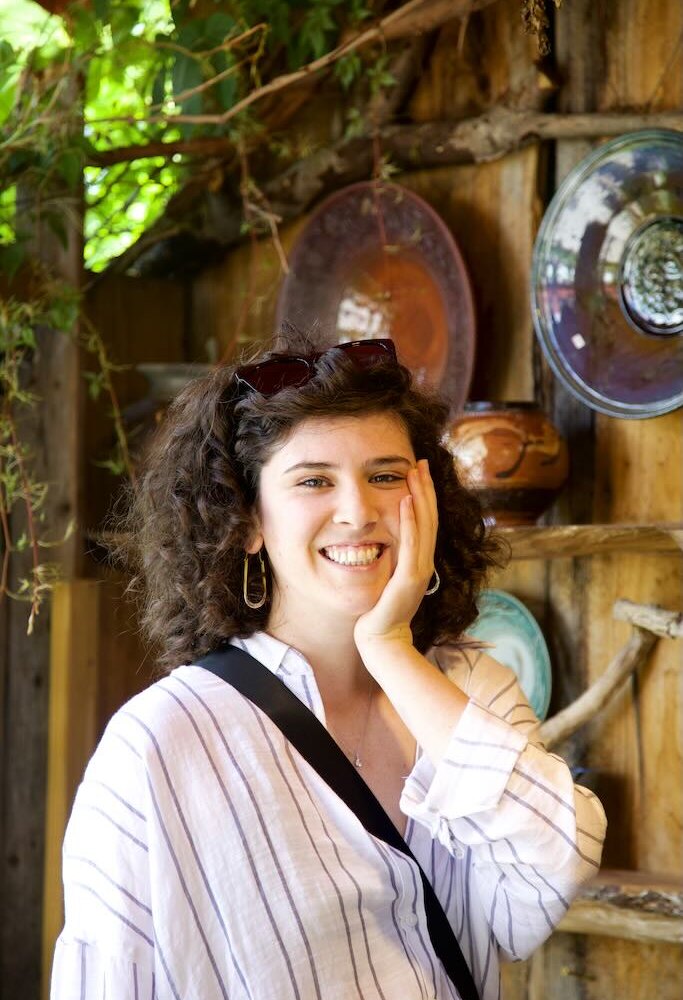
Tessa Elaina has been carrying some of the songs on Over The Years for more than a decade. Rather than reshape them to fit the person she is now, the Michigan singer-songwriter has chosen to let those different versions of herself sit beside one another — across songs about love, faith, illness, identity, isolation and the search for home. Recorded largely with little more than her voice, piano or acoustic guitar, the album also reflects a quieter shift: learning to value what can be made with the life, body and resources available now, rather than waiting for ideal circumstances.
In Focus
Tessa Elaina
Over The Years gathers songs Tessa Elaina wrote across more than a decade, leaving different periods of her life in conversation with one another. With voice, acoustic guitar and piano largely at the centre, the record reflects a decision to stop waiting for ideal circumstances and let the songs exist as they are.
Songs Across Time
Good Hours: Over The Years brings together songs written across more than a decade. What was it like to return to work created by earlier versions of yourself — did any of those songs feel as though they belonged to someone you no longer completely recognize?
I wouldn’t say these songs feel like they belong to someone I no longer completely recognize. But I’ve certainly changed quite a bit.
I still easily connect with each of these songs I’ve written, even the one back from 2013, “Tired Tried Lovin.” Even though it harkens back to a heartbreak of, you know, 13 years ago. It’s not that I still live in or feel that heartbreak, but I completely understand and still resonate with the sentiment and the thing I was experiencing at that time. It was part of the process — part of the coping process — for getting over that breakup. Recognizing all the difficulty and the heartache and struggle that existed in the relationship with that person. And so part of my experience was feeling relieved to leave the relationship. And that’s true.
I love that the song speaks to the idea that this feeling [of relief] is only temporary. And that’s a reminder I use often — that my feelings are passing, not permanent. Part of the process of getting over that person was to be angry, and spiteful in my claims about the relationship. It’s very relatable to me even still. I am, though, 13 years wiser now and a different person in relationship and life in plenty of ways at this point. But the wisdom there, about the temporary nature of my experience — it still hits the same.
Another song that I might reflect on in this question is “Tap Tap Tap.” The back story is important. I wrote this song about basically what felt like the failed adoption of a technique that was meant to help me process painful memories and emotions, called Emotional Freedom Technique — or for short, EFT. I was working with this practitioner who was freaking expensive, so there was a lot of pressure to make the most bang for my buck. Ultimately, I wasn’t having great success with her system, and one of the sentiments she expressed to me was that I must have not been doing it correctly and wasn’t trying hard enough. And what came out of this song was this realization, and this railing against what she had proposed — that I was doing it incorrectly, and therefore that’s why it’s not working. Instead, I was able to recognize that it wasn’t about me being a failure, but rather I understood that I’d made a great effort, and needed to pivot and focus my energy elsewhere. That my perspective needed to shift, and this was not the area to focus on at present. And that was what I did, which allowed me to move forward in another direction and actually begin making progress. I rejected the idea that somebody else had greater authority over my inner experience, and that their judgement ultimately mattered.
Receiving rejection and being criticized by others — I encountered that a lot as a child, especially, as surely many people can relate. And it left a mark. The lyrics, “Do it this way, do it right now / like you learned, like you were shown how / No, not like that / Tiptoe back home / You’re not welcome here / Go back where you came from.” People saying you’re not doing “it” right and maybe attributing it to a character flaw or weakness. And as a kid, it’s easy for someone else’s certainty to override your knowledge of yourself. So that’s what part of that song is about, and what the EFT experience brought up for me.
But my actual point is that I was doing those sessions in 2024, and in early 2026, I started using EFT again. I took my own approach to it, in a more intuitive, intelligent way for myself, and it was incredibly helpful for me. And I just love the irony of that, and the change I’ve experienced! So, again, it’s not that I no longer recognize the person I was when I wrote this. I completely recognize that version of myself. But what’s so interesting is that, the technique that failed to help me — the experience that felt so bad and drudged up deeper emotions from childhood — and inspired the song, is now actually a technique I use with success!
So I don’t feel estranged from the earlier versions of myself in these songs. If anything, I’ve had the experience of time validating them.
“I don’t feel estranged from the earlier versions of myself in these songs. If anything, I’ve had the experience of time validating them.”
Good Hours: There’s an interesting difference between remembering who you were at a particular point in your life and actually hearing something that person wrote. Did revisiting these songs bring back details, emotions or memories you thought you had forgotten?
I think my first instinct in response to that question has to do with the very first song on the album called “Walk These Floors.” I wrote that song in 2022 before leaving a home I’d lived in for six years. Prior to living there I’d had several years of moving and changing home bases, and when I left, it was unclear where I’d go next.
“Walk These Floors” was also one of the last two songs I physically recorded for this album, so recording it gave me a great opportunity to reconnect with and ponder that time and feel those emotions again. The song is about feeling reconnected in a deep way to my body and also feeling connected to a sense of home. It’s also about feeling deeply reconnected to my body and also connected to a sense of home — “in my bones, in my cells, I’m at home,” and this feeling of, “I can sleep again, I can breathe again.” It came from a sense of recovery and reprieve after having been very ill, and relief that I could inhabit my body and feel at home again.
There was a prayer and a hope in it, too, that as I left that home, I was going to be okay because home was inside of me and not a physical thing. Which was a belief that got majorly challenged.
My songs have a tendency of doing this. I write songs and I feel like I’m moving on to another chapter, and it’s my hope and prayer that the next chapter will be better. But then that’s not quite what happens. It’s kind of hilarious and ironic, honestly, because it has happened repeatedly. I’ve had songs become really essential to me later on because I ended up needing them through experiences I couldn’t have anticipated when I wrote them. That happened with my EP. Songs in that EP wound up being way more powerful to me and therapeutic years after I wrote and recorded them.
But I was able to immerse myself again in the experience of being in my cells — feeling a sense of recovery and reprieve. It was wonderful to revisit those details and those emotions and the memory of that time. And I especially remember when I first started working on this version of “Walk These Floors” with the pianist on the track, Peter Prochnow. He asked me when we started, “What is this song about?” And when I first started to give him an explanation, it had been many years. I hadn’t thought about it in quite a while. So I gave him my first response which was what I’ve described thus far. But as time passed and I continued to ponder his question over weeks and practicing the song, I was like, “Oh wow, there’s a lot of depth here.” There’s a section that says, “I’m not so scared of the dark anymore. I’ve walked these halls. I know what’s behind each door.” Those halls are also, symbolically, the halls of my mind — the stretches of this vast psyche, and the mysterious and unpredictable nature of the brain. So I started realizing again just how much that song was speaking about. It’s a rich response to overcoming many years of quite intense struggle in which I was afraid of my own mind and feared what might bubble up from the unconscious.
Letting Go of the Perfect Version
Good Hours: You’ve spoken about spending years believing you needed more resources, money or physical capacity before these songs could become what you imagined. When did you realize that waiting for the ideal circumstances might actually be preventing you from sharing something that was already worthwhile?
I started to realize that while I was recording the last single I released, which was a more produced version of “Lover Boy.” My mom would make trips down with me to Redshift Studio, where I was recording it, and we had wonderful times then. Part of the mental shift started happening because I had to listen to the acoustic Loverboy track a lot, in order to work on harmonies and arrangement etc. I just really loved listening to it, and realized, “If I like listening to this song, there’ve got to be other people who would listen to it too.” From there the idea for the stripped-down album started to blossom. Personally, I do not listen to much acoustic stripped-down music, which is silly, and I should probably start doing it more. The music I listen to is typically more produced, and I think always surrounding myself with more complex-arrangement music made me think I had to do that, too.
I also have to give a shout-out to my best friend Chrystina, because she has given me this reality check many times. I work for her company and manage the clients’ social media — and whenever we would talk about my music, she came at it from this totally different perspective as an outsider who loves my music and knows how much original material I have. She’d basically be like, “Girl, you are just sitting on so much stuff, and you need to get it out.”
Meanwhile, I’m over here thinking that none of my stuff is ready. It’s not good enough. I’ve got to do this, that and the other thing. I’ve got to have a whole plan in place, because if I’m going to release something, I need this huge execution plan so I can make the biggest splash in the ocean possible. And Chrystina would basically say, “This stuff is great. You need to stop being so ridiculous. You need to stop being such a perfectionist, and you need to put stuff out. The only thing stopping you is you.”
And it is a very helpful reality check, because it also plays in with some of the yogic lifestyle and philosophies that I often consider. I’m always trying to check myself and question, you know, where am I being extreme? Where is my thinking distorted? What is the obstacle here? And what do I need to let go of? Aparigraha is a Sanskrit term, and it means non-grasping. What am I grasping onto here that is preventing me from literally moving forward, from doing anything at all?
Because, you know, it is a lot of work and resources and energy — all of which I did not have — to be able to put a big album together. I have limited energy and limited capacity to constantly be doing online things and putting myself out there. Social media is huge right now, and that’s fine. It may be changing the landscape of the music industry in all kinds of ways. But at some point I started saying, “you know what? I don’t care about all of that. I’m going to keep releasing music because I am a musician, social media be-damned” kind of thing.
All of that thinking was blocking me from moving forward and getting some more music out. I was held back by the idea that I had to make the biggest splash possible in the ocean of music and social media, and the result was that I wasn’t making a splash at all.
I had to recognize that Chrystina loves to listen to my recordings. My friend Joe loves them. My mom does. You know, I have a number of friends who love my music exactly as it is. So I had to really reality-check myself and be like, “This is good, so you need to just put it out there.”
And that doesn’t mean I’ve abandoned ambition. I truly do have a desire and a vision to reach a large audience and to perform on larger stages. I believe my audience is going to grow and I’m going to reach many more ears in time. So now I say to myself, in regards to going all out in production or promotion, “I don’t care about all that right now. I’ll get there. And as I do, I need to keep releasing music. I need to continue creating a library, a backlog of my work.”
Good Hours: That idea reaches beyond music: people often postpone things until they have more time, more confidence or feel more prepared. Has making this album changed your relationship with perfection in other parts of your life too?
That’s a great question. That’s a thoughtful question, and it is not one I’ve considered before. Is it having an effect on other parts of my life? What led me to this kind of change and decision — allowing me to change my mind on making this album and letting go of things — is a shift that’s present in other parts of my life. It’s a broader change that’s happening across various areas of my life: needing to move forward, not grasp so hard in a number of ways, and work with what I have now.
In different parts of my life I’ve been asking myself, like, does this thing actually need to be different in order to fulfill its purpose, or am I grasping at an imagined version of it because I have trouble allowing the version that exists to be enough? That’s playing into a number of forms of my relationships and how I relate to people, and my health.
There are some things that I really wish I had in various relationships: for people to have a deeper understanding of, like, who I am in the context of the daily things I’m struggling with and what it is I’ve struggled with for many, many years. How it all shapes me. How I think and experience the world. And as I say this, it reveals why my music is so important to me. Because it’s where I amalgamize or render all this complex stuff inside of me. I make sense of it in some way and hope the listener feels it and gets it.
Anyway…I’ve been exploring where in my relationships I have hopes and expectations for the way that a person may try to get to know me — relate to me — that may be preventing me from acknowledging the value of what they already offer — even if it’s not at quite the level I hope. So it’s like, okay, maybe they can’t do these things, but can they relate to or connect with me in some other way? If there is love in that relationship, well, okay, how can I still value and honor the love that is there? And where are there areas that I can let go of?
In regard to my health, I’ve come to this place where it’s, like, yes, I am continuing to pursue healing. Just today, I had a neck procedure done, which I am hoping will help with an injury I’ve been dealing with since a car accident in 2021. I still work with some doctors, but I very much pursue healing and learning through more holistic or alternative methods. I’m coming down from a long period of being very afraid of Western medicine and trying so hard to not have to take any medications whatsoever. Trying to find the middle place between, essentially, a western approach and a more eastern approach.
I still really want to recover in a far more significant way. But I’m here, and I have some capacity still. I can do some dance classes that I love. I love doing ballroom dancing, so I’ve been doing some of that more recently with my boyfriend. I’ll be planning a concert in the months following my album release. I continue to learn to say, okay, there are still problems yet to be understood and healed. And I want to get better, but it is not my pure and only focus. I embrace where I am, and aim for improvement. I want to be expanding, and I can accept this reality in a wider way and continue to move forward. It’s ups and downs. There are days I don’t feel this way at all — so accepting — but more and more, I’m not allowing the imperfection of my reality to prevent me from moving forward and creating a life of some joy and meaning.
By working on perfectionism across the board, I think I’m reducing the power that unanswered questions have to suspend everything else. Before, confusion, fear, lack of direction, or unresolved health challenges could derail me much more completely. Now there’s more capacity to say: I don’t know how this resolves yet. I’m still going to move forward.
“I don’t know how this resolves yet. I’m still going to move forward.”
Finding Another Creative Language
Good Hours: Some of your physical limitations changed the way you were able to play guitar and sing, and eventually restraint became part of the music itself. Was there a point when you stopped hearing those adaptations as compromises and began hearing them as part of your creative language?
Immediately. They were immediately new understandings and expressions of my creative language that I had not tapped into before. I did not see them as, “Oh, I wrote this song like this because I couldn’t make it bigger.” No. Right away it was something I loved. It was something I deeply connected to, and it was just as natural and real to me as any other more powerful song that I had written in the past. So no, I never even saw them as compromises at all. I was basically writing them thinking, wow, I love these, they’re great. I was just super into it, honestly.
I would say that discovering my gentler creative language didn’t change what I understood my voice or musicianship to be capable of. I almost want to say it reminded me: “Look. Look at the type of song that you can write when you are staying in this gentler space that somehow taps into a different layer of honesty. Look at the gift your limitations have granted you.” I tapped into another layer of honesty and rawness and vulnerability that I don’t necessarily access when I’m doing those vocally bigger songs. The emotionality is different for sure.
With a song like “Dear God” — the chorus of this song is “Hold on tight and you’ll lose it / Let go the fight is the way through this.” Most people see it as a sad song, but to me it’s actually triumphant. It’s a realization of letting go, and like, “Oh yes, here we are again. Letting go is the way forward.” If I continue to fight reality, I will continue to suffer. Those songs struck my close listeners deeply and beautifully, and a number of those people deeply love these gentler songs just like I do.
I think it’s got something to do with the voice itself, where I am in my range, that impacts the kinds of lyrics that come out. It impacts the way I play guitar too, of course. It allows me to enter a different emotional place.
“Woman” is a really good example too. It’s a gentle song, but it’s also one of the lighter songs on the album. It’s about womanhood and going from “I’m a girl, I’m a child, I’m a woman.” There’s so much packed into the verses, and it’s very real and honest, but it’s different from the way I’ve historically written a lot of songs. A lot of my writing comes from pain — it leans into pain and transforms pain. “Woman” is different. Very different.
But artistically, it never felt like a lesser substitute for what I really wanted to make.
Good Hours: Most of the record leaves very little between your voice and a piano or acoustic guitar. After living with some of these songs for years, did stripping them back make you feel more exposed, or did simplicity actually give you somewhere safer to stand?
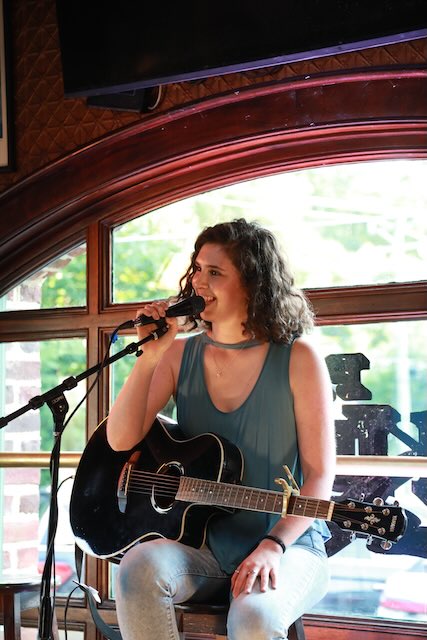
Well, the thing is that I’ve always performed these songs in their stripped-back version. And this is where my love for each song is completely grounded. I’ve always loved these songs in their original stripped-back form. So it doesn’t make me feel more exposed, but I love the fact that they are more exposed, by virtue of their simplicity, and the fact that they hold true to what most of my live performances are. I never had produced-up versions of them, nor did I work with large bands on any of them and have bigger or more complex arrangements around them.
Having little around the song creates an artistic certainty only in that I have complete control. For all five songs on this album where I am playing the guitar and I’m singing, I have full control over the dynamic movement of the song. So it provides me artistic certainty in that way, and I feel wholly responsible for the end product.
So no, I didn’t feel more exposed, and they just feel so real and authentic. In a way, that can make me feel safer, I suppose — more in control — but it’s not necessarily the word I would choose. It just feels real, and I really love that.
Good Hours: “Woman” was recorded by you on an iPhone, while other tracks were made in studios with collaborators. What did that very ordinary, immediate way of recording capture that you might have lost by trying to make the song more polished?
Well, for one, it was captured in real time, during a practice session with my awesome friend and percussionist at the time, Alex Goldstone. There’s a special magic that just happens sometimes when you’re casually running through a song that simply can’t be recreated. Maybe something different can be captured in a studio, but not recreated.
I immediately loved the balance on this phone recording — the balance of my vocals in relation to the percussion and the guitar. I just thought, “Wow, this is kind of miraculous because it sounds great!” I loved the quality of my voice right away, and the quality of Alex’s playing. And, you know, there are imperfections, but that brings charm to the recording itself. From the get-go, I also loved the little chit-chatter at the beginning and the chit-chatter at the end. You can hear Alex’s exclamation as we finish up, of something like, “Yeah, I think we’ve got something here!” It’s a great moment in time, and I’m glad it was captured.
So there’s something very special about that recording, and I’m so glad it’s in the album because it really, really brings in this DIY at-home, authentic vibe. It captures some of Alex’s personality. It captures our rapport, and it captures a little bit of the joy and the pleasure in that moment — the pleasure that it was to be playing that song together. It was just beautiful.
Another cool thing is that I actually knew shortly after I caught that recording back in 2023 that I wanted to publish it, and my plan initially was to put it up on YouTube. I went so far as to get a photographer to come around and take some photos of us, and was going to put it on YouTube after a simple mix/master. So I’d actually known for years that I loved the specific recording of “Woman,” and wanted it to be publicly available. So no, adding it to the album didn’t change my relationship to what counts as a recording, but changing my idea on what I needed to do for this album allowed me to include this recording in the project.
Home, Memory and What Remains
Good Hours: The oldest song on the album dates to 2013. When a song stays with you for that long, does its meaning continue to change as your own life changes, or is there always something inside it that belongs permanently to the moment when it was written?
I think my answer is gonna be another “it’s both” kind of thing. “Tired Tried Lovin’” is definitely one of those songs that, for the most part, belongs permanently to the moment in which I wrote it. And I think I wound up speaking to some of this idea in the first question.
I was singing to this specific person, in this specific heartbreak. The anger and the hurt that I was feeling were just a couple of many feelings I was trying to process. But at the time, I did it by saying, “You know what? I don’t owe you anything. You were just a temporary sweet something, and when I think of our tired, tried lovin, I feel relieved.” Essentially, I’m glad it’s over.
That’s not the majority of how I felt, but it was important. It’s very unique, and it does feel kind of permanently wedded to the moment in which it was written. However, I can say that this idea that I expressed, “And I know I’ll come down from this spiteful high in the morning, but now this split lets me fly.” The idea that, I know I’m going to come down from this feeling in the morning. I know I’m not going to keep feeling this way, but you know what? Right now I’m happy we’re not together. That idea totally travels time, and it’s kind of timeless for that reason. So, this song belongs to that unique experience. At the same time, I think it’s totally relatable, and I’ve felt versions of this same sentiment in other situations as well.
When I sing “you” now, I rarely think of that individual. Sometimes performing the song may bring up memories of what the relationship was like, but I’m certainly not still singing that message to that guy anymore. At this point, the “you” has become more like a character in the song.
So it’s kind of both: even as that person becomes more character-like with the passage of time, the song does originally and ultimately belong to that unique individual in time. And I think that’s a really cool thing.
I don’t think a song necessarily has to acquire a totally new meaning as your life changes. This one hasn’t. The story still belongs to 2013. But the emotional experience inside it can absolutely travel.
Good Hours: The album moves through love, illness, identity, faith, isolation, change and the search for home. After gathering all of those different periods together, has your idea of home changed over the decade these songs span?
I still consider, as expressed in the song “Walk These Floors,” home to be a feeling. And for me, it’s a super potent and profound feeling. Without feeling home in my bones, I am really untethered and anxious.
It’s been very hard — if not impossible at times — to feel that sense of home when my circumstances and environment were extremely stressful. Or when I was especially sick and in pain, and without relief. So, if home is a feeling, what happens when you don’t have access to that feeling? There’s a roof over your head, but you actually live within a sense of homelessness or strandedness.
When I wrote “Walk These Floors,” part of the sentiment was this hope and idea that no matter what happened, this sense of home was going to come with me. Cus I’d already lost it before, and had finally regained the sense of it again. And I think home did come with me in a sense, but not at a conscious level that I was aware of. I hoped it would come with me. I didn’t know what was ahead, and I didn’t know that that particular prayer and aspiration was going to be very, very specifically challenged. And that my faith would be tried so intensely.
So, if home is a feeling that can depart just as easily as it arrives…I’d better have faith in order to not lose it completely.
Luckily, the sense of home is returning within me now, once again…slowly. And I’m reminded by “Walk These Floors” that I must always have faith that fear, and hard times, will transform and pass. That peace and stillness or stability will return, even if they’re nowhere in sight, and that I must keep moving toward them. There’s a part of me that knows these truths deeply, even when I’m not consciously aware of it. I’m grateful for that and try to recognize these things.
I live in a tiny house now, on an acre of land, and, during the warmer months in Michigan, I’m able to now spend time in my backyard among the trees, among the birds. It’s been less than a year but now I have the opportunity to relax in a way that I have not been able to do in many, many years.
I’ve needed to finally have some ground to settle on, in order for that sense of home to start returning. Literally having ground to settle onto, to spend time in, to have privacy and some quiet — my God — I mean, it is a blessing. It is a true blessing. And for that I really have to thank my mom, who is my home, too. I love her and am incredibly lucky for her love, support, and example.
And “settling” has a much bigger meaning for me now, too. It means not continually having to orient toward the next departure — the next house, the next apartment, what I can afford, where I’m going to have to go next year, the next problem. It also means settling my body. I’ve spent years learning what slowing down means for me and trying to understand my capacity. The more I mistakenly pushed outside of my capacity, given the kinds of conditions I have, the more unstable my symptoms and body became. The more sick I got. So, exploring and understanding for myself what settling, what slowing down means and how to continually make sure I do that — it lends itself to not orienting toward the next problem, and orienting toward something deeper and more stable.
There will always be problems that require energy and awareness — health problems, career problems, and the problems of life that anybody can have. But there’s something about turning down the volume on that desperate need for stability — I’m glad and blessed that I don’t have to do like that anymore. Not in the same way. Having a physical place where I can stay long-term allows me to stop orienting toward the next departure and actually settle. It allows me to put down roots, which, fun fact, the first song I ever wrote is called Roots. Roots in a metaphorical sense.

Ready to Let the Songs Go
Good Hours: There’s something powerful about deciding that a piece of work is finished not because it has reached some imagined perfect version, but because you’re ready to let it go. Was releasing Over The Years difficult in that sense, or did it feel like relief?
I think across the board, from the moment I had the realization and made the resolve, this is what I’m doing, it’s basically been relief and excitement. To remove the excessive obstacles that had been crowding my mind space and to free myself up to put out another music release, it’s truly exciting for me. It’s felt great. And after the release, I think it’ll more so be excitement and feeling pleased and proud. Pleased with the album, pleased with myself, proud of myself, and just happy it’s there. At this point I will have a total of 16 original recordings now on all streaming platforms — I’m so happy about it! I have loads more original material that I’ve written that’s yet to be recorded, and plenty future songs to write. It’s a good place to be.
Good Hours: If you could sit beside the Tessa who wrote the earliest song on this record — without warning her about everything that’s going to happen or trying to change her path — what would you want her to know?
You know, when I see people ask these kinds of questions or respond to these kinds of prompts online, I ask myself, what would I say if I was ever prompted with that kind of question? And I never want to answer it in such a way that would attempt to change anything that’s happened. So I’m glad the question is phrased this way.
I guess what I might want her to know would come in the form of affirming her talent, and that she’s going to continue writing and evolving in an important way as a musician. That what she continues to create as life unfolds will be true and, for many listeners, refreshingly real and uniquely moving. That those qualities of her writing are valuable, and that her song, her voice, and her relationship to music are deeply woven into who she is. That no matter what she does, she’s going to be writing music for the rest of her life. It’s intrinsic to her and she won’t be able to help it.
That her musicality is something she can actually rely on and know about herself, even when so much of who she is seems to change or even get lost through hardship. One of the most stable, resilient, and un-changing aspects of herself is that she is a musician. A singer, and a writer.
Across Over The Years, songs written years apart are allowed to keep the circumstances that first shaped them while gathering new meaning through time. What connects them is less a neat story of becoming than Tessa Elaina’s decision to stop waiting: to work with what is present, to let older work be heard, and to keep making music while the unanswered parts of life remain unanswered.
Tessa Elaina: Frequently Asked Questions
Who is Tessa Elaina?
Tessa Elaina is a Michigan-based singer-songwriter whose work explores experiences including love, identity, faith, illness, change and the search for home.
What is Over The Years?
Over The Years is Tessa Elaina’s eight-track full-length album, bringing together songs written across more than a decade of her life.
Why did Tessa Elaina record the album in a stripped-back style?
The arrangements reflect the way Elaina has long performed many of the songs, largely centering her voice alongside acoustic guitar or piano. She also describes the album as part of a decision to stop waiting for larger resources or more elaborate production before releasing her work.
How was “Woman” recorded?
“Woman” comes from an iPhone recording made during a practice session with percussionist Alex Goldstone. Elaina had wanted to make the recording public since 2023 and chose to preserve its informal character on the album.
What does home mean to Tessa Elaina?
Elaina describes home primarily as a feeling rather than simply a physical place. In the interview, she also reflects on recently settling into a tiny house on an acre of land in Michigan and how having somewhere to remain has changed her relationship with stability.