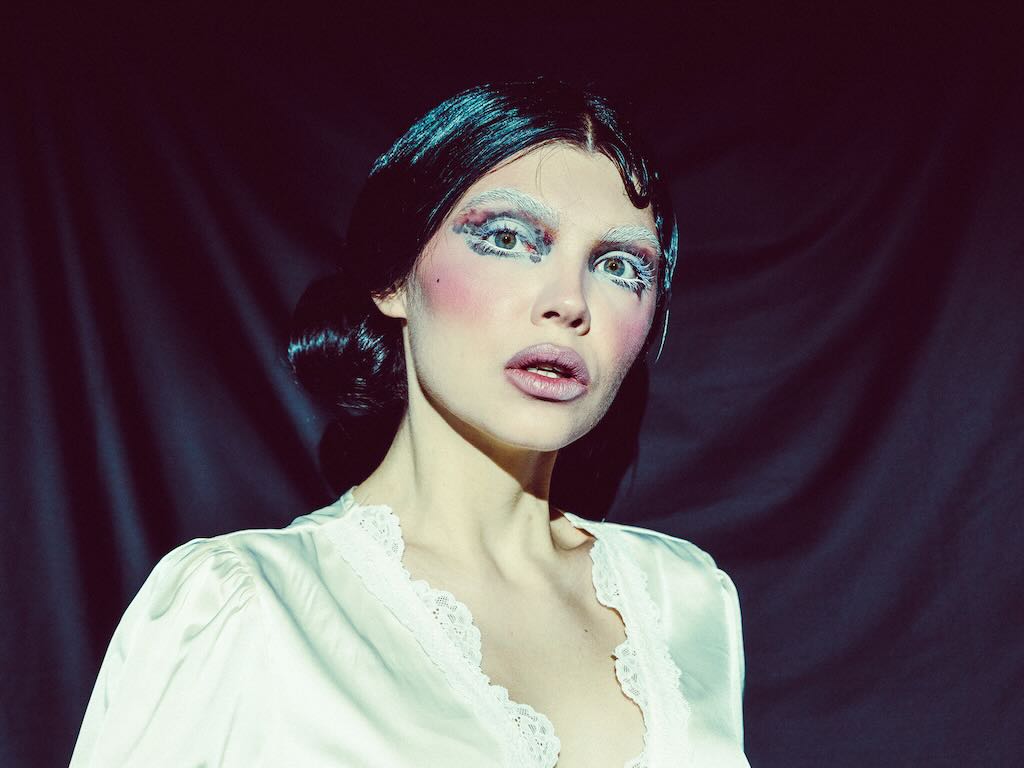
Some songs begin with a melody. “Suite 17” begins with a door left slightly open.
For Prague-based artist NOANNE, music is closely tied to the language of film and theatre: rooms, characters, shadows and small details that suggest something larger happening out of sight. Her work often occupies the space between reality and imagination, using atmosphere to explore memory, identity and the less comfortable corners of our inner lives.
Her latest single, “Suite 17,” takes that instinct into psychological noir. Inspired in part by the story of a letter that arrived after its sender had died, the song introduces Jack, a mysterious figure who exists somewhere between memory, temptation and the pull of patterns we know we should leave behind. The title carries its own ambiguity, playing with “suite” and “sweet,” and with the uneasy closeness of seduction and destruction.
Created with musician and producer Gregory Darling, the track also carries a tangible connection to cinema. Its strings were performed by musicians from the Accademia Nazionale di Santa Cecilia and recorded at Rome’s Forum Studios, the historic studio co-founded by Ennio Morricone.
Good Hours spoke with NOANNE about the world behind “Suite 17,” the strange comfort of familiar darkness, introversion as a creative space, and why her ideas so often begin somewhere between a song and a scene.
Artist File · 017
Good Hours · Music
Artist · Storyteller
NOANNE
Suite 17
I only write about darkness when it makes you want to touch it. I am obsessed with beauty that contains a warning.
NOANNE · On Suite 17
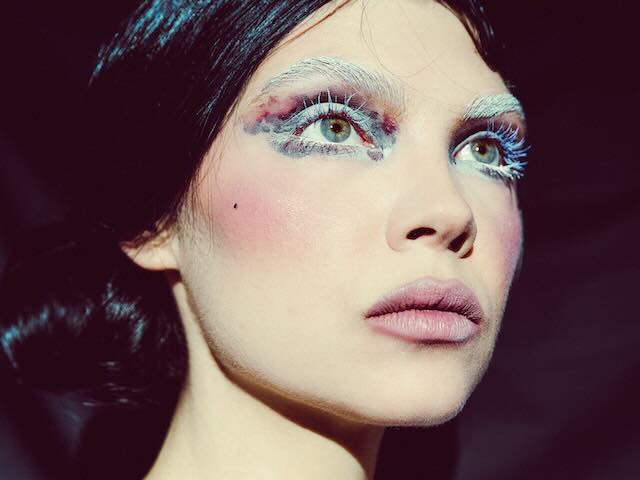
Entering Suite 17
Good Hours: “Suite 17” feels less like a conventional song and more like entering a psychological film. When did you first understand what kind of world this track needed to inhabit?
For me, music has never been just sound; it has always been architecture. When Gregory first played the foundation of this track, I didn’t just hear a melody—I felt the physical temperature of the room drop. I immediately saw a long, dimly lit hallway stretching out in the dark. There was a closed door, the faint smell of something burning, a dropped letter, and a character who had perhaps overstayed her welcome.
The song already held this incredible, suffocating suspense in its bones. I didn’t have to invent the tension; I simply turned the heavy brass handle and walked inside. That is generally how my imagination works. I don’t write lyrics to a beat; I start interrogating the space. Who lives here? What trauma is buried beneath the floorboards? What is the character desperately refusing to look at in the mirror?
With “Suite 17,” the world was fully formed, waiting for me to step into it. And honestly, who says “Suite 17” cannot still become a film? The song is just its first physical form.
Good Hours: The original spark came from a real story about a letter arriving after its sender had died. What stayed with you emotionally about that story?
The absolute, crushing impossibility of replying. A letter is already such an intimate time capsule—a physical artifact of a moment that has already burned out by the time you break the seal. But when the person who sent it is no longer breathing, you are essentially holding a ghost by the throat. Their words are screaming at you in the present, demanding to be felt, yet their voice belongs entirely to the dirt and the past.
That contradiction became the absolute heartbeat of “Suite 17.” It is the realization that the past can still reach out and touch you, but you can never, ever touch it back. It’s exactly how memory works. Something can suddenly return with violent clarity—a sentence, the smell of a specific perfume, the exact weight of a hand on your shoulder—and emotionally, it is resurrecting you. But rationally, you know the moment itself is a locked room you can never re-enter.
The past is always negotiating with you. The tragedy is whether you decide to answer it.
“The past is always negotiating with you. The tragedy is whether you decide to answer it.”
The Seduction of Familiar Darkness
Good Hours: Jack is deliberately difficult to define. He can feel like a person, a memory, a temptation or even a destructive part of the self. Who is Jack to you?
I never wanted Jack to be a traditional villain. Villains are boring because they announce themselves; you see the knife in their hands, and your instinct tells you to run. Jack is much more terrifying because he feels like a warm bed on a freezing night. To me, he is memory itself—but memory weaponized and at its most seductive.
He’s that quiet, velvety voice telling you that maybe it wasn’t so bad. Maybe you should go back to that old addiction, that toxic pattern, or that hollow version of yourself you should have buried years ago. Jack appears differently for everyone. For some, he is a former lover; for others, a destructive habit disguised as salvation.
In that sense, Jack doesn’t just live in “Suite 17.” He lives in the shadows of our own minds, waiting for a moment of weakness to invite us back in.
Good Hours: There is an intriguing tension between “suite” and “sweet” in the title. How important was that duality between seduction and danger when shaping the song?
It was the anchor of the entire concept, because I truly believe the most dangerous things in life rarely look dangerous from the first second. Ruin never introduces itself as ruin. It usually offers you something sweet first—an intoxicating rush, a sense of intimacy, nostalgia, or the false comfort of being deeply understood.
I love that phonetically, “Suite 17” sounds like pure luxury. You hear the word and you imagine a velvet-lined room, champagne, a space where you are entirely taken care of. But underneath that elegance, the lock is quietly clicking shut behind you.
As an artist, I don’t find pure darkness very interesting. It is flat. I only write about darkness when it makes you want to touch it. I am obsessed with beauty that contains a warning.
Good Hours: You chose July 17 as the release date, extending the symbolism of the number beyond the room itself. What does 17 represent within the wider story?
I have this deep, almost obsessive need to let my fictional worlds bleed into real life through tiny, meticulous details. I don’t just want you to listen to a track; I want you to step into the theatrical landscape I’ve built. Choosing July 17 was a deliberate act of breaking the fourth wall.
Suddenly, 17 isn’t just a golden number on a fictional hotel door—it exists on your calendar. It breathes in your reality. I wouldn’t say that 17 has some secret numerological code that the audience needs to painfully decipher. To me, it acts as a threshold. It is a marker.
Once you start noticing the number in your daily life, you have already crossed the boundary. You’ve already checked into the hotel.
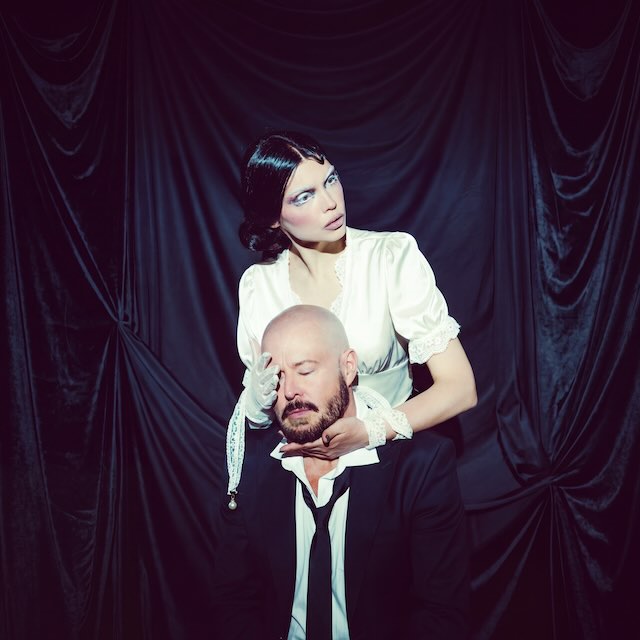
Two Voices in the Same Room
Good Hours: Gregory Darling brings another perspective into the narrative: someone watching another person disappear beneath an internal struggle. How did the collaboration change the emotional architecture of the track?
What makes this collaboration so compelling to me is the friction. We aren’t telling the exact same story; rather, we are haunting the exact same room from completely different corners. Gregory has this incredible, almost visceral instinct for melody and tension. He built the heavy walls of the room and the suffocating air inside it.
My instinct, however, moves immediately toward psychology, imagery, and the breakdown of identity. So when we sing together, it is not just a duet. It is a collision of two lonely realities.
His voice feels like a desperate witness watching someone disappear into an abyss they cannot stop, while my character almost embodies the gravity pulling them further under. We might not even exist in the same psychological timeline, and that dissonance makes the narrative so much more dangerous.
Good Hours: Gregory has said the tune had been dormant for years before you became involved. What did you hear in the original material that made you feel there was still a story waiting inside it?
Mystery. And a tremendous amount of negative space. When a piece of music hands me a finished emotional statement, it leaves no room for me to breathe. I need the empty spaces to start building my own monsters.
Gregory’s demo felt like a locked door in an abandoned hotel. It had this gorgeous suspense in its bones. I didn’t hear a completed thought; I heard a question that hadn’t been answered yet.
He had already built this beautiful, cinematic room musically, and I simply became obsessed with finding out who was hiding inside it. Once I opened the door and Jack stepped out of the shadows, the entire psychological universe just violently expanded around him.
Good Hours: Your character inhabits the seductive force at the centre of “Suite 17,” but she is not presented as a simple villain. Were you interested in making the listener feel attracted to something they simultaneously recognise as dangerous?
Absolutely. That ambiguity, that specific sickness of wanting the thing that destroys you, is the emotional core of the song. If something is obviously destructive, walking away is a simple matter of survival. The real, devastating tragedy begins when the destruction is wrapped in tenderness, shared history, or a profound sense of home.
Your nervous system becomes completely compromised. It starts confusing familiarity with safety. I wanted my character to embody that exact contradiction. She shouldn’t arrive wearing a warning sign or holding a weapon.
She should feel compelling and divine enough that a very real part of you understands exactly why someone would choose to stay in the burning room. I am infinitely more interested in the art of seduction than the act of villainy.
Suspense, Strings and Cinema
Good Hours: Hitchcock-era suspense is embedded in the track’s DNA. Which elements of classic psychological thrillers interest you most: the visual language, ambiguity, tension, unreliable characters, or something else?
It’s the terror of what is deliberately withheld. I am absolutely obsessed with the elegance of restraint. A shadow that lingers on a wall for a fraction of a second too long. A closed door that you know shouldn’t be closed. A perfectly curated room that smells faintly of copper and secrets.
Classic noir has this breathtaking visual poetry—the heavy contrast of light, the mirrors, the long corridors. But all those beautiful images only matter if they carry severe psychological weight.
I love unreliable perception. That terrifying moment when you are navigating a space and you can no longer tell if you are experiencing reality, a fragmented memory, a nightmare, or your own self-deception. Atmosphere should never just decorate a scene. It should make you deeply paranoid.
Good Hours: The strings were performed by musicians from the Accademia Nazionale di Santa Cecilia and recorded at Forum Studios in Rome. What did that setting and those musicians bring to the recording?
There is something inherently visceral about real strings. They don’t just play notes; they create a physical pressure on your chest, like water slowly filling a locked room. They can be incredibly beautiful, but they also bring a profound anxiety, an instability, and a sweeping emotional apocalypse that feels almost tactile.
And recording in Forum Studios—a space co-founded by Ennio Morricone—added such a heavy layer of cinematic ghosts to the track. The musicians didn’t just bring elegance; they brought human flaw and friction. The tiny, microscopic shifts in bow pressure, the sharp intakes of breath before a crescendo. You cannot synthesize that.
They made the walls of “Suite 17” breathe, and they made the room feel infinitely larger.
“Atmosphere should never just decorate a scene. It should make you deeply paranoid.”
Building Situations, Not Just Songs
Good Hours: Your work often moves between music, theatre and film rather than treating them as separate disciplines. When you begin writing, do you hear the music first, or do you see images, characters and spaces?
It shifts every time, but increasingly, I realize I don’t write songs per se—I construct situations. Sometimes it starts with a melody, but often it is a very clear, sharp visual. I might see a woman staring at a shattered mirror, refusing to clean up the glass. I then have to work backward to figure out what emotional apocalypse happened in that room before the glass broke.
Music, film, and theatre don’t feel like separate disciplines to me; they just feel like different lighting setups for the exact same stage. If a story is begging to be sung, I write the track. If it needs to be seen in flesh and blood, I build the stage. If it requires a screen, I start planning the short film and becoming very dangerous to my own budget.
The medium is just the vehicle; the emotional devastation is always the destination.
Good Hours: You have described introversion as a creative strength. How does solitude affect the way you observe people and build emotionally complex fictional worlds?
For an artist, I think introversion is almost a superpower. Because I am naturally private and don’t feel the constant, exhausting need to be the center of attention in a crowded room, I spend my life watching from the shadows. You notice the quiet fractures in people that way. You see the stark contrast between the confident things they say and the micro-expressions that betray their panic. You notice what they avoid answering.
Solitude gives me a dark, quiet laboratory to let those observations mutate into characters. The music industry demands an extraordinary amount of exposure and judgment. So, paradoxically, fiercely protecting my inner silence gives me the exact emotional armor and raw material I need to bring onto the stage.
Going into the spotlight becomes an act of deliberate courage, rather than a desperate cry for attention.
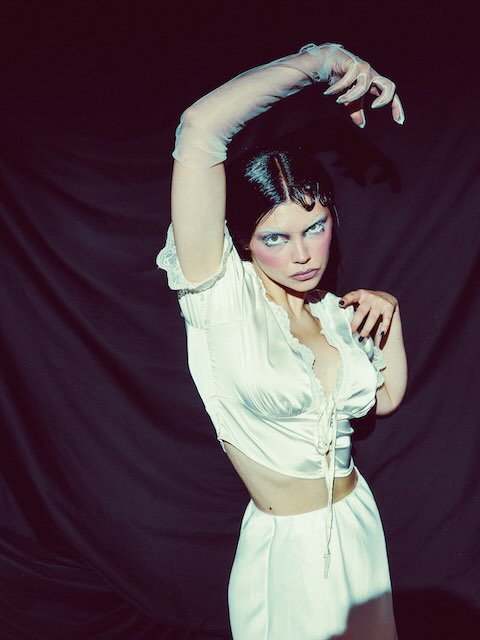
When Familiarity Resembles Safety
Good Hours: There is often a point in destructive emotional patterns where danger begins to feel familiar, and familiarity starts to resemble comfort. Is that contradiction at the heart of “Suite 17”?
Yes, completely. We have this romanticized idea of self-destruction as a dramatic, cinematic leap off a cliff. You see the danger, you close your eyes, and you jump. But in reality, ruin is usually much quieter and far more insidious.
It’s just walking back into a room you know too well. You already know exactly how this person will break your heart. You know exactly how the argument will end. You know the exact shape of the pain. But there is a strange, twisted, narcotic comfort in that predictability, even when the prediction is your own demise.
That’s what Jack understands better than anyone. He doesn’t need to convince you that the room is safe. He only needs to remind you that your coat is already on the bed.
Beyond a Single Medium
Good Hours: Your recent work has moved through film festivals, theatrical performance and orchestral settings. Has working across these different spaces changed what you believe a pop artist can be?
Profoundly. I have lost absolutely all interest in fitting neatly inside one professional cage. A song can evolve into a theatrical confession, and a performance can become a fragmented, surreal film. The physical form keeps shifting, but the emotional universe remains a constant.
Gaining recognition in the film and theatrical worlds has given me the conviction that independent, high-art concepts can travel much further than the industry tells you. But I am also acutely aware that critical acclaim and Grammy considerations do not magically build a cult following. There is no magic wand.
The real, grueling work now is closing the gap between that high-level industry recognition and actually building the global audience that wants to step inside this dark universe and lock the door behind them.
Good Hours: You were an accredited composer at the Cannes Film Festival in 2025 and 2026. Has being surrounded by filmmakers affected the way you think about narrative structure in music?
It validated everything I already felt instinctively: you do not need to treat the audience like children by over-explaining every detail immediately. Pop music often hands you the emotion on a silver platter in the first ten seconds. Cinema, however, teaches you to trust the withheld information. It teaches you to let the audience sit in the uncomfortable tension before they fully understand why they are afraid.
A detail introduced in the first frame might only become devastating in the final scene. I find myself thinking purely in those terms with music now. I don’t just think about where the chorus should hit. I ask myself: “What does the listener know at this exact second? What are they suspecting? And what am I deliberately hiding from them until the very last note?”
It turns songwriting into psychological manipulation, and I love that.
Leaving the Room
Good Hours: After someone leaves “Suite 17” for the first time, what feeling do you hope follows them down the corridor?
I hope they feel the phantom ache of having forgotten something inside. You know you made it out. You survived the encounter. You’re walking away, and the cold air is hitting your face.
But just for a second, you stop halfway down the heavy, carpeted corridor and look back at the wooden door. You know you should keep walking. You know what’s in there. But the unease is mixed with this terrible, magnetic attraction.
And for one fleeting, dangerous second… you actually consider turning around and going back into the dark.
That final image feels true to the world NOANNE has built around “Suite 17.” Nothing is entirely explained, and nothing is simply dark. A corridor, a letter, a number on a door and the physical pull of real strings become ways of exploring something less theatrical and more familiar: the ease with which memory can make an old danger feel like home.
The door is there. So is the knowledge of what might be waiting behind it. The tension comes from still wanting, for a moment, to turn the handle.
NOANNE and “Suite 17”: Frequently Asked Questions
Who is NOANNE?
NOANNE is a Prague-based artist whose work moves between music, film and theatre. In this interview, she describes her creative process as constructing situations through characters, spaces, imagery and sound rather than treating songs as isolated pieces of music.
What is “Suite 17” about?
“Suite 17” explores memory, temptation and the pull of destructive patterns that can feel familiar enough to resemble safety. Its psychological world centres on the ambiguous figure of Jack, whom NOANNE describes as memory at its most seductive.
What inspired “Suite 17”?
Part of the song’s emotional starting point came from a story about a letter arriving after the person who sent it had died. NOANNE says the impossibility of replying became central to the song’s treatment of memory and the past.
Who did NOANNE create “Suite 17” with?
NOANNE created the track with musician and producer Gregory Darling. She describes their collaboration as two perspectives occupying the same psychological room, with Darling’s musical instinct for melody and tension meeting her focus on imagery, psychology and identity.
Where were the strings for “Suite 17” recorded?
According to NOANNE, the strings were performed by musicians from the Accademia Nazionale di Santa Cecilia and recorded at Forum Studios in Rome, a studio co-founded by Ennio Morricone.
Why is the number 17 important to the song?
NOANNE describes 17 as a threshold rather than a secret numerological code. Choosing July 17 as the release date allowed an element of the fictional world to cross into everyday life, extending the idea of the room beyond the song itself.
https://www.instagram.com/this_is_noanne
https://www.facebook.com/noannemusic
https://www.youtube.com/@this_is_noanne/shorts