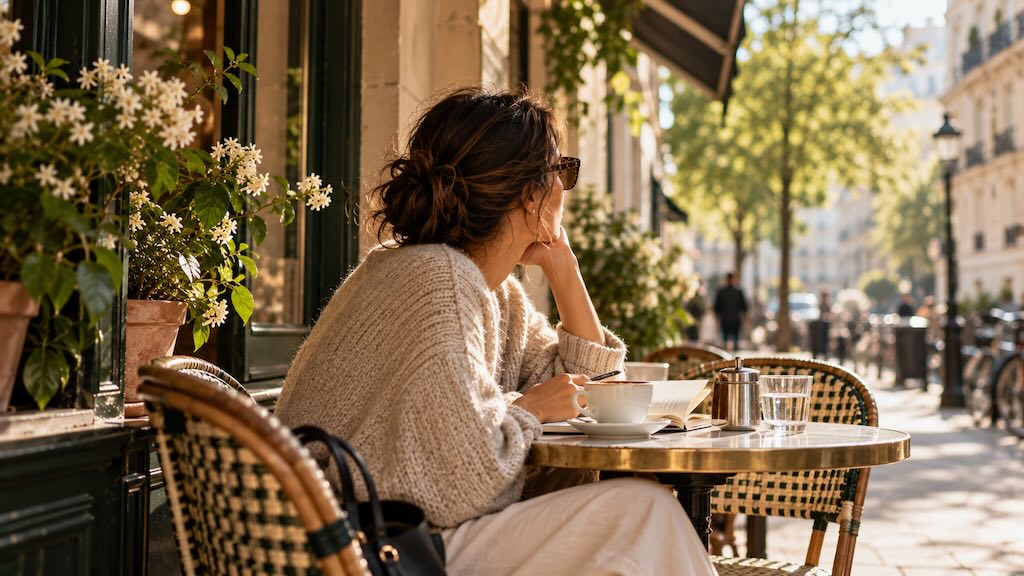
There is a particular moment when you walk into a café alone and realise you have nowhere to look while waiting to be seated. You check the menu, glance at your phone, study the pastries behind the counter. Everyone else seems to have arrived with someone.
Then you order something you like, find a comfortable seat and discover that nobody is paying much attention to you. The coffee is good. You can stay for twenty minutes or an hour. You don’t have to agree on what to do next.
Taking yourself on a date is really that simple: making a plan you would normally consider doing with someone else, then going anyway. You don’t have to be single, particularly confident or in need of a personal breakthrough. Sometimes you just want to see a film, visit an exhibition or eat somewhere new without waiting for another person’s schedule to line up with yours.
Why does going somewhere alone feel so awkward?
Most of us spend time alone every day without giving it much thought. We commute, shop, run errands and wait for appointments. But the moment an activity is associated with leisure, being alone can suddenly feel conspicuous.
A restaurant table for one may seem more intimidating than a quick lunch between meetings. Going to the cinema alone can feel like making a statement, even though you will spend most of the evening sitting in the dark watching a screen.
Part of the discomfort comes from imagining how other people see us. Are they wondering why we’re alone? Do they assume nobody wanted to come with us?
Psychologists studying solitude have explored precisely this unease. In an American Psychological Association discussion about the benefits of solitude, researchers Thuy-vy Nguyen and Netta Weinstein describe how social expectations can make people uncomfortable spending time alone in public, even when they might enjoy the experience.
That doesn’t mean everyone secretly loves solitude. Some people prefer company for most activities, and there’s nothing wrong with that. The point is that an unfamiliar feeling doesn’t necessarily tell you whether an experience will be enjoyable.
How to plan your first solo date
If you’ve never deliberately taken yourself somewhere alone, don’t begin with the activity you find most intimidating. A three-course dinner at a crowded restaurant can wait.
Instead, choose something with a clear beginning and end. An hour in a museum. Coffee at a place you’ve been meaning to try. A weekday cinema screening. A visit to a bookshop followed by a walk.
Three decisions will make the outing easier:
- Pick a place you’re comfortable reaching. A complicated journey adds unnecessary pressure when you’re already doing something unfamiliar.
- Give yourself a loose plan. Know where you’re going, approximately how long you’ll stay and what you’d like to do there.
- Leave room to change your mind. You can extend a good afternoon or go home early. Neither outcome makes the date a failure.
One practical detail helps more than you might expect: check opening hours, ticket requirements and whether a restaurant accepts walk-ins. The less time you spend sorting out logistics at the door, the more attention you can give to the experience itself.
Solo date ideas that are actually worth leaving the house for
The best solo date isn’t necessarily unusual or expensive. It’s an activity that gives you something to enjoy without needing someone else to make it worthwhile.
1. Take yourself to the cinema
The cinema is one of the easiest places to begin. You buy a ticket, find your seat and watch the film. Nobody expects conversation, and there’s no pressure to entertain anyone.
Choose a film you’re genuinely curious about, especially one your friends might not be interested in seeing. An afternoon screening can feel less intimidating than a busy Friday evening.
Afterwards, give yourself a little time before heading home. A walk or a coffee can be a pleasant way to sit with the film rather than immediately moving on to the next thing.
2. Spend an afternoon in a museum or gallery
Visiting an exhibition alone has an underrated advantage: you can look at whatever interests you for as long as you like.
You don’t need to move at someone else’s pace, apologise for reading every wall label or pretend to appreciate something that leaves you cold.
Choose one exhibition rather than trying to see an entire museum. If admission is free, all the better. Afterwards, sit in the museum café or walk around the surrounding neighbourhood.
3. Have lunch somewhere you’ve always wanted to try
Eating alone is often the activity people feel most nervous about. Lunch is a gentler introduction than dinner, particularly at cafés, casual restaurants and places with counter seating.
Look at the menu beforehand so you know there’s something you’d enjoy. Bring a book if you want one, but don’t feel you have to create the appearance of being busy.
Order the dish you came for. Have dessert if you want it. The experience doesn’t need to become an exercise in proving how independent you are. You’re simply having a good lunch.
4. Make a bookshop and café afternoon of it
Visit an independent bookshop or library without a particular title in mind. Browse sections you don’t usually visit. Pick up a book because its cover catches your attention. Read the opening pages before deciding whether to take it home.
If you buy something, find a nearby café and start reading. If you don’t, you’ve still had an afternoon of looking around.
For a no-spend version, use the library and bring a drink from home. The pleasure is in having time to follow your curiosity, not in coming away with a shopping bag.
5. Explore a neighbourhood you don’t know well
Choose an area of your town or city that you’ve passed through but never properly explored. Walk along the smaller streets, notice the shops and look for a park, market or interesting building.
You can make the outing more enjoyable by choosing one destination: a bakery, a second-hand shop or a public garden. That gives the walk a purpose without turning it into a tightly scheduled itinerary.
Keep an eye on your surroundings, choose a route that feels comfortable and check your transport options if you’re travelling somewhere unfamiliar.
6. Go to a concert by yourself
There’s a particular frustration in discovering an artist you want to see and realising none of your friends are interested. Going alone means you don’t have to miss the performance.
Start with a smaller venue or an early-evening event if that feels more comfortable. Check the venue’s layout, transport home and whether there are seated tickets.
You might chat with someone before the show. You might not speak to anyone at all. Once the music begins, neither matters very much.
7. Take a class in something you’re curious about
Pottery, drawing, cooking, photography or a beginner’s dance class can work well as a solo outing because everyone has a reason to be there beyond socialising.
Look for a single-session workshop if you don’t want to commit to a course. Check whether materials are included and whether beginners are welcome.
It’s worth choosing a subject you’d enjoy even if you aren’t particularly good at it. A class should give you an interesting afternoon, not another standard to measure yourself against.
8. Take a short trip to a nearby town
A solo date doesn’t have to stay within your usual neighbourhood. Pick a town reachable by train or bus, find somewhere appealing for lunch and give yourself a few hours to explore.
Keep the first trip straightforward. A direct journey, a walkable centre and a return ticket booked in advance are often enough.
The pleasure of travelling alone is that small decisions belong entirely to you. You can spend an hour in a bookshop, change your lunch plans or sit by the water without negotiating any of it.
Solo dates for different budgets and moods
Not every outing needs the same amount of money, energy or confidence. Match the plan to the kind of day you’re having.
| What you’re in the mood for | Try this | Typical cost |
|---|---|---|
| Something easy | Coffee and a book | Low |
| No spending | Library, park or self-guided walk | Free |
| A little culture | Gallery, museum or matinee | Free to moderate |
| Trying something new | One-off creative workshop | Moderate to higher |
| More confidence | Lunch at a restaurant | Moderate |
| A change of scenery | Day trip by public transport | Varies |
| Something memorable | Concert or live performance | Varies |
These are broad cost categories, not fixed prices. Free museum admission, transport fares and workshop fees vary by location.
What to do when you feel awkward on a solo date
Even with a good plan, there may be a few uncomfortable moments. Waiting for your food can feel unusually long. You might notice a group of friends laughing at the next table and wish you’d invited someone. You may suddenly wonder what you’re supposed to do with your hands.
None of that means you’ve made a mistake.
It helps to give yourself something small to focus on. Read the menu carefully. Look at the exhibition notes. Notice the details of the place you’re visiting. If you’re at a café, enjoy your drink rather than monitoring how you appear to other customers.
Your phone can be useful for directions, tickets or a quick message. But try not to spend the entire outing scrolling simply to avoid looking alone. You might discover that the awkwardness passes more quickly when you stop trying to conceal it.
There is some evidence that people underestimate how enjoyable quiet time can be. In research reported by the American Psychological Association, participants enjoyed sitting alone with their thoughts more than they had expected. The experiments weren’t studies of solo dating, but they offer an interesting reminder that our predictions about being alone aren’t always accurate.
If you’re genuinely not enjoying yourself, you can leave. Staying somewhere uncomfortable isn’t a requirement for becoming better at spending time alone.
You don’t have to make being alone into a personality
One of the less helpful messages surrounding solo dating is that enjoying your own company proves you’ve reached some superior level of independence.
It doesn’t. Some of the best experiences are shared. A concert can be wonderful with a friend. A long dinner can be more enjoyable when the conversation is as good as the food. Wanting company is not a weakness.
There is also an important difference between chosen solitude and loneliness. Being alone can be welcome when it is something you want. It can be painful when it reflects a lack of connection or support. A solo date may be enjoyable, but it is not a replacement for relationships you need or miss.
And you don’t have to call an outing a date if the phrase feels silly. You can simply say you’re going to the cinema or spending Saturday afternoon in town.
The useful part is giving yourself permission to do something enjoyable without needing someone else to come along.
A simple solo date plan for this weekend
If you’d like to try it without making a large commitment, set aside roughly two hours.
- Choose one destination. A bookshop, café, gallery or cinema is enough.
- Decide on a comfortable budget. Free is perfectly acceptable.
- Check the practical details. Opening hours, tickets, transport and accessibility.
- Go without trying to make it an event. You don’t need a special outfit, photographs or a story to post afterwards.
- Notice what you liked. Was it the place, the activity, the freedom to change plans or simply having an afternoon without obligations?
That last question can help you choose what to do next time. If you loved the exhibition but hated sitting alone in a crowded café, plan another museum visit and skip the café. If lunch was the best part, try a different restaurant.
There’s no need to work your way through a list of increasingly ambitious solo experiences. You can return to the same pleasant activity as often as you like.
Frequently asked questions
What is a solo date?
A solo date is an outing you deliberately plan for yourself, usually involving something enjoyable such as visiting a café, seeing a film, exploring a new place or attending an event. The idea is to make time for an experience you want rather than waiting for someone to accompany you.
Is it weird to go on a date by yourself?
No. Going somewhere alone is an ordinary choice, even if it feels unfamiliar at first. Some activities, such as eating at a restaurant, can feel more socially intimidating than others. Starting with a short outing may help you become more comfortable.
What is the easiest solo date for a beginner?
A cinema visit, bookshop afternoon or museum exhibition is a good starting point because the activity gives you something to focus on. You can decide in advance how long to stay and don’t need to make conversation.
Can you take yourself on a date if you’re in a relationship?
Absolutely. Solo dates are not limited to single people. Enjoying an activity independently can be part of a satisfying life alongside a relationship, friendships and family commitments.
What can I do on a solo date without spending money?
Visit a public library, explore a park, take a self-guided walk, attend a free exhibition or spend an afternoon photographing interesting details in your neighbourhood. Check local opening hours and admission policies before going.
The pleasure of making your own plans
At some point during a good solo afternoon, you may notice how little negotiation is involved. You can stay for another coffee, take the longer route home or leave an exhibition after twenty minutes because you’ve seen enough.
It isn’t that other people make these experiences worse. It’s that doing something alone offers a different kind of pleasure: the chance to follow your own interests at your own pace.
Perhaps the first outing will feel slightly awkward. Perhaps you’ll enjoy it immediately. Either way, the next time you see a film you want to watch or a place you’d like to visit, you’ll have another option. You won’t necessarily have to wait for someone to come with you.