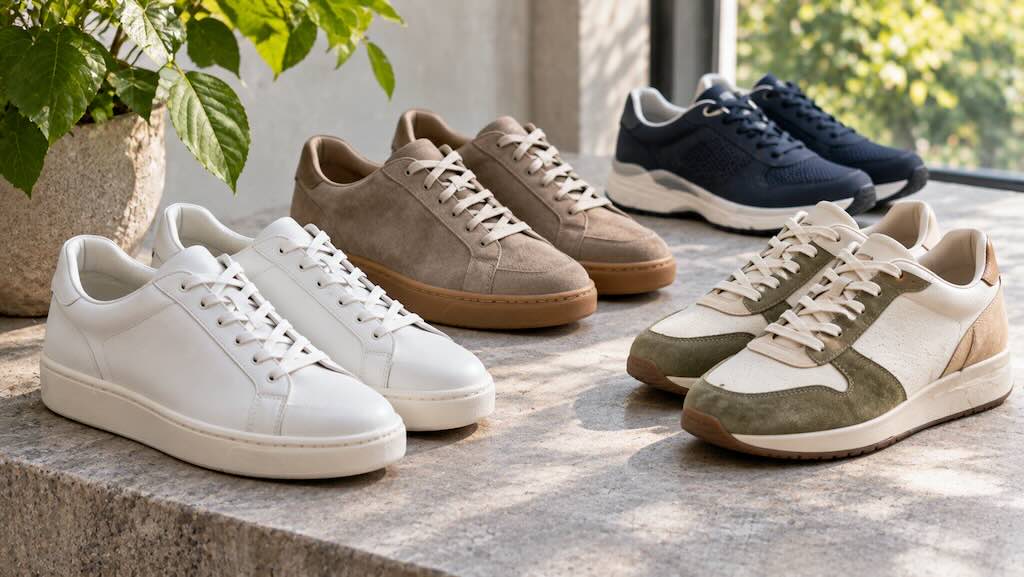
Somewhere in your closet, there may be a pair of sneakers you were convinced you’d wear constantly. They looked good online. They worked with the outfit you imagined wearing. Perhaps they were even on sale. But after a few outings, they quietly disappeared to the back of the shelf.
It’s an easy mistake to make. Sneakers are sold as fashion statements, performance equipment, everyday essentials, and sometimes all three at once. There are minimalist leather styles, retro running shoes, chunky soles, canvas classics, and countless variations on the white sneaker. Finding a pair you like isn’t particularly difficult. Finding one that suits the way you actually live takes a little more thought.
The best sneakers aren’t necessarily the most expensive, the most versatile, or the ones everyone seems to be wearing. They’re the pair you reach for without having to think about it. Here’s how to recognize them before spending your money.
1. Think about your actual week, not your ideal wardrobe
Before looking at another pair of sneakers, consider what you wore during the past seven days.
Were you mostly in jeans and a sweater? Tailored trousers? Dresses? Did you walk to work, spend hours standing, or drive between appointments? Were your shoes exposed to rain, pavement, public transportation, or mostly indoor floors?
These details tell you more about the sneakers you need than a photograph of someone else’s outfit.
If you walk several miles most days, comfort and underfoot support deserve considerable attention. If you’re buying sneakers primarily to wear with smarter clothes, shape and materials may be more important. If you want one pair for travel, look for something comfortable enough for long days but easy to wear to dinner.
One pair doesn’t have to do everything. Running, hiking, and other athletic activities can place different demands on footwear. The American Orthopaedic Foot & Ankle Society recommends choosing activity-appropriate athletic shoes, particularly when you participate in a sport regularly.
For everyday sneakers, however, versatility is useful. The question is how much versatility you genuinely need.
2. Choose a shape that works with your clothes
A sneaker can be beautifully made and still feel wrong with everything you own.
Often, the issue is proportion. A substantial running-inspired sneaker creates a different silhouette from a slim leather low-top. Neither is inherently more stylish, but they interact differently with the clothes around them.
Low-profile sneakers can work particularly well with straight-leg trousers, relaxed tailoring, and outfits where you want the footwear to remain understated. Chunkier sneakers can balance wider pants, oversized jackets, and more casual clothing.
Color matters, but there’s no requirement to buy white sneakers. White and off-white are popular because they work with many wardrobes, yet they also show dirt. Navy, brown, burgundy, olive, and charcoal can be equally versatile if those colors already appear in your clothes.
Try a simple exercise: imagine wearing the sneakers with five outfits you already own. Not five outfits you might buy someday. If you struggle to find more than one combination, consider whether you love the shoes themselves more than the idea of wearing them.
3. Get the fit right before considering anything else
There’s little point buying versatile sneakers if you can’t comfortably walk in them.
Start by ignoring your usual size for a moment. Sizing varies between brands and sometimes between models from the same manufacturer. Your feet may also change over time, and one foot may be slightly larger than the other.
The American Academy of Orthopaedic Surgeons advises trying on shoes later in the day, when feet may be larger, and allowing approximately half an inch between the longest toe and the front of the shoe.
Your toes should have room to move without being crowded. The heel should feel secure, and the shoe shouldn’t press painfully against the sides of your feet.
Wear the socks you would normally use with the sneakers. Lace both shoes properly, stand up, and walk around. Pay attention to whether your heel slips, your toes touch the front, or you feel pressure across the top of your foot.
And don’t assume a shoe that’s too narrow will become comfortable if you buy a longer size. You may simply end up with a sneaker that’s too long and still doesn’t fit your foot properly.
4. Don’t rely on the promise of breaking them in
We’ve all heard that some shoes need time to soften. Certain materials may become more flexible with wear, but that doesn’t mean an uncomfortable fit is acceptable.
If a sneaker pinches your toes, rubs your heel, or creates pressure across your foot in the store, don’t assume the problem will disappear.
The American Academy of Orthopaedic Surgeons cautions against buying shoes that require a break-in period to fit properly. Shoes should accommodate your feet rather than forcing your feet to accommodate the shoes.
It’s especially worth remembering when shopping online. A pair may look perfect in photographs, but if the fit isn’t right, returning it is usually a better decision than trying to make it work.
5. Understand what different materials offer
The upper material affects how sneakers look, feel, age, and respond to everyday use.
Leather
Leather sneakers can offer a clean, structured appearance that works well with everyday and slightly smarter outfits. Some leathers soften with wear and develop an attractive patina. Others have heavy coatings that give them a more uniform finish.
Leather isn’t automatically more comfortable or durable than every alternative. Quality, construction, and fit matter, and some leather sneakers can feel warm or relatively stiff.
Suede
Suede adds softness and visual texture, particularly in muted colors such as taupe, brown, navy, and olive. It can make a simple sneaker feel more interesting without adding conspicuous branding.
The trade-off is maintenance. Suede can show water marks and stains, and it benefits from appropriate cleaning and protection. If you regularly walk through wet streets, consider whether you’re willing to care for it.
Mesh and technical textiles
Mesh is common in athletic and running-inspired sneakers. It can provide ventilation and a lighter feel, although the amount of airflow depends on the construction.
These materials may suit people who walk frequently or prefer a softer upper. Some designs are easy to clean, while others have delicate panels or layered details that trap dirt.
Canvas
Canvas sneakers have an uncomplicated, casual character and can be an affordable choice. They work particularly well in relaxed wardrobes, but the thin uppers and relatively simple soles of some classic designs may not provide the comfort you want for long days on your feet.
Rather than choosing one material as universally superior, consider where you’ll wear the shoes, how much maintenance you’re comfortable with, and whether the material suits your climate.
6. Look beyond softness when judging comfort
It’s tempting to press a thumb into a sneaker’s sole and assume that the softest one must be the most comfortable.
But cushioning is only one part of how a shoe feels. Stability, flexibility, fit, and the shape of the sole also matter.
A very soft shoe may feel wonderful for a few minutes but not provide the experience you want after a long walk. A firmer sneaker may initially seem less plush yet feel comfortable because it holds your foot securely and moves naturally with you.
Look at where the sole bends. For many conventional everyday and athletic shoes, flexibility around the forefoot is useful, while excessive twisting through the middle can indicate less structural support. The American Orthopaedic Foot & Ankle Society’s footwear guidance explains the importance of suitable construction, heel security, and fit.
If you use orthotic inserts, check whether the sneakers have removable insoles and enough interior space to accommodate them comfortably.
Ultimately, the best test is how the shoes feel on your own feet. Cushioning preferences are personal, and the most comfortable sneaker for someone else may not be right for you.
7. Learn to recognize construction that’s worth paying for
A higher price can reflect better materials, more careful construction, or additional design work. It can also reflect branding, limited availability, or fashion demand.
Before spending more, examine the actual shoe.
- Check the stitching. Look for reasonably even stitching and secure seams, particularly where different upper materials meet.
- Inspect the sole attachment. Notice whether the sole sits evenly against the upper and whether there are obvious gaps or excess adhesive.
- Look at the lining. Rough interior seams and poorly finished heel areas can cause irritation.
- Consider the outsole. A suitable tread pattern and material matter if you’ll regularly walk on wet pavement or uneven surfaces.
- Ask about care and repair. Some sneakers can be professionally cleaned or repaired, but many conventional designs aren’t intended for full sole replacement.
These checks can’t guarantee durability. A sneaker’s long-term performance is difficult to establish from appearance alone. But they can help you distinguish useful construction details from marketing language.
8. Think about cost per wear, not just the price
Imagine choosing between two pairs of sneakers.
One costs $70 but only works with a handful of outfits. You wear it perhaps 20 times before losing interest. The other costs $150, feels comfortable, and works with most of your wardrobe. You wear it 150 times.
The first pair costs $3.50 per wear. The second costs $1 per wear.
These are hypothetical examples, of course. You can’t know exactly how often you’ll wear something or how long it will last. But the calculation offers a useful way to think about value.
It also works in the other direction. A $200 pair that remains unworn isn’t a better purchase simply because the materials are premium.
Spending more makes sense when the additional cost buys something you’ll genuinely appreciate: better fit, materials you prefer, a design you’ll use frequently, or construction that suits your needs.
9. Be realistic about maintenance
White leather sneakers can look excellent with almost anything, but keeping them pristine requires attention. Suede needs different care from smooth leather. Canvas may be easy to wear casually but can show dirt quickly.
Before buying, ask yourself whether you’re willing to clean the shoes in the way the manufacturer recommends.
If you dislike maintaining footwear, choose materials and colors that are forgiving. A dark outsole, textured upper, or slightly muted color may be more practical than an entirely white pair.
Simple habits can also help sneakers last: remove surface dirt before it becomes embedded, let damp shoes dry naturally, and give frequently worn pairs time to air out between uses.
Don’t automatically put sneakers in the washing machine. Some manufacturers allow it for particular models, but water, heat, and agitation can damage adhesives, leather, suede, or structural components.
10. Give yourself a reason to say no
Perhaps the most useful sneaker-shopping habit is learning to recognize when a pair isn’t quite right.
It might be beautiful but uncomfortable. It might be comfortable but difficult to wear with your clothes. It might be well made but more expensive than you want to spend. Or it might simply resemble three pairs you already own.
None of those is a reason to convince yourself the purchase will work out.
Before checking out, ask yourself three questions: Would I wear these next week? Can I think of at least five outfits I already own that work with them? Would I still want them if they weren’t discounted?
If the answers are uncertain, waiting is often the better decision.
A practical sneaker-buying checklist
| What to check | What you’re looking for |
|---|---|
| Everyday use | Suitable for your actual activities and routine |
| Wardrobe compatibility | Works with several outfits you already own |
| Toe room | Space to move without excessive sliding |
| Heel fit | Secure without rubbing or slipping |
| Width | No pinching or uncomfortable side pressure |
| Cushioning and stability | Comfortable for the walking and standing you do |
| Materials | Appropriate for your climate and care preferences |
| Construction | Secure seams, suitable outsole, comfortable lining |
| Price | Worthwhile for how often you expect to wear them |
| Return policy | Enough flexibility to assess fit before outdoor wear |
The right sneakers should fit into your life
It’s easy to become distracted by the number of sneakers available. Every season brings another silhouette, another collaboration, another supposedly essential color. But most people don’t need an endless rotation of footwear.
What they need is a pair that fits properly, feels good after a few hours, and works with the clothes they enjoy wearing.
Sometimes that will be a beautifully made leather sneaker. Sometimes it will be a comfortable running-inspired style. Sometimes the best choice is a simple canvas pair you’ve worn for years.
The point isn’t to find the perfect sneaker for every possible occasion. It’s to find the ones that make getting dressed easier, walking more comfortable, and buying another pair a little less necessary.
Frequently asked questions
How should sneakers fit when you first buy them?
They should feel comfortable immediately, with room for your toes, a secure heel, and no painful pressure. For many conventional athletic shoes, approximately half an inch between your longest toe and the front is recommended. Fit both feet and walk around before buying.
Are expensive sneakers worth buying?
Sometimes. Higher prices may reflect materials, construction, or design, but they don’t guarantee comfort or durability. Consider fit, expected use, care requirements, and whether the extra cost provides a benefit you actually value.
What color sneakers are the most versatile?
White, off-white, black, navy, and muted earth tones can all be versatile. The best choice depends on your existing wardrobe. A color that works with most of your clothes will be more useful than one that’s popular but difficult to style.
Should you buy sneakers a size bigger?
Not automatically. If sneakers feel too narrow, choosing a longer size may create heel slipping without solving the width problem. Look for a wider fit or a different shoe shape instead. Choose the size that fits your feet, not the number you normally wear.