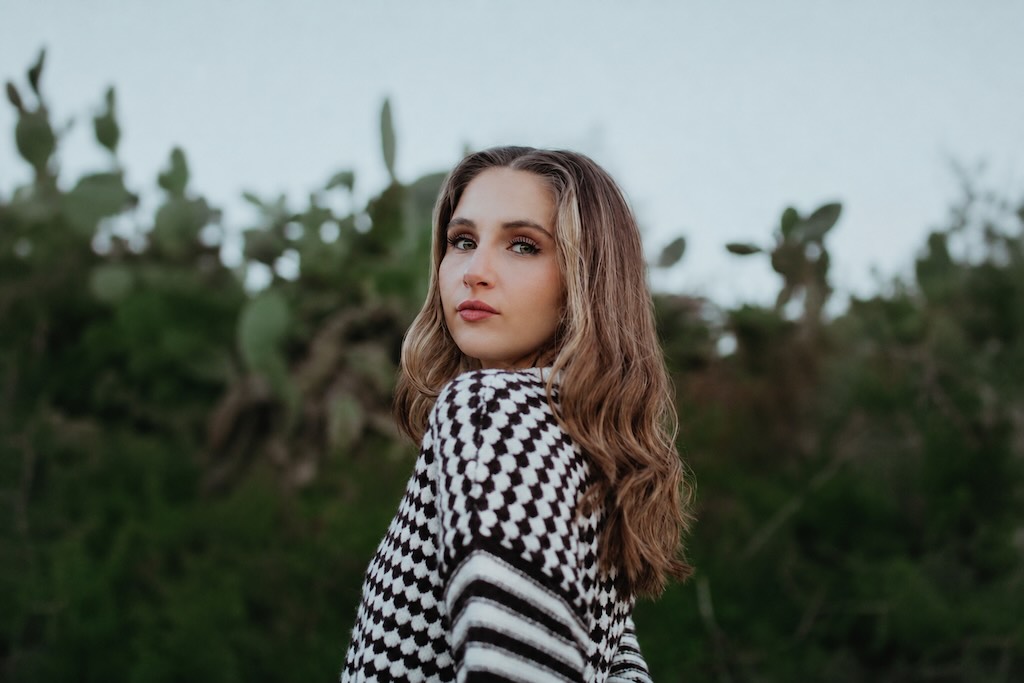
Julia Gartha used to dream about the California sunshine. Growing up in Ontario, she imagined moving to Los Angeles and making music full-time. When she finally arrived, it was the life she had worked towards. Then, gradually, the sunshine became part of the problem.
Every day began to feel much like the one before it. She missed cold weather, rain and the changing seasons. She missed riding her bike through her parents’ neighbourhood and sitting on their back porch, where some of her family’s most meaningful conversations had taken place. The feeling was difficult to reconcile with the life she had wanted for so long.
During the summer of 2023, that distance from home became literal. While waiting for her green card to be approved, Julia couldn’t leave the United States. She hadn’t seen her family in more than a year. Ordinarily, she would have spent part of the summer back in Toronto, returning to familiar places and people. Instead, she stayed in Los Angeles and began writing what would become the title track of her EP California’s Killing Me.
Released on October 23, 2026, the six-track EP developed gradually with producer and co-writer Caleb Dee. They hadn’t planned to make a collection about feeling stuck. Over several years, they simply kept writing songs that returned to similar questions: where home is, what needs to change and how to live with not knowing what comes next.
Julia’s working life moves between her own songwriting and performing in support of other artists. She has worked as a backing vocalist on major stages, where the task is to listen closely and help realise someone else’s musical vision. Writing under her own name brings a different kind of pressure. She still catches herself wondering whether an idea is good enough, or whether it has been said before.
For all its uncertainty, California’s Killing Me isn’t simply about wanting to leave. Julia still considers Los Angeles home, even if she doesn’t imagine growing old there. The songs leave that contradiction unresolved.
In conversation with Good Hours, Julia talks about the summer that shaped the EP, the small things she misses about Canada, working with Caleb Dee, the freedom of singing for other artists and the ordinary routines that help when bigger decisions feel impossible.
Good Hours / Music
Artist File — 2026
Artist
Spotlight
Good
Hours
Featured Artist / In Conversation
Julia Gartha
Singer / Songwriter / Ontario to Los Angeles
“It feels like home, but I also don’t see myself growing old here.”
Julia Gartha / On Los Angeles
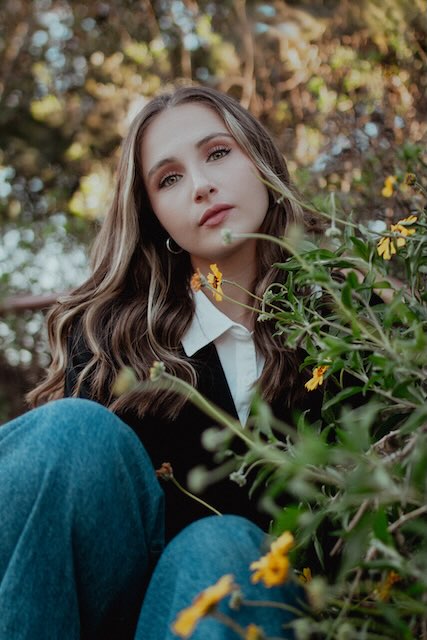
When the California Dream Changes
Good Hours: Your EP is called California’s Killing Me, but you’ve also described loving Los Angeles. When did you first begin to feel that tension between being grateful for the life you’d built and wondering whether you needed something different?
For many years as a teenager, I idolized the idea of moving to Los Angeles and doing music full-time. So when I finally made it here and the shine started to wear off, it was such an odd feeling. That classic idea of the grass always being greener started creeping into my head once real life kicked in, but real life will follow you everywhere. I learned that you just have to work with wherever you are and whatever you’ve got.
Even the idea of “how can you be sad when it’s sunny every day?” started to turn on me, because every day began to feel the same. I found myself craving the cold, the rain, anything to break up the monotony. I felt so guilty for feeling sad sometimes when the weather was objectively perfect. That’s how I came up with the line, “I think I’ve got backwards seasonal depression.” LA is still a strange place for me. It feels like home, but I also don’t see myself growing old here. I often find myself reflecting on how long I’ll stay and constantly evaluating my happiness here.
Good Hours: You grew up in Ontario before eventually building your career in Los Angeles. What are the small, ordinary things about home that you find yourself missing most — perhaps things you never expected to matter so much?
I miss riding my bike around my parents’ neighborhood. I’m sure if I did it every day, it wouldn’t feel as special and would eventually become part of the routine. But there’s a nostalgia and a feeling of purity that comes with getting to do it whenever I’m home, and that’s never lost on me. My parents’ back porch is another one. It’s where we gather as a family, and some of the most meaningful conversations I’ve ever had have happened there.
Good Hours: The EP was written during a period when you felt stuck. What did an ordinary day look like during that chapter, and how did you recognize that something in your life needed to change?
There’s something about the sadness that comes over me during the summer in LA. It’s so hot, and every day starts to look and feel the same. The first song I wrote for the EP was the title track, “California’s Killing Me,” which came to life during the summer of 2023, when I was physically stuck in LA. I couldn’t leave the country because I was waiting for my green card to be approved, and by that point, I hadn’t seen my family in over a year. Normally, I’d spend a couple of weeks back home in Toronto during the summer, spending time with my family. It always reminded me of who I am and where I come from.
Small Changes, Long Distances
Good Hours: “Itching for Change” explores wanting to move forward without necessarily knowing what comes next. Have you learned to become more comfortable with uncertainty, or are you still someone who wants a clear plan before making a big decision?
Over the last year, my relationship with the uncertainty of my future has absolutely changed. I started focusing on the little changes I could make in my everyday life. “I’m drinking water, getting steps in, washing my face, taking lessons” is the first lyric of “Itching for Change,” and that’s where it all started. I learned through writing the actual song that it’s easier to focus on the little things you can control than to get overwhelmed by the big changes you know you need and desperately want, but don’t know where or how to start.
Good Hours: “Not In The Room” explores the imbalance of a long-distance relationship. Has spending so much time traveling and working in music changed what you need from the people closest to you?
It hasn’t changed what I need, but it’s definitely made me a better communicator. I have to be more on top of my emotions and my schedule to make time for the people in my life. Being a touring musician is exceptionally hard, and it gets even more complicated when all your best friends and your husband are touring, too. This song isn’t specifically about anyone, especially not my husband (we’ve been happily together for 11 years). It’s more about the general feelings that come up when you’re separated from the people who keep you grounded. It could be about a couple, a pair of best friends, or anyone who knows what it feels like to be away from the people who mean the most to them.

Supporting Someone Else’s Music, Writing Her Own
Good Hours: You’ve performed as a backing vocalist for artists including Harry Styles, Olivia Rodrigo and Sabrina Carpenter. What have those experiences taught you about being part of someone else’s creative world, and how does that compare with the freedom and responsibility of making music under your own name?
It’s such an amazing feeling to be a part of someone else’s creative world. I’ve always prided myself on wearing many hats, and I love working in music in so many different spaces. In today’s industry, I believe the more you can do, the better of a musician you become. At the end of the day, I’m a vessel, and I care about the music more than anything. So being able to honor the music, whether it’s my own or another artist’s, is such a gift and a privilege to me. As an artist, there’s always an underlying pressure that comes with having the freedom to create and push my own music. So, as a backing vocalist, it’s nice to turn that side of my brain off and simply be present in serving someone else’s music and vision.
Good Hours: There’s an interesting contrast between performing on major stages and writing songs about feeling uncertain or stuck. Do those professional experiences ever make your personal doubts feel smaller, or can both realities exist completely independently of each other?
I think both realities exist independently of each other. My insecurities are deep-rooted, and they show up no matter what stage I’m on or how “busy” I am. I truly believe that even as my career continues to grow, I’ll always have doubts and holes in my confidence. That’s something I’ve recently been trying to accept instead of constantly fighting against. There’s no winning against my own brain.
Good Hours: You began writing songs at 12, long before the professional opportunities that followed. When you sit down to write for yourself today, how do you reconnect with the instincts that made you love songwriting in the first place?
I try to follow my own taste. It’s hard sometimes because, in the back of my mind, I’m always wondering, “Is this good enough?” or “Is this an original thought?” But I try to lean into not thinking too much, as crazy as that sounds. I’ll start recording a voice memo on my phone and just improvise, mumble some lyrics, make up stories, anything that might lead me to the next idea. When I was 12, I wasn’t thinking about the industry, how many streams a song would get, or what my peers would think of my work. I was solely focused on whether I liked it, and that’s the magic in writing that I try to tap back into.
An EP That Came Together Quietly
Good Hours: You worked closely with Caleb Dee on California’s Killing Me. Was there a particular conversation, recording session or musical decision that helped you understand what you wanted this EP to become?
This EP was finished without us even realizing it! Caleb and I have been writing together since the summer of 2023, when we wrote the first track, “California’s Killing Me.” Over time, we built up a pile of solid tracks that all happened to share very similar themes. It was completely unplanned, but I guess that’s just how I’ve been feeling over the last couple of years. Earlier this year, we finally counted up all the songs and realized we had a really strong EP that was essentially finished!
Coffee, Friends and a Day Without a Plan
Good Hours: Your work has taken you into recording studios, onto international stages and into other artists’ projects. When you finally have time entirely to yourself, what does a genuinely good day look like, and how much does music feature in it?
A genuinely good day would look like waking up, grabbing coffee or breakfast with friends, and coming home to binge-watch The Real Housewives (I’ve been deep into Salt Lake City lately). Then maybe taking a yoga class, or going to a writing session with close friends where it doesn’t really feel like work. After that, coming home, pouring my husband and myself a glass of wine, and watching a movie together! A perfect day could include music, but it’s not necessary. Sometimes I need a break from it since it’s my full-time job. Music can feel like fun, but depending on the day, it can also feel like work.
Good Hours: The EP explores being caught between the life you have, the life you miss and the life you’re still trying to build. Has finishing these songs changed how you feel about Los Angeles, or are you still figuring out what your next chapter might look like?
Finishing and releasing these songs hasn’t necessarily changed how I feel about LA, but it has freed up some space in my brain. I think the growing pains I experienced while making this project shed light on a specific chapter of my life, and I’m anxiously awaiting the next chapter, which I’m sure I’ll try to solve the puzzle of, too. I’ve learned that this is just a part of life that you have to work through. I’m never going to have it all figured out, because 1. That would be so boring, and 2. That’s not real life.
Julia hasn’t arrived at a definitive answer about Los Angeles. She still loves parts of the city, still questions how long she’ll stay and still misses the places in Ontario that make her feel like herself. Finishing the EP hasn’t settled any of that.
It has, though, given those feelings somewhere to live. What began during a summer when she couldn’t go home became a collection of songs about the difficulty of being where you once wanted to be. For now, she is paying attention to smaller changes and leaving the larger questions open.
Listen to California’s Killing Me on all streaming platforms:
https://stem.ffm.to/juliagarthacaliforniaskillingme
Julia Gartha: Frequently Asked Questions
Who is Julia Gartha?
Julia Gartha is a singer-songwriter from Ontario, Canada, now based in Los Angeles. Alongside releasing her own music, she works as a backing vocalist and has performed with other artists.
What is California’s Killing Me about?
The EP explores homesickness, uncertainty and the complicated experience of building a life in a place that once felt like a dream. Its songs draw on Julia’s experiences living in Los Angeles while missing her family and familiar places in Ontario.
When was California’s Killing Me released?
The six-track EP was released on October 23, 2026.
Who worked with Julia Gartha on the EP?
Julia developed the EP with producer and co-writer Caleb Dee. They began writing together in the summer of 2023 and gradually realised that the songs they had made shared a common emotional thread.
What inspired the title track “California’s Killing Me”?
Julia began writing the song in summer 2023 while waiting for her green card to be approved. She couldn’t leave the United States and hadn’t seen her family in more than a year. The experience intensified her feelings of homesickness and frustration with the sameness of Los Angeles summers.
Is “Not In The Room” about Julia Gartha’s husband?
No. Julia says the song is not specifically about anyone, and particularly not her husband, with whom she has been happily together for 11 years. It explores the wider experience of being separated from people who provide comfort and stability.
What does “Itching for Change” explore?
The song is about wanting life to change without knowing how to begin. Julia describes learning to focus on small, manageable daily habits rather than becoming overwhelmed by larger decisions.
https://www.instagram.com/juliagartha