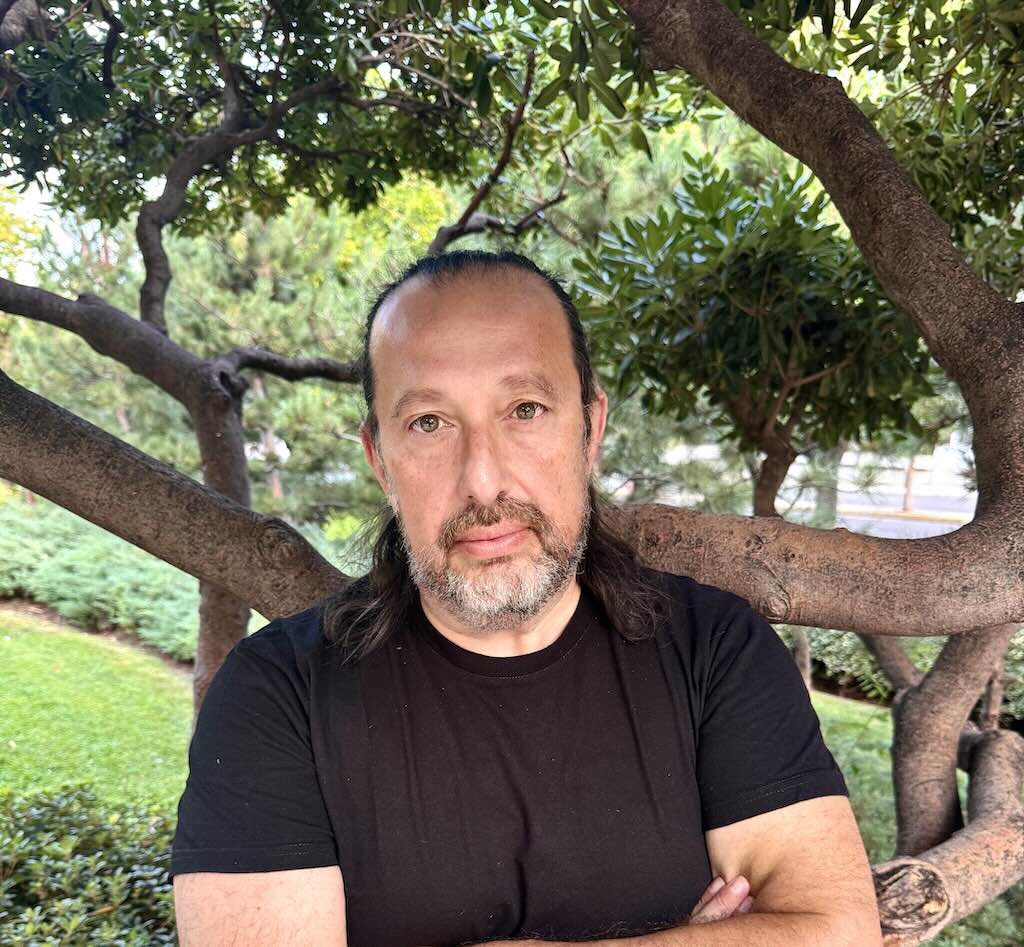
George Voukanos did not begin TERRA OLYMPIA with victory, spectacle or the familiar grandeur surrounding the Olympic story. He began with something quieter: light, landscape and silence. The Greek composer’s connection with Olympia and the wider land of Elis stretches back through childhood and earlier creative work, but his new album deliberately looks at that landscape from the present rather than attempting to reconstruct its past.
Across twelve instrumental pieces, mythology, rivers, forests, human effort and cultural memory meet synthesizers, electronic pulses and cinematic space. The result is less an illustration of Ancient Greece than a conversation between different periods of time — one in which an old landscape is allowed to sound unmistakably contemporary.
For Good Hours, Voukanos spoke about the places behind TERRA OLYMPIA, why mythology should remain a living conversation, the freedom he finds in electronic sound, and his belief that an instrumental album ultimately belongs as much to the listener’s imagination as to its composer.
The Good Hours Q&A
Music · 2026
Composer
George Voukanos
TERRA OLYMPIA
“The first feeling was not actually victory or grandeur. It was light, landscape and silence.”
George Voukanos
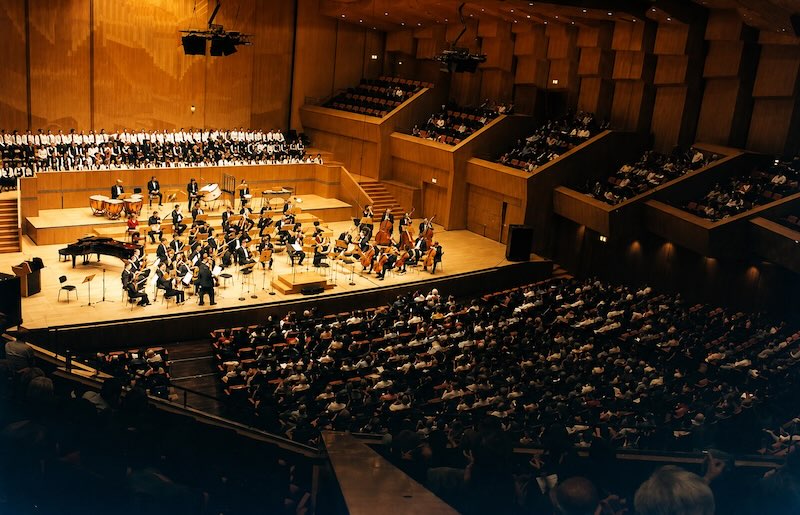
Photo: Christos Bonis
Light, Landscape and Silence
Good Hours: TERRA OLYMPIA begins with a place that carries thousands of years of history and symbolism. What was the first musical idea or feeling that made you realize Ancient Olympia could become an entire album?
The first feeling was not actually victory or grandeur. It was light, landscape and silence.
There is something very particular about Olympia and the wider land of Elis. You can stand in a place where apparently nothing is happening, and yet you feel that time has not completely left it. The landscape carries memory. The rivers, the olive trees, the mountains, the ancient routes — they seem to contain stories before you have even begun to tell them.
My first encounter with this musical world goes back to 2002, when I was writing material connected with an ERT documentary (ERT is Greece’s national public broadcaster) about Ilia. But the idea never really disappeared after that. It remained somewhere inside me and returned in different forms over the years.
It is important to make one distinction, however: the music connected with that 2002 documentary, my symphonic work ARETON ANOTERA for the Olympic Games, and the 2017 stage production TERRA OLYMPIA are separate projects from the 2026 album. The new TERRA OLYMPIA is not a remake, re-orchestration or recording of any of them, but an independent work with its own musical identity and contemporary sonic language.
What connects them is not the music itself, but a world that has continued to fascinate me: Olympia, Elis, mythology, landscape and the Olympic idea.
Eventually I understood that Olympia was much larger than one composition or one production. It offered an entire musical universe: myth, nature, ritual, human effort, competition, peace, memory.
And perhaps most importantly, it contained a question that still interests me today: how can something born thousands of years ago continue to speak to a person living now?
TERRA OLYMPIA grew out of that question.
Good Hours: You’ve made it clear that you weren’t interested in reconstructing the music of Ancient Greece. How did you decide what a 21st-century musical interpretation of Olympia should actually sound like?
I never wanted to ask, “What might music in Ancient Olympia have sounded like?”
That is a fascinating historical question, but it was not my artistic question.
I wanted to ask: What does Olympia sound like to me now?
We live in a world of electronics, cinema, digital images, satellites, enormous cities and instant communication. We hear sound differently from people who lived thousands of years ago. So pretending that I could somehow remove myself from the 21st century would have felt artificial.
Instead, I tried to bring two times into the same room.
The ancient world provides the memory, the mythology, the values and the landscape. The contemporary world provides another vocabulary — synthesizers, electronic pulses, sound design, layered textures and a cinematic sense of space.
I think cultural memory becomes most interesting when we stop treating it as something frozen.
I wanted to respect Olympia precisely by not turning it into an archaeological reconstruction.
The roots are ancient. The ears listening to them are contemporary. The imagination is limitless.
“The roots are ancient. The ears listening to them are contemporary. The imagination is limitless.”
Building a Contemporary Olympia
Good Hours: Electronic instrumentation and synthesizers play a much larger role here than the symphonic language associated with some of your previous work. What did electronic music allow you to express that a traditional orchestra might not have?
Electronic sound gave me a different relationship with space and transformation.
An orchestral instrument has a physical history attached to it. A violin, a horn or a human voice immediately brings centuries of musical memory with it. I love that world and it remains an important part of my work.
But a synthesizer can begin almost without an identity. A sound can grow, disappear, change shape, become rhythm, atmosphere, movement or something that is halfway between music and environment.
That freedom fascinated me.
In TERRA OLYMPIA, I could create sounds that feel as though they are coming from very far away and then suddenly move extremely close. A texture can become a pulse; a pulse can dissolve into air. You can suggest something ancient without imitating an ancient instrument.
There was also something very personal about working this way. It allowed me to build the sonic world almost from the inside out, layer by layer.
For me the important thing is never whether a work is “electronic” or “orchestral.” Those are tools and languages.
The real question is always: what does this particular idea need in order to become alive?
TERRA OLYMPIA needed this palette.
This is also a direction I feel increasingly drawn to as a composer: the meeting point between orchestra, electronic sound, cinema and visual storytelling. I don’t see TERRA OLYMPIA as a temporary experiment with a different sound, but as part of a musical language I want to continue developing — one that can live in the concert hall, but can also enter the world of contemporary cinema.
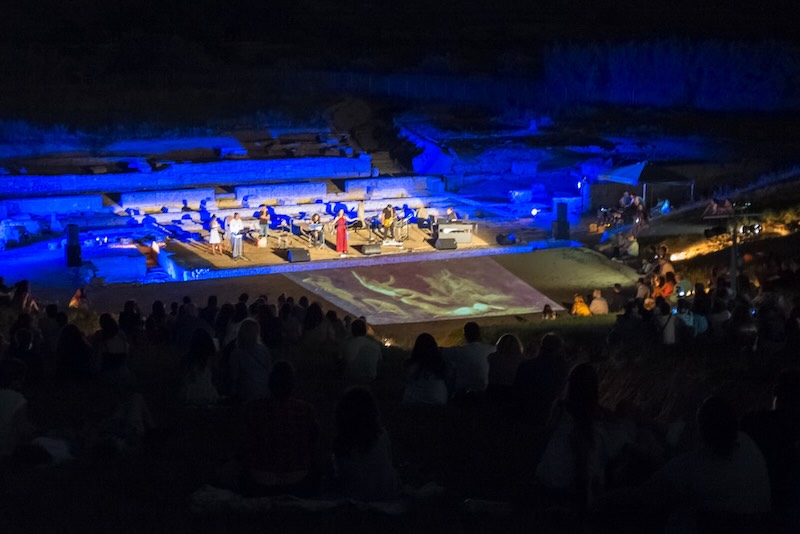
Good Hours: The album draws not only from Ancient Olympia itself but from the wider landscape of Elis — its rivers, forests, sacred routes and mythology. How important was the physical landscape to the way you composed these pieces?
Very important, because for me the landscape is almost another character in the album.
My roots are connected with Ilia, and many of these places have been part of my imagination since childhood. Ancient Olympia is obviously at the centre, but around it there is an extraordinary geography: Neda, Foloi, Ancient Elis, the rivers, the forests, the sea, the old routes, the light.
And each landscape suggests a different musical movement.
A river naturally creates flow. A forest creates depth, mystery and layers. A road introduces direction and expectation. An open landscape gives you air and distance.
I do not translate these things mechanically into notes, of course. I am not saying, “Here is a tree, therefore here is a chord!”
But physical places create emotional reactions, and those reactions eventually become musical decisions — tempo, texture, harmony, rhythm, density, silence.
This is one reason I prefer to think of TERRA OLYMPIA as a journey through a world, rather than simply a collection of twelve tracks.
You move through the land as much as through the mythology.
Mythology as a Living Language
Good Hours: Tracks such as “Sacred Neda” and “Heracles and the Centaurs of Foloi” take inspiration from very specific places and myths. When you begin a composition like these, are you trying to tell the original story through music, or does mythology become a starting point for something entirely new?
Mythology is the starting point, not the screenplay.
If I tried to translate every event of a myth literally into music, I think the composition would become an illustration. What interests me much more is discovering the human emotion hidden inside the story.
With “Sacred Neda,” for example, I am interested in water, birth, secrecy, protection, nature, something almost primordial.
“Heracles and the Centaurs of Foloi” naturally has another energy. There is physical power, danger, movement and confrontation, but beneath all of that there are also questions about instinct, violence and consequence.
The myths have survived for thousands of years because they are not really stories about distant supernatural beings. They contain recognizable human experiences: love, fear, ambition, courage, jealousy, loss, sacrifice.
That is where I enter them as a composer.
I respect the original myth, but once the music begins, I allow it to travel somewhere new.
Otherwise we would simply be retelling the past.
And I think mythology has survived precisely because every generation has found a way to see itself reflected in it.
Good Hours: “The Heartbeat of Heroes” and “Olympic Glory” evoke ideas of achievement, struggle and human excellence. How do you translate something as abstract as the Olympic ideal into melody, rhythm and sound?
I try not to begin with glory.
I begin with the person before the glory.
There is breathing, repetition, discipline, fatigue, doubt, another attempt, another failure, another attempt. Human achievement is interesting because it is never simply the moment when someone stands at the top. It is everything invisible that came before it.
Rhythm becomes very important there.
A repeated pulse can suggest the body, training, running, expectation — almost a heartbeat. Gradually you can add movement, tension and harmonic expansion until the music begins to feel as if it is breaking through something.
Melody then gives that movement a human face.
For me the Olympic ideal is not simply about being stronger than another person. It is also about confronting your own limits and discovering whether you can move beyond them.
That idea is not exclusive to athletes.
A musician knows it. A scientist knows it. A child learning something difficult knows it.
So when I write something like “The Heartbeat of Heroes,” I am not imagining only Olympic champions.
I am thinking about that very human moment when somebody says: I will try once more.
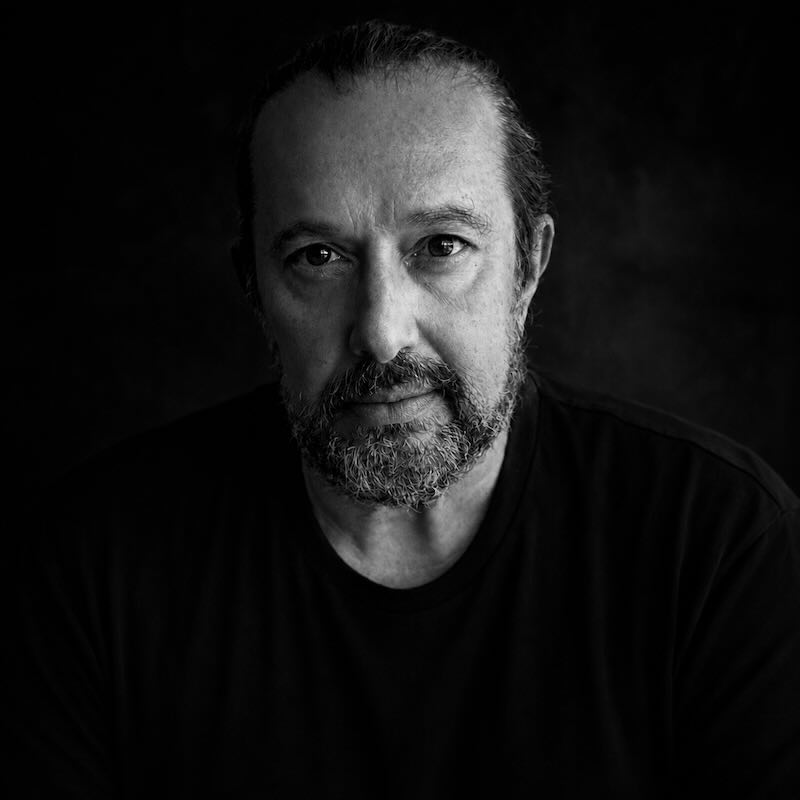
Ancient Memory, New Technology
Good Hours: There is a fascinating tension in the project between something extremely ancient and technology that is unmistakably modern. Did you ever find yourself deliberately pushing the music further into the future because the source material was so deeply rooted in the past?
Yes, and I think that tension became one of the pleasures of making the album.
The deeper I entered the ancient material, the less I felt the need to make the music sound “ancient.”
There is already enough history in Olympia. I did not need to add artificial dust to it!
Instead, I became increasingly interested in contrast: an ancient image against a synthetic texture, mythology against an electronic pulse, something ritualistic surrounded by a sound that could only belong to our century.
There is a wonderful paradox there.
We often think that respecting tradition means remaining stylistically close to it. I see it differently. Sometimes respect means having enough confidence in the original idea to allow it to encounter something completely new.
The ancient myths themselves survived because they were retold.
So yes, there were moments when I deliberately allowed TERRA OLYMPIA to move further toward the contemporary and even toward an imagined future.
Not because I wanted technology to become the subject, but because I wanted to show that memory does not have to face backward.
It can also become raw material for what comes next.
Perhaps this is also where I see myself artistically now: not choosing between the symphonic world and new technology, but allowing them to meet. I want to remain an orchestral composer, but an orchestral composer of my own time open to electronics, cinema, new media and whatever new forms of storytelling the future may bring.
Good Hours: You’ve described Olympia as carrying values of human effort, excellence, peace and people coming together. At a time when the world can feel increasingly divided, has the meaning of those ideals changed for you while making this album?
Perhaps they have not changed, but I feel their importance more strongly.
Words such as peace, dignity, excellence and human unity can very easily become ceremonial words. We hear them often, and sometimes we stop hearing what they actually mean.
But when the world becomes more divided, they stop being decorative ideas.
They become necessary.
For me, one of the most powerful ideas connected with Olympia is not simply competition. It is the possibility that people can meet, compete, disagree, come from completely different places and still recognize something human in one another.
That is a very simple idea, but apparently humanity still finds it extremely difficult!
I do not believe music can solve political conflicts, and I would never make such a claim. But music can create a space in which people feel before they judge. For a few minutes, language, nationality and borders become less important.
That matters to me increasingly as I grow older.
It is also very close to what I call Music of Life.
For me, Music of Life is not a musical genre or a particular sound. It is the belief that music begins with life itself, with people, memory, nature, history, cultures, love, loss, encounters and everything that changes us.
Technology may expand our musical language enormously, but the human reason for making music must remain at its centre.
We carry different histories and identities, but ultimately we are travelling on the same small planet.
If TERRA OLYMPIA carries a message beyond its music, I hope it is that excellence should never be separated from humanity.
“Memory does not have to face backward. It can also become raw material for what comes next.”
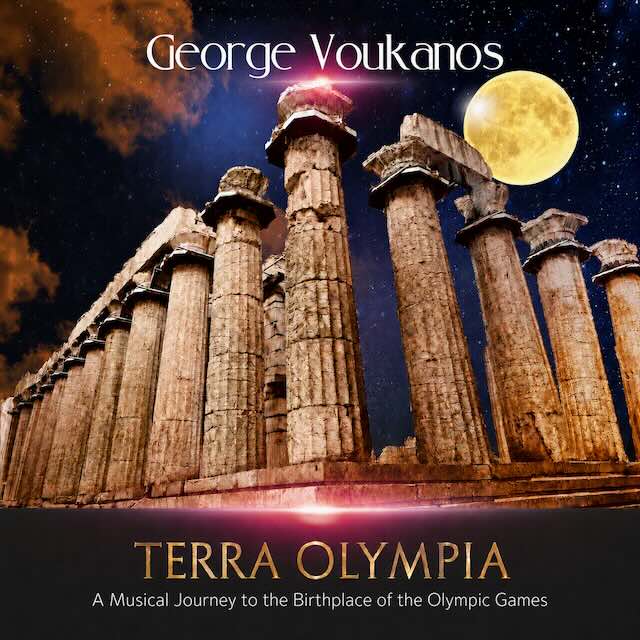
Artwork: Effie Panagopoulou
The Screen Inside the Listener
Good Hours: Unlike one of your large-scale audiovisual works, TERRA OLYMPIA gives listeners no fixed visual narrative to follow. What do you hope happens in a listener’s imagination when they experience the album with nothing but the music to guide them?
I hope I disappear a little.
That may sound strange for a composer, but once the music reaches the listener, I do not want to stand beside them explaining what they are supposed to see.
The titles open a door — Neda, Foloi, the Sacred Road, Ancient Olympia — but after that I would like the listener to walk through it alone.
Someone may imagine an ancient landscape. Someone else may see something completely contemporary. Another person may not see Greece at all; perhaps the music connects with a memory from their own life.
All of those responses are valid.
I am a very visual composer, so images are often present in my mind while I am writing. But one of the extraordinary advantages of an instrumental album is that the screen exists inside the listener.
And every screen is different.
That is why I like cinematic music that exists independently from cinema.
And perhaps paradoxically, that freedom is also what makes me want to explore cinema itself more deeply — to discover what happens when this musical imagination finally meets another artist’s images and story.
That kind of music can suggest movement, distance, characters and emotion without dictating a single narrative.
If a listener finishes one of these pieces having travelled somewhere I never imagined myself, then the music has done something beautiful.
At that moment, the imagination of the listener becomes part of the composition.
Good Hours: Your work has repeatedly brought Greek cultural memory into conversation with contemporary art. Do you see projects like TERRA OLYMPIA partly as a way of preventing mythology and ancient cultural ideas from becoming museum pieces — keeping them alive by allowing each generation to reinterpret them?
Absolutely.
Museums perform an invaluable role because they preserve objects. Art has another responsibility: it can keep questions alive.
The danger begins when we admire cultural memory so much that we become afraid to touch it.
Mythology was never created to sit silently behind glass. These stories were told, retold, transformed, painted, sung, performed and reinterpreted for centuries.
That is why they survived.
Of course, reinterpretation requires respect. You have to understand what you are approaching. But respect should not become fear.
As a contemporary Greek composer, I do not feel that my responsibility is to imitate the artistic language of my ancestors. My responsibility is to enter into a dialogue with what they left us and then answer from my own time.
If every generation simply reproduces the previous one, culture eventually becomes a monument to itself.
I prefer to think of tradition as a living conversation.
We inherit something, we listen to it, we change through that encounter, and then we pass something different to the next generation.
TERRA OLYMPIA is one part of that conversation.
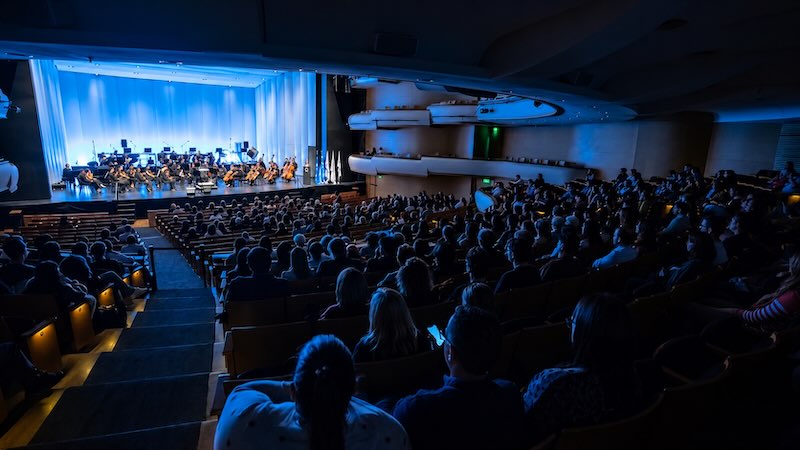
Another Horizon
Good Hours: The album closes with “Journey into Myth & Eternity.” After taking listeners through this landscape of mythology, memory and Olympic ideals, where do you want that final piece to leave them — and what would you like someone who has never visited Olympia to understand or feel when the album ends?
I wanted the final piece to feel less like an ending and more like a horizon.
Throughout the album we encounter places, myths, heroes, ritual and the idea of Olympia. But by the final track, I wanted those specific images gradually to dissolve.
The journey begins in a particular place in Greece, but I did not want it to remain geographically imprisoned there.
And this is why Los Angeles 2028 has naturally become a horizon in my mind.
The Olympic idea was born in this landscape, but it belongs to the world. I would be very happy if, on the road toward 2028, TERRA OLYMPIA could find a way to meet the American audience, perhaps eventually not only as an album, but through a contemporary live and visual presentation.
Los Angeles, with its extraordinary relationship to cinema, music, technology and cultures from across the world, would be a particularly meaningful place for that encounter.
Someone who has never visited Olympia does not need to know every myth or recognize every location. I would rather they finish the album with a feeling: perhaps of distance, memory, light, human effort, or simply the sense that they have travelled somewhere.
And perhaps one day they will visit the real place and discover that it is completely different from the Olympia they imagined through the music.
I would love that.
Because then there would be two Olympias: the historical place and the private one they had already created inside themselves.
“Journey into Myth & Eternity” therefore does not close the door.
It opens it wider.
I have never been very interested in final destinations anyway. Every time you reach one, another horizon appears.
Perhaps that is why I continue writing music.
The journey never really ends.
That open horizon feels fitting for TERRA OLYMPIA. Voukanos begins with a specific landscape, but he does not ask the listener to remain there. Olympia becomes memory, sound and imagined space — something inherited from the past, heard through the present and left open to whatever a listener brings to it.
George Voukanos: Frequently Asked Questions
Who is George Voukanos?
George Voukanos is a Greek composer whose work includes orchestral and contemporary electronic approaches. In this interview, he discusses his instrumental album TERRA OLYMPIA and his growing interest in the meeting point between orchestral music, electronics, cinema and visual storytelling.
What is TERRA OLYMPIA?
TERRA OLYMPIA is a twelve-track instrumental album inspired by Olympia, the wider landscape of Elis, Greek mythology and ideas connected with the Olympic tradition. Voukanos describes the 2026 album as an independent work rather than a remake of his earlier projects connected with the same cultural landscape.
Is TERRA OLYMPIA intended to recreate Ancient Greek music?
No. Voukanos says he deliberately avoided attempting an archaeological reconstruction. Instead, he uses a contemporary vocabulary including synthesizers, electronic pulses, sound design and cinematic textures to respond to Olympia from a 21st-century perspective.
What inspired the music on TERRA OLYMPIA?
The album draws from Ancient Olympia and the wider geography of Elis, including Neda, Foloi, Ancient Elis, rivers, forests, old routes and the landscape itself. Mythology, human effort, memory and the Olympic idea also shape the work.
How does George Voukanos approach mythology in his music?
Voukanos describes mythology as a starting point rather than a screenplay. Instead of translating myths literally into music, he looks for the human emotions within them and allows the compositions to move in new directions.
Why does TERRA OLYMPIA use electronic sound?
Voukanos says electronic sound gives him freedom to work with space and transformation. Synthesized textures can change shape, become rhythm or atmosphere, and suggest connections with the ancient world without imitating historical instruments.