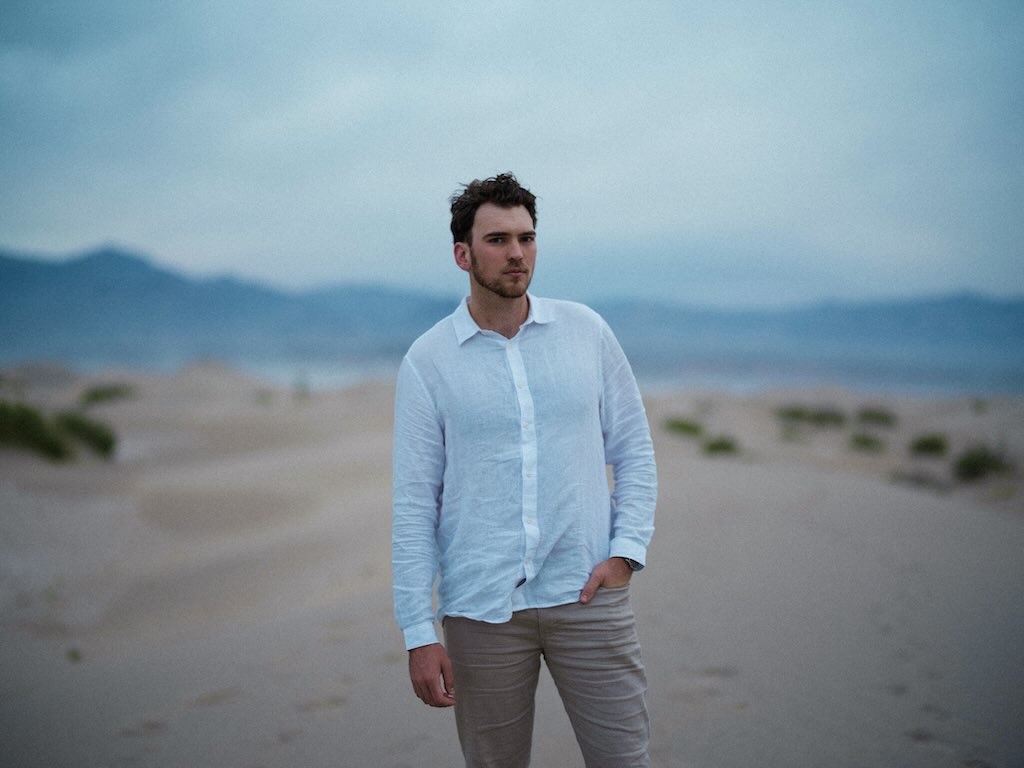
Cade Hoppe’s path into music has rarely followed the obvious route. Before songwriting became the centre of his life, he was studying finance and playing college basketball at New York University. When the pandemic disrupted that version of the future, Hoppe committed to music full-time, supporting his earliest releases through service-industry jobs while gradually finding his footing as both an artist and producer.
Several years and a move from New York to Los Angeles later, that decision has become more complicated — and more interesting. Hoppe’s forthcoming album, Safer at a Distance, finds him examining not only relationships but ambition itself: what happens when the thing you wanted badly enough to build your life around begins asking more of you than you expected.
That tension also runs through his recent single “Crashland,” a song about recognising the warning signs in a relationship and moving toward it anyway. But for Hoppe, uncertainty reaches beyond romance. It appears in the distance between creative ambition and everyday life, in leaving a city after seven years, and in learning when persistence is useful and when it becomes something else entirely.
For Good Hours, Hoppe talks about the less romantic side of ambition, the service-industry years behind his early music, what basketball taught him about failure, producing for other artists, leaving New York, and the life he has built in Los Angeles after choosing the uncertain path.
The Good Hours Q&A
Music · 2026
Songwriter · Producer
Cade Hoppe
Safer at a Distance
You can ignore the ground below you but you can’t really ignore the wind in your face as you’re in free fall.
Cade Hoppe
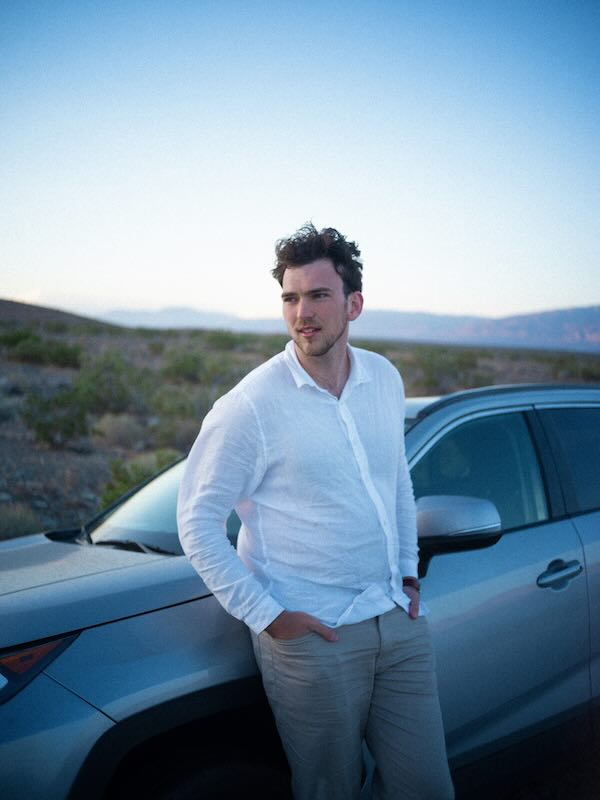
Choosing the Uncertain Path
Good Hours: You originally studied finance and played basketball at NYU before music became your full-time direction. When you think about that earlier version of yourself, does choosing music now feel like a sharp turn in your life or something that had quietly been happening for much longer?
Music was always a big part of my life, but I hadn’t really considered it to be a realistic path for me until the pandemic. My life just had so much more tangible momentum in school and basketball that it took the world coming to a halt for me to make that pivot to music. But yeah, I would say that it had been happening for much longer and in retrospect it was always where I was headed.
Good Hours: You funded some of your earliest releases through service-industry jobs. Is there a particular shift, table, apartment or ordinary moment from that period that you still associate with trying to make a life in music?
It all kind of blurs together, honestly, but I worked a year at Chipotle and then four years at an Italian restaurant waiting tables and I can admit to doing a lot of shameless self promotion, especially the first few years. At Chipotle, I remember working the line during a lunch rush and still finding ways to tell people about my music, and then waiting tables, I used to have so many go-to segues to put people onto my music. I was annoying, but I was committed to the bit that wasn’t really a bit.
Ambition Without a Scoreboard
Good Hours: Safer at a Distance explores your changing relationship with music and ambition. Was there a moment when you realised the thing you had worked so hard to pursue was also something you needed to question?
I can hardly think of a time when I didn’t question my pursuit of music. It’s a stupid thing to pursue and I think that really speaks to how badly I want it and how desperately I can’t live without it. Sometimes I can ignore its uncertain nature, but it’s a lot like closing your eyes to forget that you’re skydiving. You can ignore the ground below you but you can’t really ignore the wind in your face as you’re in free fall.
Good Hours: Creative ambition is usually talked about as an uncomplicated virtue — wanting it enough, working harder, refusing to give up. What have you learned about the less romantic side of wanting something very badly?
Unfortunately talent has little to do with success. A lot of times there’s correlation, but it’s harder to prove causation. There are many successful people that I don’t think are very talented, but there are also many talented successful people. The one main thing they all have in common is the extraordinary amount of luck that got them there—whether that’s the luck of the situation they were born into or the luck of the viral moment that broke them (or both, in most cases). I think talent brings longevity, but luck brings the initial opportunity for success. Wanting it, working hard, and refusing to give up can sometimes help you stick around long enough for that stroke of luck to hit, so they aren’t inconsequential. They just don’t make up the whole equation and I’m much more aware of that now more than ever.
Knowing the Warning Signs
Good Hours: “Crashland” is about recognising the warning signs in a relationship and going toward it anyway. Are you someone who generally has to experience things for yourself before you believe the warning, even when part of you already knows where they’re heading?
I suffer from the slightly narcissistic belief, not that the rules don’t apply to me, but that one person’s experience may not be my experience. It mostly leads to me being dead wrong, but you have to take that risk sometimes. It’s not that I need to touch a hot stove to know it’s hot, but maybe I need to touch a hot stove to know if I can handle the heat. I think some things in life you can take people’s word for, but others you’ve got to come to your own conclusions about. My newest single, “Flatearther,” is also about that refusal to accept hard truths. Sometimes you want so badly for the earth to be flat despite its obvious spherical nature, that you just pretend and convince yourself it’s flat anyway.
Good Hours: You describe these characters as star-crossed, which carries this idea that some relationships can be meaningful even if they aren’t sustainable. Has getting older changed the way you think about whether something has to last in order to have been worth experiencing?
As I’ve gotten older, I’ve realized discovering the things you don’t like is as important as finding the things you do like. And everything ends at some point, so I don’t think something being finite makes it any less meaningful.
“Everything ends at some point, so I don’t think something being finite makes it any less meaningful.”
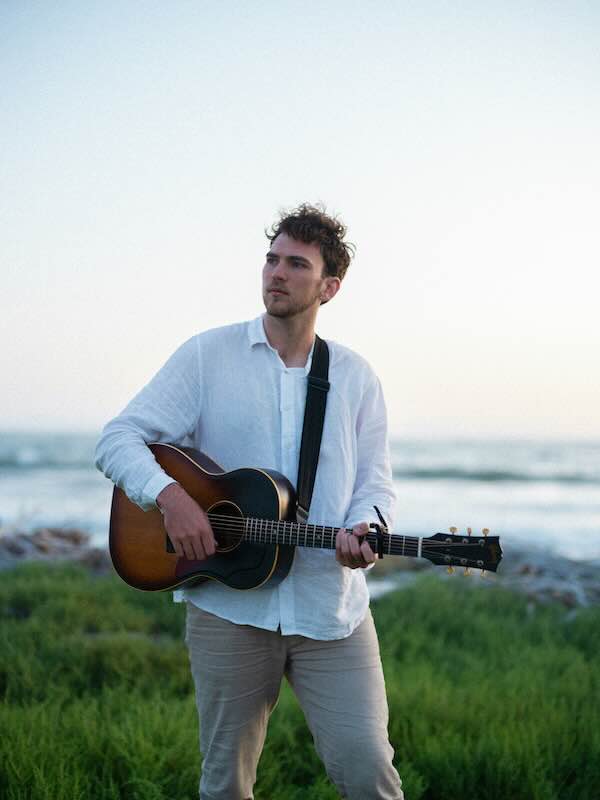
Making Space for Someone Else’s Sound
Good Hours: You produced “Crashland” with Harper James and increasingly work as a producer for other artists. When you’re helping someone else realise their idea, does being temporarily free from the question of what a song says about Cade Hoppe change the way you work?
I have Harper to thank for so much of how I approach being a producer for other artists. When we first started working together and I wasn’t much of a producer yet, he was always so great about giving me the space to use my strengths as an artist and complement them, rather than steamroll any project. Taking that experience with him, I work really hard to bring myself to an artist’s project without making it feel too much like a “Cade Hoppe” record. And that means highlighting the artist and all the things that make them unique at the center of the project. My philosophy is that with all of the projects I work on there are so many constant variables—from the hardware I use in my studio to my own creative brain—and the only real independent variable is the artist and what they bring to the table, so it’s important that we dig into that as much as possible if we want to attempt to make something singular.
Leaving New York
Good Hours: After seven years in New York, you recently moved to Los Angeles. What was surprisingly difficult to leave behind — not necessarily something important, but an ordinary ritual, place or detail you didn’t expect to miss?
I really miss the subway commutes where I’d be able to listen to music or podcasts, but I’d also have the ability to write things down and fine tune lyrics. There are things I love about driving a car, but it does lack a certain hands-free element that I appreciated whenever I had to go anywhere.
Good Hours: You spent years playing competitive basketball before building your life around music. Has anything from that world — repetition, discipline, competition, dealing with a bad performance — remained useful to you as an artist, or have you had to unlearn parts of that mentality?
I think it can honestly be more frustrating than anything. Music is competitive, but in such arbitrary ways. In basketball you either win or you lose, and there’s always another game. There are also so many metrics to validate hard work. I do have basketball to thank for all those things you mentioned—it taught me a relentlessness that I’ve carried over to my music. But art is much more of a lifelong pursuit with the constant invention of new milestones to achieve and there’s an uncertainty that requires extraordinary patience.
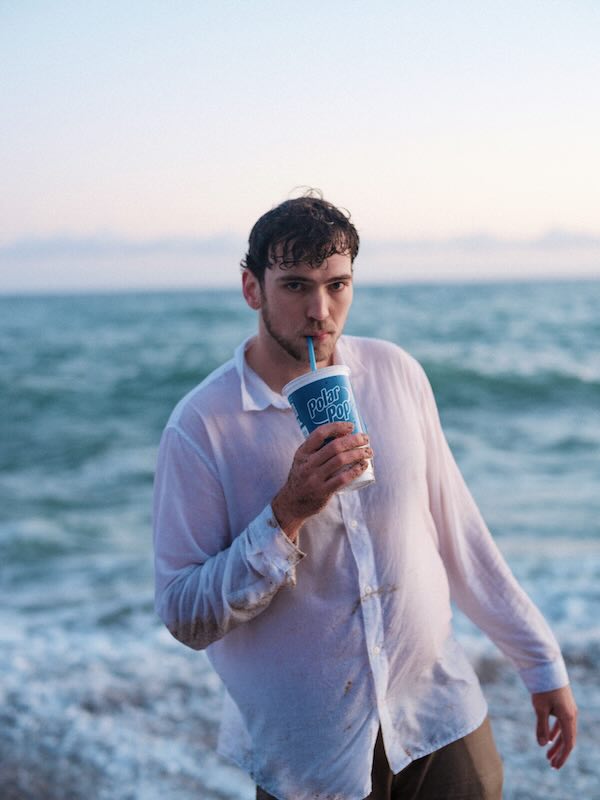
The Hours Outside Music
Good Hours: When so much of your professional life revolves around music — writing your own songs, producing other people and thinking about the next release — what do you do that has absolutely nothing to do with being productive or advancing a career?
I watch so many movies and especially try to go to the theater to see them. My fiancée, Maddie, and I are at the movies at least two times a week, sometimes even up to five times. We both love it. I love it because it forces me to put my phone away and just immerse myself in the movie for a couple hours. It helps me take my mind off the music and then later it actually helps inspire my writing. I also really enjoy running and I tend to listen to podcasts more than music when I run, just to give my ears a break. And I’m also a huge Survivor fan, so during the Survivor season I’m really invested in that or I’m rewatching old seasons. Those three things really keep me sane and refreshed when I go back to making more music.
Good Hours: If the version of you who decided during the pandemic to pursue music full-time could spend one ordinary day with you now in Los Angeles, what part of your life do you think would surprise him most?
I think that version of me would be shocked that I’m a full-on producer now. He’d be proud too, but I was so resistant for so long to dive totally into the production/engineering side of things, so that would be a little surprising. It’s not that I didn’t want to, it just seemed so daunting and I had so much respect for the difficult nature of actually becoming great. I still am so far from where I want to be, but he would think it was pretty cool that I’ve come this far and I’m still chasing this dream of mine.
There is no neat arrival point in Hoppe’s version of the story. The finance student became a songwriter; the basketball player carried his relentlessness into a field without wins and losses; the artist who once promoted his songs across a Chipotle counter now produces records for other people. Yet uncertainty has remained.
Perhaps that is what makes the free-fall image feel so apt. Hoppe has not found a way to remove the risk from the life he chose. He has simply spent enough time inside it to recognise the wind in his face — and to keep going anyway.
Cade Hoppe: Frequently Asked Questions
Who is Cade Hoppe?
Cade Hoppe is a songwriter, artist and producer now based in Los Angeles. Before pursuing music full-time, he studied finance and played basketball at New York University.
What is Safer at a Distance?
Safer at a Distance is Hoppe’s forthcoming album. In this conversation, he describes the project in the context of his changing relationship with music, ambition, uncertainty and relationships.
What is “Crashland” about?
“Crashland” explores recognising warning signs in a relationship while choosing to move toward it anyway. Hoppe connects that instinct with his tendency to want to reach his own conclusions rather than assume another person’s experience will also be his.
How did Cade Hoppe support his early music career?
Hoppe says he spent a year working at Chipotle and four years waiting tables at an Italian restaurant. During those years, he regularly found ways to tell customers about his music while supporting his early releases.
Why did Cade Hoppe move from New York to Los Angeles?
Hoppe discusses making the move after seven years in New York, although this interview does not specify a single reason for relocating. One unexpectedly missed part of New York life, he says, is the freedom of subway journeys to listen, write and refine lyrics while travelling.