Australia is the sort of destination that makes a two-week holiday feel unexpectedly short. You might arrive wanting to see Sydney, snorkel on the Great Barrier Reef, explore Melbourne’s cafés, visit Uluṟu and spend a few days on a tropical island. Then you open a map.
The distances change everything. Australia’s best-known destinations are spread across different regions, with different climates and very different reasons to visit. Trying to fit them all into one trip can mean spending more time in airports than enjoying the places you came to see.
For a first visit, the better approach is to decide what kind of holiday you want. Cities and culture? Beaches and warm water? Extraordinary landscapes? A little of everything, with enough time to enjoy it?
These five destinations are excellent starting points. You don’t need to visit all of them to have a memorable first trip to Australia.
1. Sydney: For the classic Australian city experience
Sydney is an appealing introduction to Australia because you can combine a major city with beaches and outdoor life without travelling far from your accommodation.
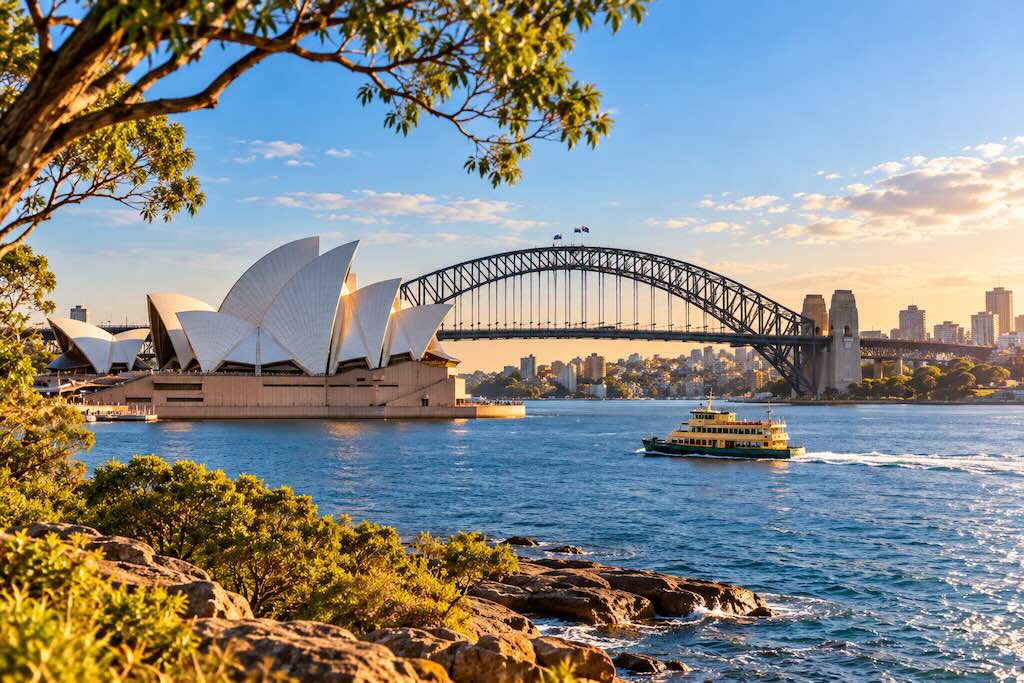
Start around Circular Quay, where the Sydney Opera House and Harbour Bridge form the city’s most recognisable waterfront. The harbour is not just something to photograph. Ferries are part of Sydney’s transport network, and taking one across the water offers a different perspective on the city.
A ferry to Manly can turn an ordinary afternoon into a beach outing. Bondi offers another familiar Sydney experience, with cafés, swimming and coastal scenery. If you have more time, explore neighbourhoods such as Surry Hills, Newtown or Paddington for shops, restaurants and a different side of city life.
One of Sydney’s strengths is that a day doesn’t have to revolve around a major attraction. You can visit a market, spend an afternoon near the water or take a coastal walk without filling every hour.
Best for: First-time visitors who want beaches, restaurants, city life and familiar landmarks in one destination.
Suggested stay: Three to five days, longer if you want day trips or time at the beach.
Good to know: Sydney is spread out. Choose accommodation with convenient public transport rather than assuming every attraction is within walking distance. The official Sydney tourism guide is useful for comparing neighbourhoods and nearby attractions.
2. The Great Barrier Reef: For an experience you cannot have in a city
For many travellers, the Great Barrier Reef is the reason to visit Queensland. But the reef is not a single beach or attraction. It is an enormous marine ecosystem stretching along Australia’s northeastern coast, with different departure points and experiences.
Cairns and Port Douglas are popular bases for reef excursions. Depending on the operator and location, trips may include snorkelling, scuba diving, guided interpretation or opportunities to see the reef without entering the water.
If you’re comfortable swimming, snorkelling can be a way to observe marine life and coral habitats. If you aren’t, look for tours designed for non-swimmers rather than assuming every reef excursion will suit you.
It is worth spending time choosing the excursion itself. Ask how long you’ll be travelling by boat, where the operator visits, what equipment and guidance are included, and whether the experience suits your swimming ability.
The reef also faces serious environmental pressures, including marine heatwaves and coral bleaching. Responsible tourism cannot solve those problems, but choosing an operator that follows reef protection rules and provides environmental education is a sensible consideration.
Best for: Travellers interested in marine life, snorkelling, diving and nature.
Suggested stay: Three to five days in the Cairns or Port Douglas region, allowing time for a reef excursion and other activities.
Good to know: Sea conditions, visibility and seasonal marine hazards vary. Check conditions and operator guidance before booking. The Great Barrier Reef Marine Park Authority’s visitor information explains how to visit and what to consider.
3. Melbourne: For food, art and neighbourhood wandering
Melbourne is a good choice if you enjoy discovering a city on foot, moving between cafés, galleries, shops and neighbourhoods without needing a famous landmark at every stop.
Its central laneways are particularly well known. Hosier Lane attracts visitors for its street art, while Degraves Street and Centre Place offer cafés and small businesses tucked into the city centre.
Beyond the central streets, Melbourne offers a substantial arts and music scene. You might spend a morning in a gallery, browse independent shops in Fitzroy or explore the city’s food culture through its markets and restaurants.
Melbourne also works well for travellers who like to leave some time unplanned. Its appeal is not limited to individual attractions. Much of the pleasure comes from finding a good café, following an interesting street or discovering a neighbourhood you hadn’t intended to visit.
If you have additional days, Victoria’s Great Ocean Road is a possible extension. It deserves time of its own, particularly if you want to stop along the coast rather than rush through the drive.
Best for: Food lovers, art and design enthusiasts, shoppers and travellers who enjoy exploring cities.
Suggested stay: Three to four days for Melbourne itself, with extra time for regional Victoria.
Good to know: Melbourne’s weather can change quickly, so bring layers even when the forecast looks pleasant. For ideas beyond the obvious sights, explore the official guide to Melbourne’s laneways.
4. Uluṟu: For landscape, culture and a different sense of scale
Uluṟu is not somewhere to add casually to an itinerary because it looks close to another destination on a map. It sits in Central Australia, far from the coastal cities, and visiting requires deliberate planning.
The sandstone formation is one of Australia’s most recognisable landscapes, but its importance extends far beyond its appearance. Uluṟu and nearby Kata Tjuṯa are part of the traditional lands of the Aṉangu people, whose cultural knowledge and relationship with Country are central to understanding the national park.
Rather than treating Uluṟu as a quick photo stop, allow time to explore the park’s walking routes, learn about Aṉangu culture and experience the landscape at different times of day.
Climbing Uluṟu has been permanently prohibited since 2019, reflecting the wishes of its Traditional Owners as well as safety and environmental considerations.
Visitors should follow park guidance on culturally sensitive areas, photography and access. A guided experience led by or developed with Aṉangu people can provide a more informed understanding of the place.
Best for: Travellers interested in extraordinary landscapes, Indigenous culture and experiences beyond Australia’s coastal cities.
Suggested stay: Two to three days, with three days preferable if your schedule allows.
Good to know: Central Australia’s temperatures can be extreme, particularly in summer. Park entry, transport and accommodation should be arranged in advance. Consult the official Uluṟu-Kata Tjuṯa National Park planning guide before travelling.
5. The Whitsundays: For beaches, islands and time on the water
If your idea of a holiday involves swimming, sailing and spending much of the day outdoors, the Whitsundays may be the destination that appeals most.
This island region lies off the coast of Queensland and includes Whitehaven Beach, known for its pale silica sand, and Hill Inlet, where shifting sand and water create striking patterns.
Airlie Beach on the mainland is a common departure point for boat trips, while some visitors choose accommodation on one of the islands.
Experiences range from day cruises and sailing trips to beach visits and snorkelling. The right choice depends on whether you want to spend most of your time exploring or would prefer several slower days by the water.
It is worth remembering that a famous beach photograph doesn’t tell you what the whole trip will be like. Boat schedules, weather, swimming conditions and travel between islands all influence the experience.
Best for: Beach holidays, sailing, island scenery and travellers who enjoy spending time on the water.
Suggested stay: Three to five days, depending on your accommodation and planned excursions.
Good to know: Tropical weather, marine stingers and seasonal conditions require attention. Follow local swimming advice and check boat-trip cancellation policies before booking.
Which Australian destinations should you combine?
The five places above make an excellent shortlist, but they do not form one convenient overland route. Sydney and Melbourne are in southeastern Australia, Uluṟu is in the centre, and the Great Barrier Reef and Whitsundays are in Queensland.
Domestic flights can connect these regions, but each additional stop brings transfers, accommodation changes and time spent getting to and from airports.
Instead of trying to see everything, choose a combination that suits your interests.
| Your travel style | Destinations to consider |
|---|---|
| Cities, food and culture | Sydney and Melbourne |
| Beaches and marine life | Great Barrier Reef and Whitsundays |
| City life and extraordinary landscapes | Sydney and Uluṟu |
| A varied first visit | Sydney, Cairns region and one additional destination |
These are planning combinations, not fixed itineraries. Travel dates, available flights and your preferred pace may make a different arrangement more sensible.
How much time do you need for a first trip to Australia?
There is no single correct length, but the amount of time available should influence how many places you attempt to visit.
- One week: Focus on one city and its surrounding region. Sydney with nearby beaches or Melbourne with a short regional excursion can provide plenty to do.
- Ten to fourteen days: Consider two main destinations, or three if the connections are straightforward and you’re comfortable with a faster pace.
- Three weeks: You have more flexibility to combine cities, tropical Queensland and perhaps Central Australia, although including all five destinations will still involve substantial travel.
For travellers arriving from Europe, the long international flight and time-zone adjustment are additional reasons to avoid an overly ambitious schedule.
Australia rewards time spent in individual places. A few extra days in one region may be more enjoyable than another flight and a rushed overnight stop.
When is the best time to visit Australia?
Australia doesn’t have one ideal travel season. Its climate varies significantly between the tropical north, the temperate south and the arid centre.
Sydney and Melbourne experience their warmest months during the Southern Hemisphere summer, generally December through February. Spring and autumn can also be attractive for city visits, with conditions varying by location and year.
In tropical Queensland, the wetter season generally falls during the warmer months, while the cooler, drier period often provides more settled conditions. Marine weather and visibility still vary, so check local forecasts and seasonal advice.
For Uluṟu, the cooler months are generally more comfortable for walking. Summer heat can make outdoor activities difficult or unsafe during parts of the day.
If you’re combining several regions, expect compromises. The month that suits Melbourne best may not be the ideal time for every Queensland excursion.
Before you book: Five practical things to check
- Entry requirements: Check the visa or travel authorisation rules that apply to your passport before booking.
- Domestic connections: Compare flight schedules and total transfer time, not just the distance between destinations.
- Seasonal conditions: Review weather, heat, marine safety and any seasonal restrictions for the regions you plan to visit.
- Accommodation: Book earlier for popular periods, especially school holidays and major events.
- Travel insurance: Check that your policy covers your planned activities, including diving, boating or car hire where relevant.
It is also sensible to check official travel advice and transport information shortly before departure. Entry rules, tour operations and local conditions can change.
Frequently asked questions
Is two weeks enough for a first trip to Australia?
Yes, provided you choose your destinations carefully. Two weeks can allow a satisfying visit to two or three regions, but trying to include every major Australian attraction will create a demanding itinerary.
Should I visit Sydney or Melbourne first?
Choose Sydney if beaches, harbour scenery and famous landmarks are priorities. Melbourne may appeal more if you enjoy cafés, galleries, food, shopping and exploring neighbourhoods. Both are worthwhile first-time destinations.
Can I visit the Great Barrier Reef and Whitsundays on the same trip?
Yes. Both are in Queensland, although the travel between them still needs planning. The Whitsundays are also within the wider Great Barrier Reef region, so decide whether you want separate experiences around Cairns and the islands or prefer to concentrate on one area.
Do I need to rent a car in Australia?
Not necessarily. Sydney and Melbourne have public transport networks, while many reef and island excursions operate through organised tours. A car can be useful for certain regional trips, but it is not essential for every itinerary.