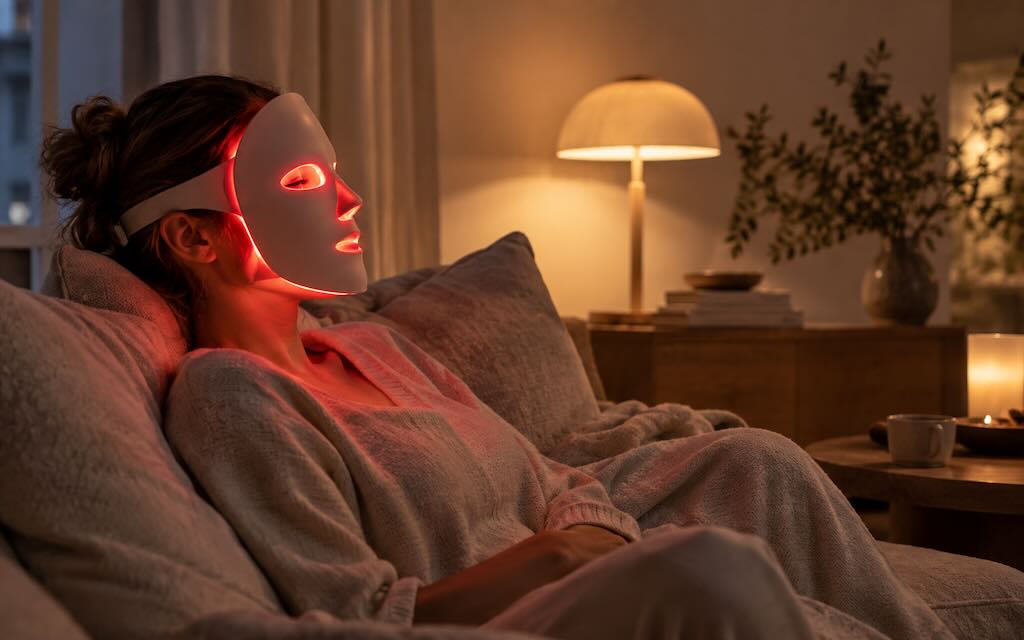
A red light face mask makes an unusually large promise for something that asks so little of you.
Put it on. Sit there for a few minutes. Repeat several times a week. Depending on the device, the promised reward may include smoother skin, fewer wrinkles, more even tone, less redness or a generally younger-looking face.
The strange thing is that red light therapy is neither quite the miracle suggested by some of its marketing nor an expensive piece of illuminated skincare theatre.
There is real science behind photobiomodulation, the broader term for using low-level light to influence biological processes. There is also clinical evidence that certain red and near-infrared light treatments can produce improvements in signs of skin ageing.
What the evidence does not give us is a reason to assume that every red mask works equally well, that more light produces better skin, or that a home device will dramatically change a face.
There is a plausible reason red light can affect skin
Red light therapy is different from ultraviolet exposure. It generally uses visible red light, sometimes combined with near-infrared wavelengths, delivered at relatively low energy.
The treatment is often described as photobiomodulation. Rather than deliberately damaging tissue so that it repairs itself, as happens with some resurfacing procedures, the light is intended to influence cellular activity without producing that kind of injury.
The biological mechanisms are still being investigated, but this is an established area of medical research rather than a concept invented to sell face masks. A 2025 evidence-based consensus published in the Journal of the American Academy of Dermatology concluded that photobiomodulation is generally a safe treatment modality in adults and that red-light photobiomodulation does not induce DNA damage.
That establishes something important about the underlying treatment. It does not establish that every cosmetic claim attached to a consumer mask is true.
For wrinkles, the evidence is promising rather than spectacular
This is where the case for red light face masks becomes more convincing.
The American Academy of Dermatology says research suggests red-light LED treatment can produce subtle to noticeable improvements in concerns including fine lines and wrinkles, rough skin, dark spots, redness and skin laxity. It also stresses that studies use different devices, treatment schedules and research methods, making direct comparisons difficult.
Some newer trials have specifically examined mask-style devices. In a 2025 randomized, double-blind, sham-controlled study, participants used a home mask combining 630-nanometre red LED light with 850-nanometre infrared light. After 16 weeks, researchers reported significantly greater improvement in crow’s-feet scores in the treatment group than in the sham group.
Another randomized, double-blind study published in 2025 investigated a 660-nanometre LED mask in women aged 45 to 60, comparing different treatment frequencies over four weeks. The study found improvements in measures used to assess facial rejuvenation.
Earlier controlled research has also reported improvement in periocular wrinkles after repeated LED treatment.
Taken together, this makes “red light does absolutely nothing” difficult to defend. But it does not turn an LED mask into the equivalent of a facelift, injectable treatment or more intensive dermatological procedure.
A 2026 review of red light therapy in cosmetic dermatology reaches a useful middle ground: evidence supports it as a relatively low-risk adjunct for certain uses, including mild photoageing, but the improvements tend to be modest and gradual. The authors found that commercial claims frequently overstated how quickly, dramatically and permanently those benefits occur.
The mask matters more than the colour of the glow
One of the problems with shopping for red light therapy is that products can look interchangeable.
They are not.
Studies specify wavelengths, energy delivery, treatment duration and frequency. Consumer devices differ across these variables. The fact that two masks both make your bathroom glow red does not mean they deliver the same treatment.
This is also why a successful study of one device or treatment protocol cannot automatically validate every mask sold online.
In the United States, some home LED masks have received FDA 510(k) clearance for indications such as the treatment of full-face wrinkles. FDA records show cleared home devices using combinations such as 630-nanometre red and 830-nanometre near-infrared light.
But “FDA-cleared” needs to be read accurately. The American Academy of Dermatology notes that clearance should not be interpreted as proof that a device will produce a particular degree of cosmetic improvement. It is also different from the casual marketing phrases “FDA approved” or “FDA certified” sometimes encountered when shopping for beauty devices.
If you are comparing masks, look beyond the number of LEDs and the futuristic shape of the device. Check what wavelengths it emits, what it is actually intended to treat, whether the manufacturer gives a clear treatment protocol and whether claims about regulatory clearance can be verified.
Consistency is part of the treatment
A red light mask is not particularly demanding during any single session. The commitment comes from repetition.
Clinical studies generally involve repeated treatments over weeks or months, not occasional use when somebody remembers the mask is in a drawer.
The American Academy of Dermatology similarly notes that home red light devices need to be used regularly and that follow-up treatment is necessary when treating signs of skin ageing. There is no universal schedule that can sensibly be applied to every device, so the manufacturer’s directions matter.
This changes the calculation when deciding whether an expensive mask is worthwhile. The relevant question is not only whether red light therapy can work. It is whether this particular device has credible specifications and whether you are likely to use it as directed for long enough to see a potentially modest result.
Short-term safety looks reassuring, with some caveats
Red light does not carry the same established skin-cancer risk as ultraviolet light. Current evidence is generally reassuring about short-term use within established treatment parameters.
The American Academy of Dermatology describes common side effects as mild, including temporary irritation or discomfort. It also notes that we still do not know the long-term effects of repeated use on skin and hair.
There are circumstances where professional advice matters more. AAD recommends speaking with a dermatologist before home treatment if you have a condition that causes light sensitivity, such as lupus, or take medication that increases photosensitivity. It also advises people with darker skin tones to discuss home red-light treatment with a dermatologist because visible light can contribute to hyperpigmentation in susceptible skin.
Eye instructions should be treated as instructions rather than optional accessories. If a particular device calls for protective eyewear, use the protection specified for it.
So, is a red light face mask worth buying?
It depends on what you expect it to do.
If the expectation is that a few minutes under red LEDs will substantially lift the face, erase established wrinkles or replace the effects of more intensive dermatological treatments, the evidence does not support that expectation.
If the expectation is more restrained — gradual improvement in some signs of photoageing after consistent use of an appropriately designed device — there is clinical evidence behind it.
That distinction makes red light masks less exciting than much of their advertising and more interesting than dismissing them as another beauty gadget.
The technology appears capable of doing something. The difficult part is deciding how much that something matters to you.
What to check before buying a red light face mask
- Its intended use: A device marketed for wrinkles should provide information relevant to treating wrinkles, rather than making vague claims about “wellness” or complete skin transformation.
- The wavelengths: Look for clearly stated specifications rather than relying on the fact that the device visibly glows red.
- The treatment schedule: You should be able to find clear instructions for session length and frequency.
- Regulatory claims: In the US, verify claims of FDA clearance rather than assuming “FDA approved” language means the same thing.
- Eye protection: Follow the device’s specific safety instructions.
- Your own skin and medication: Speak with a dermatologist if you have a photosensitive condition, take photosensitising medication or have concerns about pigmentation.
- Your expectations: Think in terms of gradual, potentially modest improvement rather than dramatic transformation.