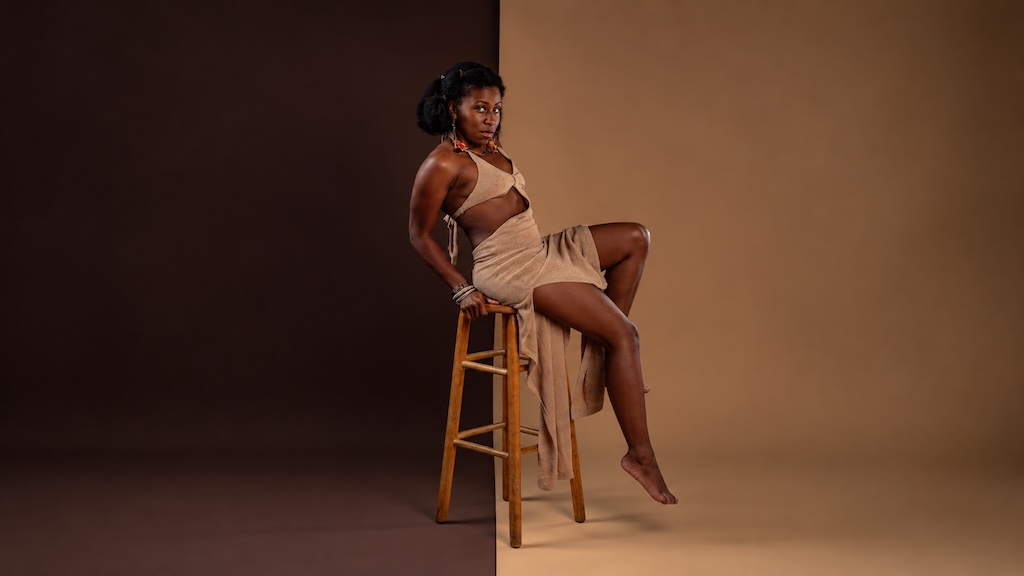
Being seen as strong can be a complicated thing. It can acknowledge what someone has survived, but it can also become an expectation that leaves little room for exhaustion, grief or the need to be cared for.
For R&B artist Akeylah Simone, that contradiction sits at the centre of Black Women Feel No Pain. The song began taking shape after she witnessed a traumatic event in April 2025. In the hours that followed, she says, people still expected her to meet their needs, with little consideration for what she had just experienced.
It was not an entirely unfamiliar feeling. Simone had previously worked in a corporate environment where she was regularly asked to manage conflicts and carry responsibilities that others avoided. She had learned to handle difficult situations. Only later did she begin questioning why she was expected to handle so many of them.
That question runs through Black Women Feel No Pain, a song that confronts the assumption that Black women can absorb extraordinary pressure without being hurt by it. A sustained violin line carries a sense of distress beneath the arrangement, while Simone’s lyrics refuse the expectation of endless resilience.
In this Good Hours conversation, Akeylah Simone speaks about the experience behind the song, the physical cost of being treated as invulnerable, and the difficult work of learning that strength does not have to mean carrying everything alone.
Good Hours
Artist Spotlight
For the hours
that make a life.
In Conversation / Music
Akeylah Simone
R&B · Singer-Songwriter
I didn’t need to hear how strong I was in that moment. I didn’t need to be strong.
Akeylah Simone · On the experience behind the song
Good Hours — Music / 2026
The Moment Behind the Song
Good Hours: “Black Women Feel No Pain” started as a response to real tragedies and real people who wouldn’t make room for your grief. Was there a specific moment — a conversation, a room, a silence — that became the seed of the song?
A very specific moment. I witnessed a tragedy in April 2025, and it was extremely traumatic for me. As I tried to navigate the commitments I had that immediately followed that event, there was little grace and compromise around basic favors people needed of me. It felt like I was looked at as a robot more than a human being. It was learning what that really was and where it came from that helped me jump start this song.
Good Hours: You’ve described being treated as “the emotional anchor in white spaces.” What does that role look like day to day, and how did you learn to name it as a burden rather than just accept it as who you are?
It took me some time to recognize what was happening. I used to work for a major corporation in Transportation Logistics. My white coworkers and leaders used to come to me to handle escalations and conflict resolution daily. When a conflict would arise, because my leader didn’t handle confrontation well, he would make it my responsibility to navigate them. Essentially placing the weight, burden and responsibility on my shoulders. I used to carry it well and proudly. It wasn’t until I removed myself from that environment that I was able to see what was really happening.
Good Hours: The song points to how these pressures made you physically and emotionally sick. How much of that toll did you understand in real time, and how much only became clear once you started writing?
It wasn’t until directly after that major traumatic event that I was able to recognize how clearly I was being used and how my resilience was weaponized in real time. I remember an instance where I was surrounded by people that used to force me to be strong for them and it triggered an anxiety attack. It was one of the first times I could clearly feel the pressure and my body rejecting the expectation any longer. Once I started writing, the emotions began to unfold and I was able to put it into words, metaphorically, the toll it was taking.
When Strength Becomes an Expectation
Good Hours: The title directly confronts the myth of Black women being immune to pain — a myth that also shows up in documented medical bias. Did you set out to write something that spoke to both the personal and the systemic, or did the song find that connection on its own?
It wasn’t my intention when I began writing to touch both, but the connection is clear and evident. I wanted to use the song to speak on both and shine light on the bias. I feel as a performer with a platform, it’s important we take these opportunities to use our art to speak on these truths and help change the narrative.
Good Hours: You’ve said your history of resilience and survival was “weaponized” against you. Can you unpack that — how does strength get turned into an expectation instead of a choice?
I’m still unpacking this one myself. It seems after I wrote and released the song, I’m waking up every day and reflecting on past moments and realizing “wow…I handled that well but why did I have to?” Something as simple as driving 12 hours on just a few hours of sleep to a tour stop and being thanked repeatedly for how well I drive and handle a vehicle when I’m clearly struggling. I know that example seems shallow, but those moments build up over time. “You handle that so well, Akeylah.” “It’s so strong of you to let that roll right off your shoulder, Akeylah.” “You have so much on your plate. It’s so cool how you’re able to do all of that alone.”
Especially because it led to the very moment I speak to in the song. When I had to witness a death and because I’m so “strong and resilient” you felt I could handle a simple favor. A simple favor that only required me to revisit the exact location of that tragedy, just hours later, to accommodate your needs. I didn’t need to hear how strong I was in that moment. I didn’t need to be strong. It didn’t have to happen.
I was also targeted in the workplace. Because I didn’t let much sit in my spirit, I consistently had coworkers starting rumors, filing complaints, opening investigations all to see how far I could be pushed. As a past time. The micro and macroaggressions could have directly affected my progression within the company but because I had worked so hard developing a solid reputation to begin with, it didn’t get far. But I had to learn to ask myself why I am expected to endure this and pretend it doesn’t affect me? In corporate white spaces like that, I’m supposed to endure. I say no.
A Cry Beneath the Music
Good Hours: Sonically, this is described as a “cinematic R&B protest ballad.” How did you land on that blend — what has to be true musically for rage, softness, and reclamation to sit in the same track?
I strongly believe that the individual elements in the production of a track have their own story before we touch lyrics. I began with the chord progression and there is this question it’s asking. We don’t know the question exactly, but the progression seems “unsure” of itself. I might have had the chord progression sitting on my phone for 6-8 months before I began writing the lyrics and fully producing the song.
There is a cry from the violin that sustains through the song before we add the guitar and drums that sit more parallel to the storyline, oblivious to why it’s there. There is also a cadence to the song that moves away from any aggression leaving that for the direct, heavy hitting lyricism.
While I maintained my poetic style of writing, I wanted it to be extremely clear and confrontational to start. When we moved to the vocal production, we touched on the cry and plea to be seen as human. I am saying “Black Women Feel No Pain” but I don’t believe it. I’m repeating it because the World wants me to believe it and I almost want to believe it too. Because it’s all I’ve ever known. We’re supposed to be proud to be so resilient but I’m not proud in this moment.
Good Hours: Vulnerability and confrontation are often treated as opposites. How did you approach writing a song that holds both without one canceling out the other?
I kept the goal in mind. I kept the message behind the lyrics and the metaphors at the forefront. As long I maintained the goal of speaking my truth and not focusing on who it might hurt or make uncomfortable, I was able to do this. The truth is uncomfortable and confrontational sometimes.
Good Hours: Was there a lyric or section of this song that was the hardest to keep in — something you considered softening or cutting because it felt too exposed?
The very first line. I was very back and forth on whether I should be so direct, but I needed to put into words that pain it caused. It has been healing sharing this with the World.
Learning to Put It Down
Good Hours: You call this track a refusal to carry the myth of invincibility any longer. What does the process of “putting it down” actually look like for you, on stage or off?
Distance and learning how to say, “no that’s not for me to carry.” And more grace for myself and less for others. If you’ve followed my content for any amount of time, I preach “grace, grace, grace” quite a bit. I’ve learned that it’s not grace some folks need, its distance. I have learned to swiftly remove people from my life that don’t see me as human. It was hard at first but I’m learning.
I’m also relearning how to rest and be ok with resting. My hustle mindset has placed this inability to rest without guilt or shame on my shoulders and I’m learning how to cope through that.
“I’m also relearning how to rest and be ok with resting.”
Akeylah Simone
The Space Between Home and the Road
Good Hours: Hampton Roads and your touring life have shaped a lot of your storytelling. How does home — or the distance from it — show up in how you write about pain and healing?
There is something special about taking a group of folks along to play our hearts out on stages near and far. We are so blessed to be able to do so but it does require a lot of heavy lifting, mentally and physically. At home and on the road.
I am married with three children and sometimes it’s not until I get on the road with a new group of people that I learn I can’t be soft or human in this space. I must be a superhuman to make this happen and I’m the only one that can do this. Once I return, I can be soft and rest again.
Having the support system at home helps me to cope while I’m on the road. When I need to vent or my anxiety gets too high, I have my husband I can call to help cope and navigate my emotions or the situation with. A blessing I’ll never take for granted, a man that allows me to be fully human, fully feminine, fully an artist and business owner alongside being a wife and mother. These are a lot of hats to wear but they are required and take a special kind of man to know how to handle anyone carrying this amount of weight. I have a song titled “JJJ” that speaks all about it. Check it out!
The Beginning of the Story
Good Hours: With more singles coming through Summer and Fall 2026 ahead of your Spring 2027 album, where does this song sit in that larger arc — is it an opening statement, a turning point, or something else?
Black Women Feel No Pain is the beginning of the story. It’s the breaking point, it’s the rock bottom to what my next album is, my healing journey. I have two more releases coming up this fall that also speak to the truths I refused to face leading up to the tragedy that turned it all around for me in April 2025.
Good Hours: If someone hears “Black Women Feel No Pain” and it’s the first time they’ve felt truly seen in a song, what do you want them to do with that feeling once the track ends?
Acknowledge it with yourself and then learn to acknowledge it in every room you walk in. Practice speaking your truth and then practice speaking the narrative you really want for yourself. Do it loud and often.
Simone describes Black Women Feel No Pain as the breaking point in a larger story, with a forthcoming album moving towards healing. That distinction matters. The song does not offer a neat resolution to the experiences behind it, and Simone does not pretend that learning to set boundaries or rest comes easily.
For now, the change is visible in smaller decisions: saying no, creating distance, calling home when the road becomes difficult, and allowing herself to acknowledge what hurts. After years of being praised for how much she could withstand, she is beginning to ask a different question: why should she have had to withstand it in the first place?
Akeylah Simone: Frequently Asked Questions
Who is Akeylah Simone?
Akeylah Simone is an R&B singer-songwriter associated with Hampton Roads, Virginia. Her music draws on personal experiences, relationships and questions of identity, resilience and emotional wellbeing.
What is “Black Women Feel No Pain” about?
The song challenges the expectation that Black women should remain strong regardless of the emotional or physical cost. Simone connects the subject to her own experiences of grief, workplace pressure and being expected to support others while struggling herself.
What inspired Akeylah Simone to write the song?
Simone says the song began after she witnessed a traumatic event in April 2025. She was troubled by how little consideration some people showed for her grief in the hours that followed.
How does the music express the song’s subject?
Simone began with a chord progression she had saved months earlier. A sustained violin part conveys a sense of distress, while guitar, drums and direct lyrics create a contrast between emotional vulnerability and confrontation.
What has Akeylah Simone said about rest and boundaries?
She describes learning to say no, distancing herself from people who disregard her wellbeing and allowing herself to rest without guilt. She sees these changes as part of refusing the expectation that she must always be resilient.
Is “Black Women Feel No Pain” connected to a forthcoming album?
Yes. Simone describes the song as the beginning of a larger story about healing. At the time of the interview, she was planning further singles for fall 2026 ahead of an album scheduled for spring 2027.
For more on Akeylah, visit:
https://www.instagram.com/akeylahsimone