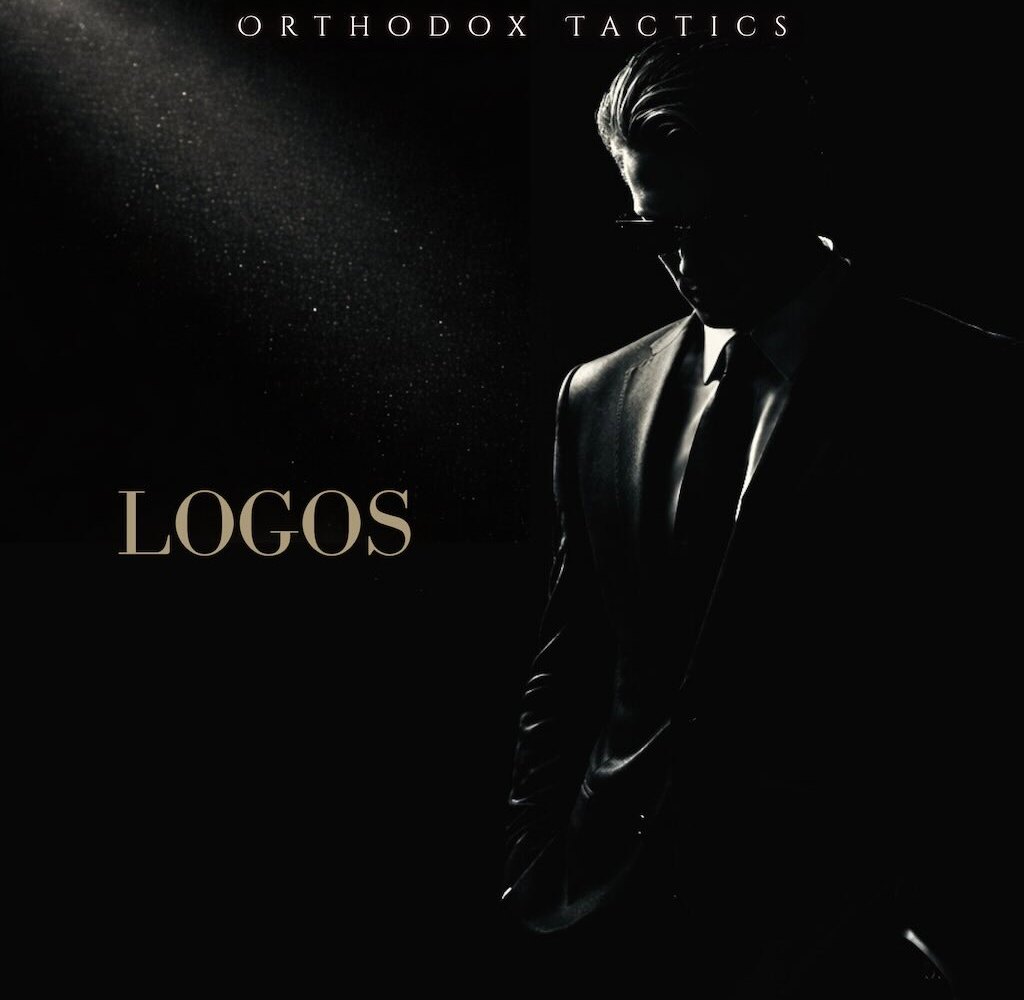
Orthodox Tactics was eight years old when a priest sent him to the chanters.
He was serving as an altar boy in a Greek Orthodox church, as he had done before. But that Sunday there were too many children around the altar. The priest offered a practical solution: go and help at the analogion, the lectern from which the chanters sing.
Until then, chanting had been something he heard moving through the church. He had not imagined himself participating in it.
He arrived without knowing the notation or theory. So he listened. He repeated what he heard. He made mistakes and tried again. Formal study of Byzantine music came later, supplying names and systems for things his ear had already begun to recognise.
Years afterwards, when Orthodox Tactics began making contemporary music, this early formation presented a question: what exactly had been inherited? For the artist, the answer turned out to be less about preserving a particular sound than preserving a way of hearing.

Before theory, there was listening
Byzantine chant is not simply a historical musical reference in Greece. UNESCO, which inscribed Byzantine chant on its Representative List of the Intangible Cultural Heritage of Humanity in 2019, describes it as a living vocal tradition closely connected to the liturgical texts and worship of the Greek Orthodox Church. It is essentially monophonic, organised through an eight-mode system and has been passed from generation to generation through a strong aural tradition alongside written notation.
That last detail matters when Orthodox Tactics talks about learning it. Listening came first, and listening closely enough eventually revealed something notation alone could not explain.
Different chanters could stand at the analogion with the same words, the same notation and the same melodic movement in front of them, yet the result could feel markedly different. One might linger almost imperceptibly on a phrase; another could give a particular word more weight. Orthodox Tactics gradually began noticing a distinction between executing something and meaning it.
“Technical correctness and emotional truth are not the same thing.”
That distinction stayed. In contemporary music, the artist says, it has become a way of listening beneath technique and production. The question is not only whether something has been executed well, but whether there is intention behind the expression.
It would be easy to draw a straight line from Byzantine chant into the music released as Orthodox Tactics. The artist is careful not to.
What if the influence is not something you can sample?
Orthodox Tactics has created three independent albums: KYRIE ELEISON, ETHOS and LOGOS. The titles make the project’s relationship with ideas of faith, character and meaning visible enough that a listener might expect the musical inheritance to be equally explicit.
Instead, the project has deliberately avoided some of the most obvious ways of signalling its relationship with Byzantine music.
Orthodox Tactics says there was an obvious route available: sample chant, place ecclesiastical phrases over contemporary production, use recognisable melodic material or surround the project with sacred imagery so the connection could be understood immediately.
The artist chose against it.
Part of that decision comes from having lived close enough to the tradition to regard its forms as more than interesting sounds waiting to be repurposed. They have a context and purpose of their own. Turning something sacred into an exotic texture simply because it would sound distinctive in contemporary production would change the nature of that relationship.
“There are things you respect precisely by refusing to turn them into decoration.”
There is a creative question inside that restraint too: can a tradition shape new work without being quoted by it?
For Orthodox Tactics, the influence lies in phrasing and repetition, restraint and intention, memory and an awareness that sound can carry weight. These are harder things to point to than a sample. They are also harder to reduce to genre.
The distinction changes the idea of musical inheritance. Instead of asking whether an old form can be heard inside a new one, you begin asking whether the habits learned from that form have survived. Orthodox Tactics puts it another way: can tradition survive as character rather than quotation?
Greek identity after the symbols are removed
The same problem appears when the conversation moves from music to Greek identity.
Remove the flag, the landscape, the traditional instrument, the familiar architecture. What remains?
Orthodox Tactics answers in terms that are less visible and more personal: family, responsibility, sacrifice, loyalty, pride, humility and inherited expectations. The artist does not claim any of these qualities as exclusively Greek. What changes between cultures, as they see it, is the way people are taught to understand and live them.
Identity, in this account, becomes less like a collection of symbols and more like a grammar. You may not consciously recite its rules. They still affect the sentences you form.
One example appears in FORGIVE ME. Orthodox Tactics describes the song as being about the point at which a child begins to see their parents as complete people: adults who experienced fear, exhaustion, disappointment and hope while trying to make childhood feel safer than their own circumstances necessarily were. The recognition is universal enough; the emotional language through which the artist understands it comes from the culture and family that formed him.
This is also where nostalgia becomes complicated. Preservation can protect something valuable, but Orthodox Tactics is wary of preserving culture so perfectly that it ceases to participate in the present.
A tradition displayed only through its recognisable surfaces risks becoming easier to identify at precisely the moment it becomes harder to inhabit. The artist is more interested in what remains once those surfaces are removed — what still governs a person when nobody looking at them can immediately tell where they came from.
Athens, now
That question also runs through NOT FOR SALE. The song originated on ETHOS and later grew into a cinematic campaign set against contemporary Athens.
The decision to use the present-day city is more consequential than a choice of backdrop.
Heritage imagery could place the project’s questions somewhere safely behind us. Old stone, sacred architecture and recognisable historical symbols would make inheritance immediately readable. They could also turn it into scenery.
Orthodox Tactics wanted the tension in the present instead. Athens, as the artist describes it, carries historical memory while continuing with the ordinary pressures of a modern capital: work, careers, status, opportunity, visibility, ambition and compromise. The past is present, but the people living there cannot remain inside it.
The campaign is concerned with what happens when ideas about character and responsibility encounter things someone understandably wants. The artist’s description of compromise is particularly revealing because it is not dramatic. Compromise, in this telling, does not necessarily announce itself as betrayal. It may first resemble access. Or recognition. An opportunity worth accepting. Then another small concession after that.
This is Orthodox Tactics explaining the moral territory of the project, not a diagnosis of Athens. The distinction matters. A contemporary city provides the setting precisely because ordinary present-day life is where the question becomes difficult.
What do you keep when giving a little of it away might make everything else easier?
The work should stand ahead of its maker
There is another refusal built into Orthodox Tactics, and this one has less to do with musical history. The person behind the project remains deliberately secondary.
It is an awkward choice in a music culture where an artist can be expected to supply not only recordings but a continuous stream of personality around them. Orthodox Tactics understands the trade-off. Familiarity, repeated visibility and access can make a project easier to communicate and easier for an audience to follow.
There is nothing inherently wrong with that approach, the artist says. It simply is not the relationship Orthodox Tactics wants to establish with the listener.
“I am protecting hierarchy. The work should stand ahead of its maker.”
The principle runs against much of contemporary music promotion, where the song, the person, the photograph, the explanation, the daily life and the promotional fragment can all arrive through the same feed. Separating the work from the person making it requires intention.
For Orthodox Tactics, anonymity is not mystery for mystery’s sake. The artist argues that revealing more about the person behind the project could sometimes interfere with what a song allows a listener to bring to it. If a piece of music prompts somebody to think about their parents, faith, a promise, a compromise or a part of themselves they have left behind, the artist does not necessarily need to remain in the centre of that encounter.
It probably makes the project harder to market. Orthodox Tactics accepts that rather than romanticising it.
Near the end of our exchange, the artist makes a distinction between visibility and presence. The two can easily be confused. To be continuously visible is to keep appearing: another image, another update, another reminder that the person and project exist. Presence asks something else. What remains once the appearance has passed?
It brings the conversation unexpectedly close to that first experience at the analogion.
As a child, Orthodox Tactics learned that two people could perform the same written material and leave different impressions. Years later, the project is making a related distinction on a much larger scale. The recognisable form is not necessarily where the meaning resides.
The chant can disappear from the recording and still have changed the person making it. The old symbols can be removed and inherited expectations can remain. A maker can step away from the centre and still leave work behind.
At eight years old, before the terminology arrived, the first lesson was simply to listen.
- Website: https://orthodoxtactics.com
- Instagram: https://instagram.com/orthodoxtactics
- Facebook: https://facebook.com/OrthodoxTactics
- TikTok: https://tiktok.com/@orthodox.tactics