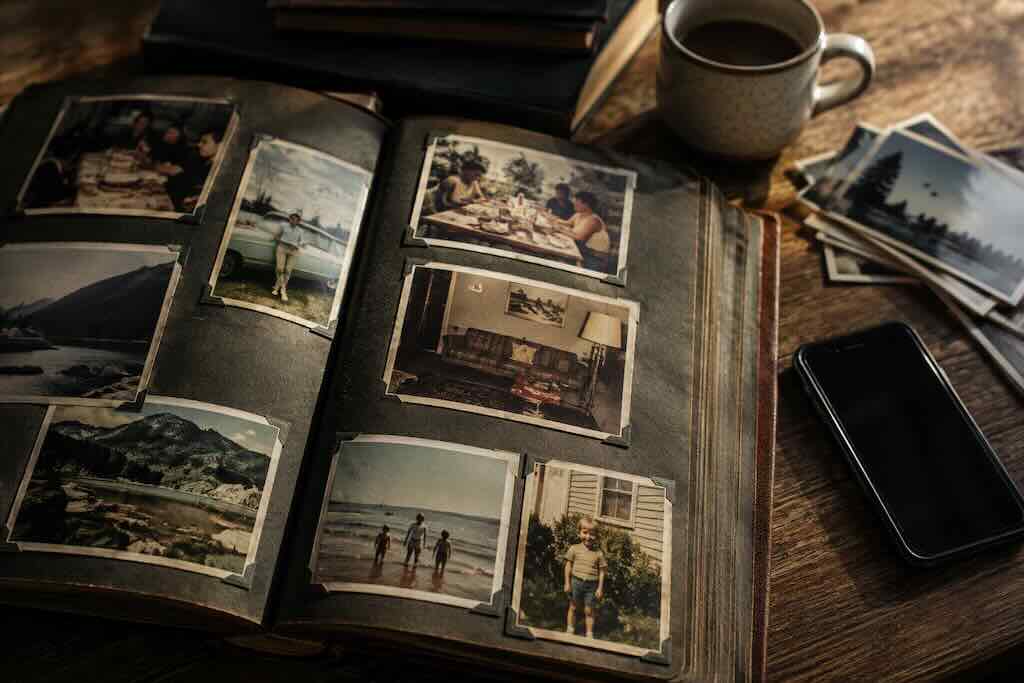
Open an old family photo album and the pictures are rarely as polished as memory suggests.
Someone has been caught halfway through eating. A thumb has entered the corner of the frame. The horizon tilts. A child is looking away. Three people stand awkwardly beside a rental car while a fourth has apparently been cut in half. There are photographs of hotel balconies, picnic tables, birthday cakes after the candles have been removed and relatives sitting in rooms nobody thought were interesting at the time.
Many of these pictures would probably not survive the first review on a phone today.
And yet decades later, they can be the photographs people linger over.
The casual photograph has not literally disappeared. We take more photographs, and more casually, than previous generations could have imagined. What has become less common is a particular kind of accidental permanence: the ordinary picture that was taken without much thought, could not be immediately inspected and somehow ended up representing a life.
Table of Contents
- The snapshot was once a technological revolution
- Film made photographs casual, but not unlimited
- There was no delete button in the photo lab
- The bad photograph often contains the good information
- Digital photography removed the scarcity
- Then photographs became messages
- At the same time, photographs became more public
- We can now correct a moment before keeping it
- The casual photograph may be hiding in the camera roll
- What changed may be the act of keeping
- Maybe the pictures worth keeping are not always the best ones
- Frequently asked questions
The snapshot was once a technological revolution
Casual photography had to be invented.
Early photography required equipment and knowledge that placed it far beyond the everyday habit it would eventually become. That began changing dramatically in the late 19th century as cameras became easier for amateurs to use.
When Kodak introduced its first camera in 1888, it came preloaded with enough roll film for 100 exposures. The customer took the photographs and sent the camera back for processing. The Smithsonian’s National Museum of American History describes the resulting snapshots as helping establish a style of photography that was informal and personal.
Then came the Brownie. Introduced in 1900 for $1, with film costing 15 cents a roll, the simple box camera brought photography within reach of a much larger consumer audience. The Smithsonian notes that snapshots of holidays, birthdays and everyday life became increasingly common in American culture in the years that followed.
That change was more important than making photography cheaper. It changed what qualified as something worth photographing.
A photograph no longer needed to be a formal portrait or significant occasion. It could be the dog in the yard.
Film made photographs casual, but not unlimited
For much of the 20th century, amateur photography lived inside an interesting constraint.
Taking pictures was easy enough to become ordinary, but each photograph still cost something.
A roll might contain 12, 24 or 36 exposures. Once you pressed the shutter, one was gone. Then the film had to be developed before you knew exactly what you had.
This did not make everyone a careful photographer. Quite the opposite. Family albums are full of evidence that people cheerfully wasted frames.
But the limitation gave photographs a peculiar relationship with time. Taking the picture and seeing the picture were separate events.
You could not immediately discover that somebody blinked and take eleven replacements. You could not enlarge the image to inspect your face. You could not decide that your arm looked strange and delete the evidence before anyone else saw it.
The photograph had already left you.
There was no delete button in the photo lab
Weeks or months of life could return in a paper envelope.
There was the photograph you remembered taking, followed by one you had completely forgotten. A flash had turned someone’s eyes red. The sunset looked disappointing. The picture from the restaurant was dark enough that everyone seemed to be eating dinner during a power failure.
They were still photographs.
You had paid to develop them. Throwing away a bad one was possible, of course, but many simply went into the envelope, a drawer or an album beside the good ones.
This created archives with surprisingly low standards for admission.
That sounds like a criticism until you look at one 30 years later.
The bad photograph often contains the good information
The photograph of a birthday cake may not be particularly good. Behind it, however, is the wallpaper everyone had forgotten.
The badly framed picture of your father might show the car he drove for ten years. A photograph taken before dinner catches the plates your grandmother always used. In the corner of a Christmas snapshot is a television set, a lamp, a stack of magazines or a toy that disappeared sometime during childhood without anybody recording when.
Photographs accumulate information their photographers did not intend to preserve.
That may be one reason ordinary family pictures become more interesting as they age. Their subjects remain important, but the background slowly catches up.
A kitchen nobody would have deliberately documented becomes fascinating once the kitchen no longer exists.
Digital photography removed the scarcity
Digital cameras changed the bargain.
Individual exposures no longer carried the same obvious cost. Memory cards could hold hundreds and eventually thousands of images. A screen on the back of the camera collapsed the distance between taking a photograph and seeing it.
That was enormously useful. Photography became more forgiving. You could experiment, correct mistakes and take another picture without wondering whether you had enough film left for tomorrow.
The camera phone pushed the transformation much further. The camera stopped being an object you decided to bring and became part of something already in your pocket.
Photography had spent more than a century becoming easier to carry. Eventually, carrying a camera stopped feeling like carrying a camera at all.
Then photographs became messages
One of the biggest changes in photography is easy to overlook because it now feels completely normal: many photographs are no longer taken primarily to become photographs.
They are communication.
You photograph a strange item in a supermarket and send it to a friend. You send a picture of the hotel room to your family. Someone asks which shoes you mean, so you photograph the shoes. You take a picture of a parking space so you can find the car later.
These images may exist for thirty seconds or remain on a device for ten years. Their purpose was fulfilled almost immediately.
This is casual photography in its purest form, but it is different from the old snapshot. The old photograph was usually created as a record. The contemporary photograph can function more like a sentence.
“Look at this.”
At the same time, photographs became more public
The photograph in a family album had a fairly predictable audience.
A photograph made for social media potentially has a very different one.
That distinction matters because a photograph intended for other people does more than preserve an experience. It represents it.
Once an image might be posted, the questions surrounding it change. Is this the best photograph? Does everyone look good? Is the background distracting? Should we take another one? Is this worth sharing at all?
None of this is entirely new. People posed carefully for cameras long before the internet, and family albums were edited versions of family life rather than neutral historical records. Kodak itself understood early that photography was connected to identity, leisure and aspiration; the Smithsonian’s history of the company’s advertising shows how cameras were marketed as companions to travel, independence and modern life.
What changed was the speed and potential scale of the audience.
We can now correct a moment before keeping it
Imagine taking a group photograph in 1992.
Someone presses the shutter. Maybe another picture is taken for safety. Then everyone moves on.
Today, the group often remains assembled while the photographer looks down at the screen.
Someone asks to see it. Someone else notices closed eyes. Another person says they were not ready. The photograph is repeated, perhaps several times, until the group has produced a version everyone can accept.
There are obvious advantages to this. Few people genuinely miss paying to develop a roll of photographs only to discover that the important picture was unusable.
But instant review introduced something else: the ability to negotiate with the past while it is still happening.
The first moment happened. We simply decide that the third version will be the one that survives.
The casual photograph may be hiding in the camera roll
It would be too easy to tell this story as a decline.
Old photographs were authentic; new photographs are curated. Film made us present; phones made us perform. We used to preserve memories; now we create content.
Real life is messier than that.
Phones have probably produced one of the largest collections of ordinary-life photography humans have ever made. Camera rolls contain pets sleeping, children making faces, receipts, half-finished meals, screenshots, walks, clouds, hotel windows, haircuts, houseplants and photographs taken for reasons their owners can no longer remember.
The casual photograph is everywhere.
The difference is that it no longer automatically becomes part of an album.
What changed may be the act of keeping
A roll of film imposed an accidental editing process. There were only so many photographs to begin with, and once they were printed, the physical objects demanded some kind of decision. Album, frame, drawer, envelope, box.
A camera roll asks much less of us.
Thousands of images can remain where they were created. There is no requirement to choose the important ones because storage allows us to postpone the choice almost indefinitely.
This produces a strange abundance. We can document an ordinary year in extraordinary detail while having no equivalent of the battered album someone can pull from a shelf twenty years later.
The photograph exists. The archive exists. What is less certain is whether anyone will encounter it again.
Maybe the pictures worth keeping are not always the best ones
There is nothing inherently superior about a blurry photograph from 1987.
Sometimes a bad photograph is simply a bad photograph.
Nor is there anything wrong with wanting a picture in which everyone looks good. The ability to take another photograph is one of digital photography’s simplest pleasures.
But old albums offer a useful reminder about what photographs eventually become.
They begin as pictures of subjects. Over time, they become pictures of everything else too.
The unfashionable sofa becomes interesting. The supermarket sign becomes historical. The friend standing at the edge of the frame becomes someone you have not seen in years. A perfectly ordinary afternoon acquires significance simply because nobody knew enough to think it was significant at the time.
Perhaps the casual photograph has not disappeared at all.
Perhaps we have millions of them.
We just have not found out which ones matter yet.
Frequently asked questions
When did snapshot photography become popular?
Snapshot photography became increasingly accessible after Kodak introduced a simple roll-film camera in 1888. The arrival of the inexpensive Brownie camera in 1900 helped bring amateur photography to a much wider audience, and informal photographs of family life, holidays and everyday experiences became increasingly common.
How did digital cameras change photography?
Digital cameras removed many of the practical limitations associated with film. Photographers could take far more pictures, review them immediately, delete unwanted images and try again without paying to develop each exposure. This changed both the quantity of photographs people could make and the way photographs were selected.
How have smartphones changed everyday photography?
Smartphones made cameras continuously available and turned photographs into a form of everyday communication as well as a way of preserving memories. Many contemporary images are taken to send information, share a moment or post online rather than to create a permanent photograph.
Why do old family photographs feel different from phone pictures?
Older film photographs were generally fewer in number, could not be reviewed immediately and often became physical objects stored in albums, envelopes or boxes. Phone photography is far more abundant and easily edited, but many images remain inside large digital camera rolls rather than being deliberately selected for a permanent collection.
Are people taking fewer casual photographs today?
Not necessarily. Smartphones make casual photography exceptionally easy, and people photograph ordinary life constantly. What may have changed is what happens afterward: an everyday photograph can be deleted, sent as a temporary message, buried among thousands of images or never deliberately revisited. The casual photograph may be less visible as an object even while casual photography itself is everywhere.